





Polymer prices - The past week was still all about holidays
The market is quantitatively balanced, but there is a severe shortage of certain grades. This is illustrated by the fact that converters who are used to Czech or Hungarian HDPE BM do not rush to buy from the Serbian producer, where there is availability. It is true that the shortage mainly affects bimodal grades, while the Serbian manufacturer only has unimodal grades. The situation is different for PPH. Due to the outage of the Czech manufacturer, some large multinational packaging material manufacturers are already looking for alternative sourcing options, not only from European but also from imported sources.
For now, however, it seems that everyone generally has enough starting stock for the expected demand for the fall season. The only problem is if demand is higher than expected. In this case, the limited availability of feedstock will be important. September, the first month of the autumn season, is likely to be the strongest. Demand will drop in October due to the "K" fair and will probably not recover this year. A foretaste of this can already be seen in the stagnating or even downward trend in feedstock prices for both SM and butadiene.
Polymer prices are expected to track feedstock price trends. In the case of polyolefins, this initially means a roll-over, while later it means a price reduction. In the case of SM and butadiene, we expect a continuous price decrease in the remaining months of 2025. However, there is no way to reduce prices "infinitely" for either monomers or polymers. Import prices are already close to their lowest point, the point where it is no longer worth importing them into Europe. On the other hand, in the case of falling prices, imports are quite risky, the available profits decrease month by month, and margins may even turn negative. It is likely that the shipments currently on the way and arriving in October-November will not be followed by new ones until February 2026, before the spring season.
It is increasingly apparent that there is an overproduction of polymers on a global level. This will also require manufacturers in the Far East to cut back on capacity.
-

myCEPPI
myCEPPI provides a weekly price report for commodity plastics.
Suppliers on this topic
-
SOLLAU CZ s. r. o.
Purchase and sale of plastic crumbs and regranulates, magnets and magnetic separators, metal part separators… -

geba Kunststoffcompounds GmbH
Masterbatches for plastics, plastic regranulate, ABS regranulate, ABS plastic regranulate, PC, PC/ABS, PA6, PA66, TPU… -
Szeplast Zrt.
Development and production of soft and hard PVC granulates, testing of plastic granulates, laboratory tests. -

Remarkplast compounding a.s.
Plastic compounds, plastic compounding, regranulate, plastic regranulation, construction plastics - production and… -

DLplast, s.r.o.
Production of hoses, extrusion of plastic hoses, extrusion of plastics, production of plastic profiles, processing of… -

Fatra, a.s.
Processing of PVC, PE, PP and PET, FATRAFOL waterproofing foils, PVC flooring, PVC granulate, regranulate…



-

Genesis Polymers Europe and Velogy bring European PP and PE production closer to customers at Fakuma 2026
The joint presence at Fakuma (Hall B2, Booth 2310) showcases a growing European polyolefin platform that combines Velogy’s production capabilities with... -
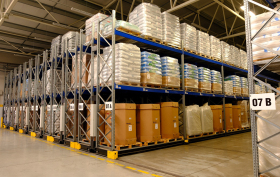
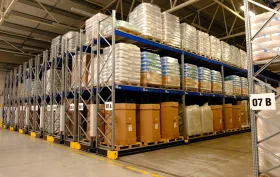
VACULA s.r.o.: Stable supplies of plastic granulates even in uncertain times
In the current complex global market environment, influenced among other factors by geopolitical tensions, many companies are facing uncertainty in supply... -
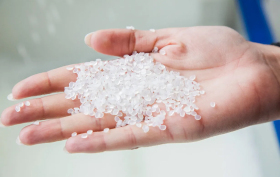
LIFOCOLOR explains how to choose the right masterbatch granule size
Are you dealing with colour inconsistencies, material segregation in the hopper, or inaccurate dosing? One possible reason may be an unsuitable granule size....

Most read in the last 7 days
-
BASF expands the Ultradur® portfolio with new grades based on post-consumer recycled PET
-
OPEX Industry Summit 2026: Meeting of Slovak Industry Leaders
-
Polymer prices – the increase in olefin monomer contract prices in October was in line with expectations
-
Fully automated production cell for manufacturing rubber-to-metal bonded parts by ROMI Automation
-
Polymer prices - narrowing availability, rising prices without panic buying





Most read in the last 7 days
-
BASF expands the Ultradur® portfolio with new grades based on post-consumer recycled PET
-
OPEX Industry Summit 2026: Meeting of Slovak Industry Leaders
-
Polymer prices – the increase in olefin monomer contract prices in October was in line with expectations
-
Fully automated production cell for manufacturing rubber-to-metal bonded parts by ROMI Automation
-
Polymer prices - narrowing availability, rising prices without panic buying