




Lifocolor s.r.o. explains how to choose the right masterbatch granule size

Smooth production starts with the right masterbatch granule size
For production to run smoothly, without fluctuations and unnecessary losses, precise dosing, even dispersion of colour or additives, and stable processing are essential. In the case of masterbatches, these parameters can be significantly influenced by the correct granule size, which has a direct impact on both the quality of the final product and the reliability of the production process.
If the masterbatch granule size does not match the specific processing conditions, various deviations and problems may begin to occur in production, negatively affecting both quality and process stability. In practice, this may result in:
- colour inconsistencies between batches or during a single production run,
- uneven dispersion of colour or additives in the material,
- material separation in the hopper,
- inaccurate dosing, especially at very low let-down ratios,
- process instability in high-speed production,
- reduced repeatability and a greater risk of production losses.
Lifocolor offers the solution to your challenges: 4 masterbatch granule sizes
Standard granulate
Are you looking for a universal solution for most common applications? Standard granules are suitable wherever precise dosing, good colour and additive homogeneity, and reliable processing are required in both volumetric and gravimetric dosing systems.
Small granulate
Do you manufacture thin-walled parts or products with higher visual requirements? Smaller granules are suitable for finer dosing, low dosing ratios, and applications where good dispersion and homogeneity are important. They can also be used with certain PCR materials.
Microgranulate
Do you work with low dosing ratios, small shot weights, or fast production cycles? Fine granules enable precise dosing and good dispersion within the material. They are particularly suitable for gravimetric dosing systems, micro injection moulding, and the production of thin-walled parts.
Macrogranulate
Do you use larger polymer pellets or need stable volumetric dosing at high throughput rates? Larger granules are suitable for high-output applications, help reduce segregation in the hopper, and are used, for example, in profiles, pipes, and extrusion lines.
| Granulate sizes range from approx. 1.4–3.0 mm in diameter and 1.8–3.5 mm in length, depending on the granulate type. |
In addition to its broad masterbatch portfolio and various granule sizes, Lifocolor also has its own laboratory for colour shade development, enabling the company to respond flexibly to individual customer requirements. Added value is also provided by expert commercial and technical support, which helps customers select the optimum solution for their specific production conditions. Customers also appreciate the reliable delivery of goods within 10 working days from the order date, a standard Lifocolor has consistently maintained over the long term.
Not sure which granule size is the best fit for your production? Contact Lifocolor s.r.o.
-

LIFOCOLOR, s.r.o.
Color concentrates - masterbatches for thermoplastics, additives for thermoplastics, plastic compounds.


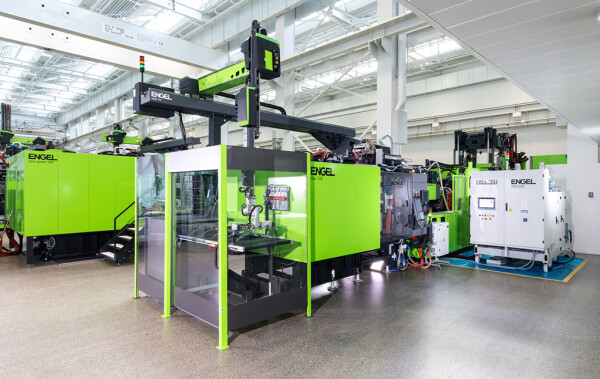
The new generation of viper robots from ENGEL increases the flexibility of linear robots and reduces investment costs
15.7.2026 At K 2025 in Düsseldorf, the ENGEL Group presented the new generation of its viper linear robots. For the first time, the three medium sizes 20, 40 and 60 share a common modular system. Axis lengths and payload can now be selected independently,...