




TBA explains: Plastic vs. wooden pallets – what really pays off in modern logistics?
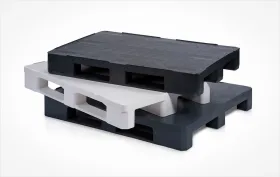
At first glance, the decision may seem simple – wood is cheaper, plastic more expensive. In practice, however, plastic pallets often prove to deliver greater value, especially in modern logistics, where automation, hygiene standards and the pressure for long-term efficiency play a role.
Two materials, two approaches to logistics
Wooden pallets are a long-established standard. They are readily available, relatively inexpensive and can be repaired if damaged. This makes them a practical choice, particularly for single use or less demanding operations.
Plastic pallets by contrast, represent a more modern solution that responds to the current needs of industry. They stand out above all for their consistent quality, long service life and ability to perform in environments where wood reaches its limits.
Hygiene as a decisive factor
One of the most fundamental differences between plastic and wood is hygiene. While wood is a porous material that readily absorbs moisture and can become a breeding ground for mould or bacteria, plastic is non-porous and easy to wash.
This is precisely why plastic pallets are now the standard in the food industry, pharmaceuticals and healthcare. In these sectors, cleanliness and contamination control are absolutely essential, and plastic offers assurance that wood simply cannot guarantee.
Automation is changing the rules of the game
Modern warehouses are increasingly using automated systems – conveyors, robots or high-bay stacker cranes. In such an environment, precision and dimensional stability are crucial.
Plastic pallets have a significant advantage in this respect. They are manufactured with high precision, do not deform and retain consistent properties even after repeated use. Wooden pallets, by contrast, are subject to wear, may warp or crack, which can lead to problems in automated processes.
Costs: short-term vs. long-term
In terms of purchase price, wooden pallets come out ahead. However, a closer look at total costs often reverses the situation.
Plastic pallets have a longer service life, do not need to be repaired and require replacement less frequently. They also reduce the risk of damage to goods because they have no splinters or loose nails. In the long term, they can therefore save companies significant amounts of money.
The specific needs of modern industry
As industry becomes more specialised, the need for specific logistics solutions also grows. Plastic pallets offer extensive customisation options in this respect.
For example, ESD pallets are used in the electrical engineering and automotive sectors to protect sensitive components from electrostatic discharge. In logistics and warehousing, pallet lids are used to increase protection for goods and enable more efficient stacking.
| ESD pallets | Plastic pallet lids |
Such solutions are virtually unavailable for wooden pallets, which limits their use in more demanding operations.
Differences by sector
The choice between plastic and wood varies significantly depending on the specific industry. In the food and pharmaceutical industries, plastic pallets dominate thanks to hygiene requirements. The automotive sector often combines plastic and ESD variants to protect electronics and ensure compatibility with automation.
By contrast, wooden pallets still predominate in construction and some retail segments, particularly where pallets are frequently lost or where high standards of cleanliness are not required.
E-commerce often uses a combination of both solutions – plastic pallets for internal handling and wooden pallets for one-way shipping.
The environmental picture is not as clear-cut as it seems
At first glance, wood may seem to be the more environmentally friendly choice. It is a natural material and decomposes easily. However, its service life is limited, and frequent replacement means greater consumption of resources.
Although plastic pallets are made from synthetic materials, their long service life and recyclability can ultimately make them more environmentally friendly. Their repeated use is the key.
How to make the right decision?
When selecting pallets, it pays to look beyond the purchase price alone. It is important to consider frequency of use, hygiene requirements, the level of automation and the value of the goods being transported.
Companies that handle sensitive products, need reliable logistics or want to optimise long-term costs are increasingly choosing plastic pallets today. By contrast, where single use or minimising initial costs is the priority, wood still retains its place.
The trend is clear
Logistics is evolving towards greater efficiency, automation and standardisation. And it is precisely in this environment that plastic pallets have a clear advantage. They are therefore gradually replacing wooden variants wherever companies are looking for a reliable and sustainable long-term solution.
The decision between a plastic and a wooden pallet is not merely a technical choice. It is a strategic step that affects costs, process quality and customer satisfaction.
And this is precisely why more and more companies are now finding that investing in plastic pallets is not an additional expense, but a route to more efficient logistics.
-

TBA Plastové obaly s.r.o.
Transport, handling and storage packaging, plastic crates, Euro crates, pallet boxes, plastic pallets, plastic bottles, canisters, barrels…

Suppliers on this topic
-

TOPlast, a.s.
Recovery of plastic waste, plastic recycling, plastic profiles, recycled plastic products, plastic furniture… -

Mettler - Toledo s.r.o.
Laboratory, industrial and food scales, laboratory instruments, industrial measuring systems, analytical instruments. -

Öko-Pack s.r.o.
Specialising in trading used plastic packaging, logistics and storage products. Buying and selling surplus plastic…ul. 1. mája 6
Hurbanovo
-

SPUR a.s.
Specialized plastic products, piping systems, cable protectors, insulating materials made of polyethylene foam… -

PK Group 2016 s.r.o.
Plastic crates, euro crates, crate carts, plastic barrels, canisters, thermoboxes, plastic pallets and big boxes. -

LAURIS R.M. s.r.o.
Packaging materials, packaging, corrugated cardboard, bubble wrap, stretch film, adhesive and binding tapes, blanks…



From warehouse to managed intralogistics: How M2M Solutions connects data, systems, and automation
12.6.2026 Today, manufacturing companies are concerned not only with machine performance, but also with how smoothly materials reach the machines, how efficiently the warehouse operates, how shipments are planned, and how much room there is for errors,...

Most read in the last 7 days
-
Polymer prices - narrowing availability, rising prices without panic buying
-
Fully automated production cell for manufacturing rubber-to-metal bonded parts by ROMI Automation
-
TECHTOGETHER+: A day that brings the automotive industry together
-
Polymer prices - polyolefin price increase without panic buying
-
Chinese manufacturer Jiangsu Xinquan Automotive Trim enters Slovakia


Most read in the last 7 days
-
Polymer prices - narrowing availability, rising prices without panic buying
-
Fully automated production cell for manufacturing rubber-to-metal bonded parts by ROMI Automation
-
TECHTOGETHER+: A day that brings the automotive industry together
-
Polymer prices - polyolefin price increase without panic buying
-
Chinese manufacturer Jiangsu Xinquan Automotive Trim enters Slovakia