





Polymer prices - demand for polyolefins is strengthening, while demand for polystyrene, PET, and PVC remains weak
The lowest polyolefin prices approached the levels seen at the end of February, and demand picked up at the same time. This is due in part to the low price level and in part to the fact that previously purchased, high-priced polymer stocks are slowly running out. Some converters are already under pressure to buy.
However, the upturn in demand for polyolefins is not uniform across all regions. There was a noticeable uptick in demand in the FYU countries, in Hungary, and to some extent in Romania, the Czech Republic, and Slovakia. In Poland, demand appeared to be strong at the beginning of last week; however, due to rising tensions around the Strait of Hormuz, converters once again became more cautious in their purchasing and halted buying on Thursday and Friday. For the time being, price levels in the Baltic states are higher than in other regions of Central Europe, which is why demand is also weak. Furthermore, most converters still have expensive inventory that they purchased in April and May.
Central European polymer manufacturers who have opted for a competitive pricing strategy had already met their July sales targets by last Friday, and they will be less flexible in their spot sales this coming week; they may even raise prices slightly compared to last week. It appears that, in the case of polyolefins, prices have bottomed out at the lower end of the price range. Manufacturers and retailers who are slow to follow the downward trend in prices are still under pressure to sell, so they will likely have to lower their prices. All of this means that the lower end of the polyolefin price ranges has already reached the bottom of the price curve; further declines are expected only at the upper end of the price ranges and in average prices during the coming week.
The ceasefire between Iran and the United States has become uncertain, leading to a slight increase in oil and naphtha prices. The rise in European naphtha prices was also driven by tightening supply in Europe. For now, it is by no means certain that prices will continue to rise or that high prices will persist until the end of the month, but in any case, the possibility of a price increase is in the air. If this happens and the price of naphtha returns to around 700 USD, it will mean a price increase for olefin monomers in August. This, in turn, translates to a low double-digit percentage increase in polyolefin prices at the lower end of the price range. This will not be unprecedented, as similar price increases occurred in mid-July and early August in both 2023 and 2024. A potential rise in the price of ethylene would be good news for both PVC manufacturers and buyers, as it would halt the dramatic price drop seen in July.
In the case of styrene monomer, spot prices rose by 200–250 euros last week due to tightening supplies of European naphtha and, consequently, benzene. This is, in a sense, a preview of a possible price increase for SM contracts in August. However, demand in the polystyrene market is generally very weak across all segments. Therefore, the likelihood of price increases for both SM and PS is low in August.
-

myCEPPI
myCEPPI provides a weekly price report for commodity plastics.
Suppliers on this topic
-
SOLLAU CZ s. r. o.
Purchase and sale of plastic crumbs and regranulates, magnets and magnetic separators, metal part separators… -

geba Kunststoffcompounds GmbH
Masterbatches for plastics, plastic regranulate, ABS regranulate, ABS plastic regranulate, PC, PC/ABS, PA6, PA66, TPU… -
Szeplast Zrt.
Development and production of soft and hard PVC granulates, testing of plastic granulates, laboratory tests. -

Remarkplast compounding a.s.
Plastic compounds, plastic compounding, regranulate, plastic regranulation, construction plastics - production and… -

DLplast, s.r.o.
Production of hoses, extrusion of plastic hoses, extrusion of plastics, production of plastic profiles, processing of… -

Fatra, a.s.
Processing of PVC, PE, PP and PET, FATRAFOL waterproofing foils, PVC flooring, PVC granulate, regranulate…




-

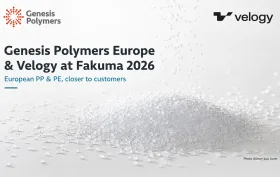
Genesis Polymers Europe and Velogy bring European PP and PE production closer to customers at Fakuma 2026
The joint presence at Fakuma (Hall B2, Booth 2310) showcases a growing European polyolefin platform that combines Velogy’s production capabilities with... -
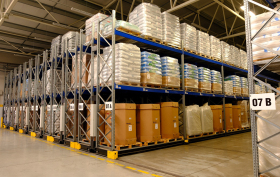
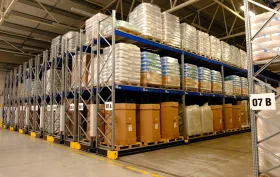
VACULA s.r.o.: Stable supplies of plastic granulates even in uncertain times
In the current complex global market environment, influenced among other factors by geopolitical tensions, many companies are facing uncertainty in supply... -
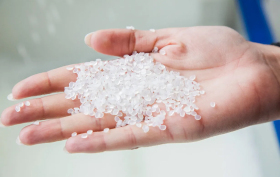
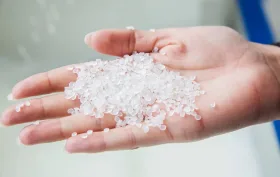
LIFOCOLOR explains how to choose the right masterbatch granule size
Are you dealing with colour inconsistencies, material segregation in the hopper, or inaccurate dosing? One possible reason may be an unsuitable granule size....
Most read in the last 7 days
-
Polymer prices – the increase in olefin monomer contract prices in October was in line with expectations
-
BASF expands the Ultradur® portfolio with new grades based on post-consumer recycled PET
-
We had the pleasure of meeting at one of the plastics industry events
-
OPEX Industry Summit 2026: Meeting of Slovak Industry Leaders
-
OPEX INDUSTRY SUMMIT 2026



Most read in the last 7 days
-
Polymer prices – the increase in olefin monomer contract prices in October was in line with expectations
-
BASF expands the Ultradur® portfolio with new grades based on post-consumer recycled PET
-
We had the pleasure of meeting at one of the plastics industry events
-
OPEX Industry Summit 2026: Meeting of Slovak Industry Leaders
-
OPEX INDUSTRY SUMMIT 2026