





The Council of the European Union has published a working document outlining the direction for the further development of the REACH Regulation
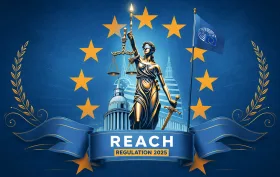
REACH reform repeatedly postponed despite original plans
The REACH revision was announced as one of the most important reforms of EU chemicals policy in recent years. It arose from the so-called Chemicals Strategy for Sustainability (2020) – a strategy for safer and more sustainable chemicals. It was intended to be extensive and include, among other things:
- improving the quality of data on chemicals;
- faster identification of hazardous substances (e.g. endocrine disruptors);
- simplifying authorisation procedures and restrictions;
- better control over products imported from outside the EU.
Despite the plans, the reform proposal has been postponed several times.
Why is the process delayed?
The main problem is that economic and political realities have changed since 2020.
a) Conditions for industry have deteriorated – the European chemical sector is under pressure: rising energy and raw material costs, supply chain disruptions, dependence on imports and intensified global competition.
b) Competition from outside the EU has increased – meaning that tightening regulations in Europe could further weaken local industry.
c) Pressure on businesses due to the lack of stability and predictability of chemicals regulations has increased, as has the deterioration of conditions conducive to investment.
A working document issued by the Council of the EU highlights the tension between maintaining a high level of protection for health and the environment and maintaining the competitiveness of European industry. Under current conditions, reconciling these two priorities is particularly challenging.
What does the document show?
The document contains no decisions, but poses questions to ministers and prepares the ground for political decisions. However, the most important message is clear: a full and rapid reform of REACH may not be possible at present, and the EU must consider a more gradual or cautious approach.
Possible future reform scenarios
In practice, the discussion is reduced to three main options:
A complete reform of the regulation and a comprehensive reform of the entire REACH system – currently considered unrealistic, which could entail high costs and risks for industry.
Phased reform – the gradual introduction of regulatory changes in the most important areas. This is a more realistic approach, a smaller burden on companies and the most likely direction of change.
Maintaining the current regulatory provisions and amending only part of the existing content, which brings stability to business but does not address systemic problems.
Proposed changes:
a) Simplification of REACH, including: simplifying regulatory obligations for SMEs, reducing data duplication in registration processes, simplifying documentation requirements for lower-risk substances, improving the transparency and accessibility of regulatory guidance.
b) Improving data quality in the REACH dossier – increasing requirements for the quality of data provided by companies, in particular: the need to update registration dossiers, ensuring data consistency across different regulatory documents, ensuring that data are appropriate for the actual use of the substance.
c) Strengthening enforcement and oversight of the chemicals market. The document emphasises the need to: increase the number and quality of inspections carried out by Member States, harmonise the work of supervisory authorities across the EU, use digital tools to monitor product compliance in order to eliminate unfair competition.
d) Increasing the role of digitalisation – the document also highlights the growing role of digitalisation in managing chemicals regulations. The plan includes, among other things: developing IT tools to support reporting and data analysis, integrating REACH systems with other regulatory frameworks (e.g. CLP), improving access to data for regulators and stakeholders.
e) By linking these changes with other legislative acts, changes to REACH are to be closely connected with other initiatives, such as: the Chemicals Strategy for Sustainability (CSS), the development of new hazard classes in CLP (e.g. ED, PMT/vPvM), measures to reduce substances of very high concern.
Significance for industry
The European Union is preparing important changes to the way the REACH regulation operates. The direction of change clearly indicates a balance between simplifying and tightening requirements. On the one hand, companies may see real benefits in the form of a reduced administrative burden; on the other hand, pressure for full compliance and data quality is increasing.
Document ST-10294-2026 shows that the European Union faces a difficult choice today: how to modernise chemicals regulations without weakening its own industry. REACH reform remains an important objective, but its scope and pace will depend on how the EU decides to balance environmental ambitions with economic reality.
-

Ekotoxikologické Centrum Bratislava s.r.o.
Consulting and advisory services, compliance with product legislative requirements, chemical legislation REACH, CLP.

Suppliers on this topic
-

TECHLER INDUSTRY spol. s r.o.
Supplier of products for industry, manufacturing and service, such as oil separators (skimmers), lubrication… -

Klüber Lubrication Slovensko s.r.o.
Production and development of advanced, high-performance and efficient customised lubricants, expert tribological… -

Lubexpert Slovakia s.r.o.
Authorized importer and distributor of ExxonMobil products in Slovakia, greases, hydraulic and synthetic oils… -

Slovensko-nemecká obchodná a priemyselná komora
Support of trade and economic relations between Germany and Slovakia, consultancy for plastic and rubber production… -

Hort Plast s.r.o.
Production of high quality plastic materials PSH, PSPE, PP and ABS, for industry, construction, automotive and food… -

INSTITUT PRO TESTOVÁNÍ A CERTIFIKACI, a. s. (ITC)
Evaluation of quality and safety of products, certification of plastic products, accredited testing laboratories…



BASF expands the Ultradur® portfolio with new grades based on post-consumer recycled PET
9.10.2026 BASF is expanding its portfolio of engineering plastics with new Ultradur® grades designed to help automotive manufacturers and suppliers increase the recycled content of their products while meeting demanding technical requirements. The new...






Most read in the last 7 days
-
Polymer prices – the increase in olefin monomer contract prices in October was in line with expectations
-
BASF expands the Ultradur® portfolio with new grades based on post-consumer recycled PET
-
We had the pleasure of meeting at one of the plastics industry events
-
OPEX Industry Summit 2026: Meeting of Slovak Industry Leaders
-
OPEX INDUSTRY SUMMIT 2026



Most read in the last 7 days
-
Polymer prices – the increase in olefin monomer contract prices in October was in line with expectations
-
BASF expands the Ultradur® portfolio with new grades based on post-consumer recycled PET
-
We had the pleasure of meeting at one of the plastics industry events
-
OPEX Industry Summit 2026: Meeting of Slovak Industry Leaders
-
OPEX INDUSTRY SUMMIT 2026