


Lubomír Zeman: Thermoplastic injection molding technology and weight reduction of injection moldings, part 2
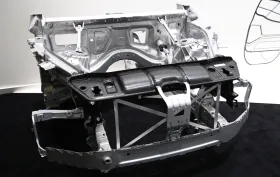
Reducing Vehicle Weight - Polymer Matrix Composites, Polymer Blends
Following the question of the potential benefits of bioplastics when used in applications to reduce the weight of current structures, particularly machinery structures and packaging, another question can be asked - what solutions are or will be available to ensure that the technical sophistication of injection moulding materials suitable for designing components for BEV vehicles does not increase vehicle weight, which is inconsistent with increasingly stringent CO2 emission standards, and does not run counter to requirements to reduce the weight of moulded parts? At what cost will we reduce the weight of moulded parts?
Requirements to reduce the weight of moulded parts and thereby also enable beneficial reductions in emissions, particularly CO2, can be addressed, among other approaches, by using composite materials and structures, blended injection moulding materials or structurally lightweight materials. Structurally lightweight materials and hybrid-material structural moulded parts are discussed in the chapters below.
In general, the term composites encompasses compound heterogeneous systems (composed of different parts) consisting of at least two phases (substances of one kind, with specific physical properties). Multiphase materials classified as composites have the following characteristics:
- both phases, or multiple phases, usually have different chemical compositions
- the phases differ in their physical and mechanical properties
- the matrix is a continuous, usually tougher component that performs the primary function in the composite; it is the binder that bonds the reinforcement - filler; its role is to maintain the shape of the product and transfer forces to the filler – reinforcement, including protecting it
- the filler – reinforcement, the secondary phase of the composite, is a discontinuous (composed of parts) component, usually with higher mechanical properties than the matrix, particularly in terms of stiffness and strength
- the composite is prepared using a process of mixing the respective components
These characteristics imply that polymer materials incorporating various additives to improve performance properties, such as heat stabilisers, flame-retardant additives, colour masterbatches, etc., are not composites. Such materials are considered standard injection moulding thermoplastics. These additives form part of the polymer matrix.
The list of characteristics of polymer matrix composites includes the filler, the secondary phase of the composite material. Fillers are usually classified as:
- particulate fillers – non-reinforcing; particles may have an isometric shape (spherical shape - equal dimensions in all directions, characterised by the average particle size d, a representative example being CaCO3) or a non-isometric shape (non-spherical, with random or preferred dimensional orientation); they may be layered – non-reinforcing, for example talc and mica, characterised by the ratio of dimension to thickness d / h; the group of particulate fillers includes – talc with a specific weight (density) of 2,58 g.cm-3 to 2,83 g.cm-3, calcium carbonate CaCO3, 2,54 g.cm-3 to 2,95 g.cm-3, silicon dioxide SiO2, 2,65 g.cm-3, mica, hollow glass microspheres (ballotini), 2,46 g.cm-3, diameter 5 µm to 600 µm, etc.
- fibrous fillers – reinforcing - are characterised by the ratio of fibre length to diameter - l / d; according to fibre length, composites are divided into short-fibre composites, in which the ratio of length to diameter l / d is less than 100, and long-fibre composites with an l / d ratio greater than 100; the reinforcing effect of a fibrous filler becomes apparent at an l / d ratio greater than 10; reinforcing fibres may be – glass with a density of 2,5 g.cm-3, carbon 1,75 g.cm-3, aramid 1,4 g.cm-3, boron 2,61 g.cm-3, beryllium 1,85 g.cm-3, tungsten 19,25 g.cm-3, steel 7,65 g.cm-3, silicon nitride Si3N4 3,25 g.cm-3, corundum Al2O3, basalt, protein (spider fibres), polymer (PES, PE, PP, PAN, PVAL), organic (plant), etc.; fibre thicknesses and diameters range from approximately 2 µm to approximately 200 µm (0,002 mm to 0,200 mm); for comparison, human hair has a diameter of approximately 42 µm to approximately 95 µm
- nanofillers - at least one dimension of the reinforcement is in the single-digit nanometre range – carbon fullerenes (nanotubes), inorganic zeolites, layered clay minerals – montmorillonites MMT, kaolinites, metal oxides V2MoO3, phosphates, phosphites, etc.
- hybrid fillers – a combination of filler types
Nanocomposites
Nanocomposites are materials composed of two or more different components, at least one of which occurs in the material in the form of particles measuring from single-digit to tens of nanometres (nano = 10-9 m - 0,000 000 001 m). The reason for using an active substance in nanoparticle form is its qualitatively different physical properties compared with conventional fillers. The properties of nanocomposites depend on their composition, particle size, morphology (shape) and arrangement. Their use also significantly reduces the volume content of nanofiller (single-digit % for example the clay mineral montmorillonite, specific weight 2 g.cm3 to 3 g.cm3) compared with standard polymer matrix composites (tens of % for example glass fibre, specific weight 2,5 g.cm3). Nanocomposites show promise as plastic structural materials with higher strength, hardness, dimensional stability, greater thermal stability and reduced flammability.
The size of the filler nanoparticles approaches the size of a matrix molecule. The small difference in size between the nanofiller and matrix molecules enables very close bonding between the matrix and filler, while the interaction (mutual action) between a filler particle and a molecule creates a bonded region on the particle surface that prevents movement of the corresponding portion of the polymer matrix, thereby enabling an improvement in the composite's physical and mechanical properties. An example is the nanofiller montmorillonite MMT, 1g of which has more than 700 m2 of notional surface area in contact with the polymer matrix. Commonly used talc of the same weight has a surface area of only approximately 30 m2. The usual nanofiller content in a composite is 3 % to 7 %.
Nanoparticles therefore improve the mechanical properties of the polymer matrix and can reduce the content of additives needed to achieve the desired benefits of composite materials, and thus their use also leads to a reduction in the weight of a specific injection-moulded part compared with traditional filled thermoplastics.
They can fully replace particulate mineral and fibrous (glass fibre) fillers as well as flame retardants. They also improve impermeability, chemical resistance and moisture absorption behaviour, including improving the surface quality of injection-moulded parts and increasing gloss. The low nanofiller content enables excellent colouring of the material, even allowing subsequent painting of injection-moulded parts to be eliminated. Injection moulding process conditions (again due to the low filler content) are not dependent on its quantity by weight. During nanocomposite production, the particles are dried, so the pellets do not need to be dried before injection moulding (when a non-hygroscopic matrix is used).
The benefit of nanofillers is therefore to achieve better material properties than with standard mineral fillers. Examples include increased dimensional stability, modulus of elasticity, heat resistance, barrier properties and scratch resistance, while, as already mentioned, simultaneously reducing the weight of the injection-moulded part.
Polymer Blends
Polymer blends are a current trend and also represent a promising way to prepare a material with unique combinations of properties tailored to a specific application. This is also one way to achieve an optimum balance between material cost and properties, including density and, consequently, weight. Thanks to the development of compatibilisers (substances with good affinity for the individual polymers in a blend, thereby bonding the blend), it is now possible under normal conditions to prepare blends of immiscible polymers and to combine polar and non-polar, crystallising and amorphous polymers.
Compatibilisers (“coupling agents”) are surface-active substances of a thermodynamic nature with high molecular weight, which reduce interfacial tension and increase the thickness of the interfacial layer, the interface, thereby creating a thermodynamically stable phase in the system after mixing (these are physical blends), a blend of incompatible polymers. There are numerous types of compatibilisers, for example – cyclic anhydrides, carboxylic acids, epoxy types, oxazoline types, isocyanate types, low-molecular-weight types, etc.
Crystallising polymers provide, for example, a high modulus of elasticity or good chemical resistance, while an amorphous polymer can contribute high impact strength. A large number of polymer blends are encountered in the development of injection moulding pellets, for example
ABS/PA, ABS/PBT, ABS/PC, ABS/PMMA, ABS/PSU
ASA/PC, ASA/PMMA
PA/ABS, PA/PET, PA/PDPE, PA/PPS,PA/PP, PP/PE, PA/TPE, PA/PPE, PA/PS
PBT/PC, PBT/PET,PBT/PA
PEEK/PES
PE/EPDM
PET/PMMA, PET/PSU, PET/PA
PC/PBT, PC/PET, PC/ABS, PC/ASA, PC/PEI, PC/LCP, PC/HDPE, PC/TPE-U
PP/EPDM, PP/PE, PP/PBT, PP/PC, PP/PA
PPO/PBT, PPO/PS, PPO/PA
PPS/PA, PPS/PEI, PPS/LCP, PPS/PES
PS/PE
TPE/PU
Polymer Matrix Composites with Natural Reinforcing Fillers
One way to reduce the weight of injection-moulded parts is to manufacture them from composite materials with natural fibrous fillers that replace reinforcing fibrous fillers such as glass fibres, carbon fibres and other inorganic fibres. In these injection moulding materials, the weight saving results from the bulk density of the fillers – inorganic glass fibres have a density of approximately 2,5 g.cm-3, while the average density of organic (natural) fibres is approximately 1 g.cm-3 lower (1,42 g.cm-3) – see Table 2 – selected physical properties of the most commonly used fibre types.
|
Table 2: Selected Average Physical Properties of the Most Commonly Used Types of Biological Fibres |
Composites with organic reinforcing fibres are usually used to manufacture injection-moulded parts installed outside vehicle crumple zones; they do not form load-bearing components and are used, for example, to manufacture door panels, dashboard components, luggage compartment components, seat components, etc. The reason is their low strength compared with, for example, the most commonly used glass fibres – glass fibres have a tensile strength of approximately 1,8 GPa to approximately 5,0 GPa (giga = 109) at similar elongation, glass fibres below 5 % – compare with Table 2, which lists the average tensile strengths of the fibres (averaged value 594 MPa = 0,594 GPa, mega = 106).
In general, natural fibres – see Table 3 – can be classified by origin as plant, animal and mineral fibres, and may consist of both organic and inorganic compounds.
Fibres obtained from plants are the most commonly used. Plants contain natural fibres in their leaves, stems or seeds (fruits). Fibres differ in their properties and morphology (external structure, shapes), reflecting their different functions in different parts of the plant. Cotton is the most important plant fibre industrially; for use as composite reinforcement, so-called bast fibres, such as cultivated flax, hemp, jute or sisal, are of fundamental importance. However, there are still numerous fibres for which specific uses in the industrial production of composite materials are being sought, as materials for designing injection-moulded parts with the required specific properties, including reduced weight.
|
Table 3: Classification of Natural Fibres by Origin |
It is clear that the structure, composition and properties of fibres obtained from different plants of the same species will vary. Much also depends on the conditions in which the plant is grown, directly linked to the age of the plant itself at which it is usually harvested, since the composition of the plant's cell walls changes over time, which naturally has some influence on the final properties of the fibres themselves. Another factor is the process chosen to extract natural fibres from the plant body. These processes may be mechanical, chemical or enzymatic.
The most important structural element of a natural fibre is cellulose. This high-molecular-weight polysaccharide consists solely of carbon, hydrogen and oxygen atoms, which are highly flammable atoms and highly susceptible to potential ignition. Other structural components are hemicellulose (a polysaccharide), lignin and a range of other substances, such as waxes, aromatic salts, nitrogen compounds, etc., although these compounds have no structural function.
The mechanical and other properties of natural fibres depend on a whole range of factors – see above, which is one of the main problems when applying them as reinforcement in polymer composites. Due to the variation in factor values, it is very difficult to ensure reproducibility (repeatability) and homogeneity (uniformity) of properties when producing polymer composites based on these fibres supplied by a single, regular supplier; the situation is similar for supplies from different sources.
In addition to highly problematic reproducibility, natural-fibre composites have other negative properties. Among the greatest drawbacks is low resistance to any form of moisture. This significantly negative property of natural fibres is caused by the presence of hydroxyl groups within the cellulose chain, which readily attract surrounding water molecules into the fibre, causing it to swell. The greatest water transfer occurs across the fibre's cross-section. The interaction between a hydrophilic fibre (a fibre that attracts water) and a hydrophobic matrix (water-repellent) causes the fibre to start swelling inside the matrix. This subsequently weakens the bond between the individual phases and may also cause the matrix to crack, potentially resulting in very poor mechanical properties of the final composite. To limit this phenomenon, the fibres must be modified using various additives or chemical procedures. Under normal conditions, natural fibres contain approximately 8 % to 14 % water by weight.
The contribution of fibres to the final properties of a composite, particularly strength, depends on their mechanical properties, type, orientation and fibre volume fraction, as well as on the fibre–matrix interface and the composite production method. The main disadvantages of natural fibres must be overcome before they are used in a composite. The greatest problem, already mentioned above, is their hydrophilic nature, caused by the presence of polar groups, leading to poor adhesion (bonding between surfaces or materials) between the fibre and the hydrophobic polymer matrix. Natural fibres are incompatible with non-polar – hydrophobic thermoplastics, such as polyolefins (PP, PE).
Physical fibre treatments are available, for example plasma treatment, but chemical treatments are the most widely used. These treatments clean and modify the fibre surface, preventing moisture penetration and increasing surface roughness, which helps increase adhesion between the fibres and the polymer matrix. Natural fibres contain hydroxyl groups from cellulose and lignin and can therefore be chemically modified – through mercerisation (exposure to concentrated sodium hydroxide causes fibres to swell, change cross-section, shorten and gain greater tensile strength), acrylation, acetylation, treatment with isocyanate, silane or peroxide and other reagents, natural fibres gain greater strength and adhesion to the matrix.
Another negative property, particularly of bast fibres, is their high flammability. At temperatures up to 100 °C, these fibres undergo no major changes. All natural fibres undergo irreversible changes at temperatures above 100 °C, which have a significant effect on their properties. Exposure to dry air at 110 °C causes fibre depolymerisation (yellowing to browning); at 150 °C, pyrocellulose forms (a chemical compound produced during the thermal degradation of cellulose, a polysaccharide found in plant cell walls), and at 240 °C the fibres gasify and char (lignite degrades at a temperature of around 200 °C, while cellulose and hemicellulose degrade at higher temperatures). The result is a decrease in strength and all other quality parameters. The heat resistance of natural fibres significantly limits their use as reinforcing fibrous fillers in matrices with elevated processing temperatures.
Another problem with bast fibres is their low resistance to microbiological agents - resistance to moulds and microbes, biological resistance, the effect of living organisms. If suitable conditions arise (increased humidity, the presence of oxygen and favourable pH values) for moulds and bacteria to multiply, these organisms obtain their nutrients by enzymatic cleavage of the substrate - the fibre. During metabolism, moulds produce oxalic, lactic and tartaric acids, which colour the substrate and may be a source of further damage. In many cases, the presence of mould can be detected using ultraviolet light, which causes intense yellow fluorescence in affected areas. All predominantly cellulosic fibres are broken down by the enzyme cellulase, which can hydrolyse cellulose into simple sugars. Biological degradation of fibres begins in their amorphous region and spreads into the crystalline region. A higher lignin content in the fibre slows microbiological damage.
Regranulates
Sustainable development (in English: Sustainable Development) is a way of developing human society that reconciles economic and social progress with the full preservation of the environment.
According to the Czech Environmental Act, it is: “development that preserves the ability of present and future generations to satisfy their basic living needs while not reducing the diversity of nature and preserving the natural functions of ecosystems”.
Major topics in discussions on sustainable development include, among others, the processing of recycled materials. It must be noted here that the problem is not plastics themselves, or products made from them, but products whose service life has ended, for whatever reason, i.e. plastic waste.
Experts agree that one possible solution is a transition from linear to circular management of plastic products. Whereas in a linear economy the direction is from resources, whether fossil or natural, to products and then to waste, a circular economy is based on turning waste back into resources. This involves not only closing the resource loop, but also slowing the flow, or in other words extending product service life (through well-considered technologies and sophisticated – ingenious, refined – structures and design). It also involves increasing the possibility of replacing parts – the assembly must be designed to allow individual structural components to be replaced with new spare parts to a large extent, thereby restoring the function of the overall structure through repairs, improvements and rebuilding (for example by introducing greater product modularity). Last but not least, it involves realigning resource flows from ownership to sharing, which concerns a change in consumer behaviour.
Other strategies for reducing the volume of plastic waste stand somewhat in opposition to circularity :
- in general, restricting items made of plastic that become waste after a single use; typical examples are disposable drinks cups, cutlery, cotton buds or straws; here I would like to make one comment – it has been statistically calculated that replacing plastics in packaging with alternative materials would increase packaging weight 3,6 x, greenhouse gas emissions would increase 2,7 x, electricity consumption would be 2,2 x greater and waste weight would be 1,6 x greater
- reducing the number of different types of plastics so that only those best suited to the given application and also easily recyclable are used; here we encounter the education system's lack of preparedness to provide accurate information about their specific properties and potential uses
- the highest possible rate of plastic waste recycling
Recycling is already inherent in the meaning of the term thermoplastic – it is a plastic that can be converted into a melt by heat, then cooled to return it to a solid state, repeatedly. Several recycling technologies are used to deal with plastic waste – mechanical recycling, chemical recycling – hydrolysis, alcoholysis, methanolysis, ethanolysis, glycolysis, aminolysis, recycling based on the thermal decomposition of plastics – pyrolysis, catalytic depolymerisation, liquefaction of thermoplastics – solvolysis, gasification and other approaches.
Mechanical recycling, the most commonly used recycling technology in injection moulding, is a physical process; no chemical reaction occurs during recycling, and polymer waste yields a material and subsequently a product with properties different from those of the original material.
It follows from the above that thermoplastic waste can be reprocessed and can be considered “secondary materials”, where “secondary materials” means thermoplastics intended for injection moulding that have already undergone a processing operation at least once, i.e. they have some thermal history. Essentially, this is either material that has only been ground, usually process waste and rejects from in-house or external injection moulding production, or material that has been ground and regranulated (its origin may be the same as that of regrind). Regranulation means that the ground material passes through a regranulation line or a mixing and extrusion machine (introducing further thermal history into the material), with extrusion producing new pellets – regranulate. Sources for regranulate may also include sorted injection-moulded parts from municipal waste collection, end-of-life injection-moulded parts and products, etc.
For heat-sensitive materials and materials containing fibrous fillers, it is more advantageous to use regrind for further processing – the material is not subjected to further thermal stress during regranulation, and degradation (shortening) of the fibrous filler during regranulation is reduced. The disadvantage of regrind is the uneven size of the crushed (ground) particles and, if an unsuitable granulator is used, a higher dust content, which may cause problems by blocking the feed opening to the screw of the injection moulding machine's plasticising unit, or irregularities in the feeding of material into the screw during plasticising.
The advantage of regranulated materials is that (unlike regrind) their granulometric properties are practically identical to those of virgin materials. Furthermore, during regranulation, various additives can be added to the melt – fillers, stabilisers, colour pigments, lubricants, compatibilisers, etc. – which improve both the performance and processing properties of the regranulate.
Injection moulding, i.e. reprocessing waste – regrind or regranulate – and the resulting quality of injection-moulded parts produced either from 100 % waste or from virgin material blended with waste, depend significantly on the polymer type and its additives (particularly heat stabilisation) and the conditions set during processing of the original pellets, with the most important process parameters being temperatures or thermal history – melt temperature, the duration of its effect on the injection moulding material, and the risk of thermal degradation of both the polymer material and its additives.
In general, it can be stated that degradation of injection moulding materials depends on their thermal loading – melt temperature, screw peripheral speed (screw rotational speed), screw back pressure, hot runner temperature, melt residence time in the plasticising barrel and hot runner, shear stress during filling of the mould cavity – on moisture content and on the content and types of stabilisers. These dependencies are also affected by the number of repeated processing cycles or regranulation operations.
As the number of recycling cycles increases, the following increase:
- the material's modulus of elasticity,
- the crystalline fraction content in semi-crystalline materials,
- the melt flow index,
- tensile strength (or there is no effect).
As the number of recycling cycles increases, the following decrease:
- the material's molecular weight,
- its elongation,
- notched impact strength,
- melt viscosity,
- increase in flowability.
End of Part Two.
You can find Part One here.
You can find Part Three here.
You can find Part Four here.
-

Jiří Češka, Nástrojárna Příbram
Production of injection molds, cutting and stamping tools, CNC machining, electric discharge machining, laser welding.
Suppliers on this topic
-

Docter Optics s.r.o.
Optical components and systems, optical lenses, PMMA lenses, plastic injection molding, glass molding, surface… -
Plasted spol.s r.o.
Plastic processing, production of plastic products, production of plastic windows, plastic window profiles, plastic… -

Tecmaplast CZ, s.r.o.
Plastic molding plant, plastic injection plant, plastic production for the automotive industry, technical plastic…Kněžnice 125
Jičín
-

KOH-I-NOOR MACHINERY a.s.
Development and production of tools, injection molds, blow molds, plastic injection, blow molding machines for… -

Mateja Plasty, s.r.o.
Processing of thermoplastics and thermosetting plastics using injection molding, extrusion and blow molding. -

SUNAP plastové součásti s.r.o.
Plastic components, plastic caps, protective caps, plastic plugs, plastic plugs, plastic caps, lids, caps, plastic…


ALLROUNDER e TREND: ARBURG Sets a new standard in electric injection moulding machines
21.9.2026 Rising energy costs, pressure to improve production efficiency and a shortage of skilled workers are changing how plastics processors assess new investments. ARBURG is responding to these trends with the launch of its new ALLROUNDER e TREND series...


Most read in the last 7 days
-
Polymer prices - october price increases partly successful, with minor corrections expected in the week ahead
-
Polymer prices - Year-End Polymer Price Scenarios
-
Long-lasting solution: Radiation-crosslinked PE-Xc pipes for drinking water supply
-
Polymer prices – the increase in olefin monomer contract prices in October was in line with expectations
-
Plastica-expo 26




Most read in the last 7 days
-
Polymer prices - october price increases partly successful, with minor corrections expected in the week ahead
-
Polymer prices - Year-End Polymer Price Scenarios
-
Long-lasting solution: Radiation-crosslinked PE-Xc pipes for drinking water supply
-
Polymer prices – the increase in olefin monomer contract prices in October was in line with expectations
-
Plastica-expo 26