


Polymer prices - Year-End Polymer Price Scenarios
Polyolefin and PVC producers remain under constant selling pressure, while feedstock prices are at April–May levels. Further increases of €50–70 per metric ton for olefins and €70–100 per metric ton for styrene monomer are expected. However, it is far from certain that these increases will be passed through to polymer prices.
At least, that was the view of both plastics converters and polymer producers in the middle of last week. The situation is complex and difficult to assess; let us examine it in detail:
- Brent approached $120 per barrel, while the price of immediately available Urals crude began to decline, although it remains above $100. There are no major problems for now, but expectations for European oil prices point upward. Meanwhile, major oil industry analysts are already forecasting price declines in early 2027.
- No significant decline in naphtha prices is expected in either November or December. This will also keep monomer prices high.
- Import supply from both Asia and North America is declining, partly because of high polyolefin and polystyrene prices in Asia, driven by tight supply in the Far East.
- Some previously ordered and confirmed import shipments from Asia are also significantly delayed. This is believed to be partly related to ICS2 (Import Control System 2), fully implemented in the second half of 2026.
- Central Asian polymer producers are also increasingly redirecting shipments to China and Korea, so low-priced PPH Raffia and HDPE grades have disappeared from the Central European market as well.
- Escalating drone attacks in the Black Sea are reducing incoming shipments. Insurance premiums have tripled. For now, shipments of non-Russian crude are reaching the refineries in Navodari and Burgas, but transport difficulties are probably already affecting shipments of monomers, polymers, and finished plastic products.
- Rising fuel prices are continuously pushing up European road freight costs, making shipments from Western Europe increasingly expensive to deliver to Central Europe. Freight costs for shipments from Spain are already approaching €200 per metric ton.
- Several European polyolefin and polystyrene producers have stopped accepting orders.
- As year-end approaches, most polymer producers are seeking to optimize inventories, bringing them down to the low levels expected by their owners.
- Converters are already preparing for the year-end slowdown in demand. Only a few plan to buy ahead, hoping that some polymer producers will launch their usual year-end low-price promotions to secure sales volumes.
The following main polymer price scenarios are possible:
- Polymer price increases reflecting the early-November monomer price changes are accepted amid moderate demand. Converters continue buying and do not allow their polymer inventories to fall, fearing limited availability. Polymer prices roll over in early December amid weak demand. A few exceptional transactions take place in the second half of December between polymer producers and converters purchasing large volumes. The probability of this scenario is 30–35%, varying by polymer grade.
- Polymer price increases reflecting the early-November monomer price changes are partly accepted. However, converters buy only small quantities. Selling pressure emerges, and polymer producers (polyolefin and PVC) partly or fully retreat from their increases. By November 10, prices roll over from October amid strong selling pressure. Subsequently, polymer prices do not rise in December either. Due to weak demand, producers clear their inventories at low prices starting in the second week of December. At the beginning of January, polymer producers, traders, and converters all have low inventories. This coincides with tight supply from both European and import sources. As a result, prices could begin rising as early as mid-January, regardless of feedstock and monomer prices, and the increase could be steep. The probability of this scenario is 65–70%, varying by polymer grade.
The first scenario would be ideal, but there will always be polymer producers under selling pressure. During this period of fundamentally insufficient demand, their pricing policies will determine market developments. Those who abandon increases sooner will sell more than those who try to maintain their prices. The first third of November will be decisive for year-end inventory levels, so the momentum behind price increases could weaken as early as the end of the first week of November.
Suppliers on this topic
-

SRNOPLAST K96 s.r.o.
Purchase and crushing of plastic materials, custom crushing of plastics, regranulate, regranulation, recycling of… -

Archeo CZ s.r.o.
Distributor of leading brands of technical granules, including PA and POM, expert advice on selecting the right… -

SOLLAU CZ s. r. o.
Purchase and sale of plastic crumbs and regranulates, magnets and magnetic separators, metal part separators… -

geba Kunststoffcompounds GmbH
Masterbatches for plastics, plastic regranulate, ABS regranulate, ABS plastic regranulate, PC, PC/ABS, PA6, PA66, TPU… -

Szeplast Zrt.
Development and production of soft and hard PVC granulates, testing of plastic granulates, laboratory tests. -

Remarkplast compounding a.s.
Plastic compounds, plastic compounding, regranulate, plastic regranulation, construction plastics - production and…


-

Genesis Polymers Europe and Velogy bring European PP and PE production closer to customers at Fakuma 2026
The joint presence at Fakuma (Hall B2, Booth 2310) showcases a growing European polyolefin platform that combines Velogy’s production capabilities with... -
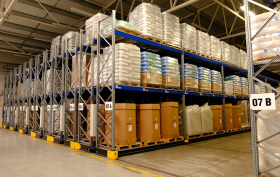
VACULA s.r.o.: Stable supplies of plastic granulates even in uncertain times
In the current complex global market environment, influenced among other factors by geopolitical tensions, many companies are facing uncertainty in supply... -
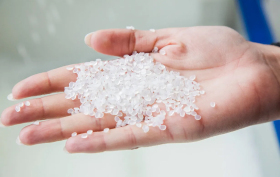
LIFOCOLOR explains how to choose the right masterbatch granule size
Are you dealing with colour inconsistencies, material segregation in the hopper, or inaccurate dosing? One possible reason may be an unsuitable granule size....

Most read in the last 7 days
-
Polymer prices - october price increases partly successful, with minor corrections expected in the week ahead
-
Plastica-expo 26
-
Polymer prices – the increase in olefin monomer contract prices in October was in line with expectations
-
Polymer prices - monomer-linked price increases based on early September levels
-
Internationale Zuliefererbörse (IZB) 2026







Most read in the last 7 days
-
Polymer prices - october price increases partly successful, with minor corrections expected in the week ahead
-
Plastica-expo 26
-
Polymer prices – the increase in olefin monomer contract prices in October was in line with expectations
-
Polymer prices - monomer-linked price increases based on early September levels
-
Internationale Zuliefererbörse (IZB) 2026