




Metal like plastic? BOLE explains how thixomolding is changing the rules of the game

Interview with Robert Duracinsky, Automotive Director Europe, BOLE Europe Technology:
What exactly is thixomolding technology and why is it attracting so much attention today?
Thixomolding is an advanced method for processing magnesium alloys in a semi-solid state. It can be described as a hybrid technology combining elements of die casting and plastic injection molding. The material is not fully liquid-it exhibits thixotropic behavior, meaning that under shear stress it flows like a liquid.
This results in greater process stability and repeatability, while enabling significantly improved control over the material’s microstructure compared to conventional casting technologies. As a result, thixomolding is gaining importance in industries where high performance, precision, and weight reduction are critical.
What does the technological process look like in practice?
The process begins with feeding magnesium alloy granules (typically up to approx. 1-1.2 mm in size) into the plasticizing unit barrel. The material is then heated to a semi-solid state and injected into the mold at very high speed (typically exceeding 2000 mm/s).
A key advantage of the process is the significantly reduced risk of oxidation and ignition compared to conventional molten metal processing, as the material is never fully liquid. This eliminates the need for protective gases such as sulfur hexafluoride (SF₆) or other sulfur-based flame retardants, making the process more environmentally friendly and compliant with upcoming European regulations.
In addition, the technology does not require a separate melting furnace, and key parameters – such as the solid fraction - can be precisely controlled.
What material properties distinguish components produced using this technology?
The key factor is the resulting microstructure. Unlike conventional dendritic structures, thixomolding produces a fine-grained, globular, and more homogeneous microstructure.
This translates into improved mechanical properties, including higher strength, better ductility, and enhanced fatigue resistance. At the same time, porosity and other internal defects are significantly reduced.
Furthermore, by adjusting the alloy’s chemical composition, it is possible to tailor material properties to specific application requirements, providing a high degree of design flexibility.
Where are thixomolded products used in practice?
The greatest potential lies in industries where low weight and high mechanical performance are essential, such as automotive, electronics, and aerospace.
| Drone body |
Thixomolding enables the production of thin-walled, high-precision components with near-net-shape geometry, significantly reducing the need for secondary machining operations. Additionally, good thermal conductivity makes these components particularly suitable for electronic housings and thermal management applications.
What role does BOLE play in the development of this technology?
BOLE is not the originator of thixomolding technology; however, it plays an important role in its industrial implementation. The company provides advanced machine platforms used both in R&D environments and in mass production.
These solutions enable the transition from laboratory-scale experiments to stable and repeatable manufacturing processes. The scale-up phase is typically the most complex and cost-intensive, making precise and reliable equipment essential.
What are the biggest challenges associated with implementing thixomolding?
The main challenges are investment costs and process complexity. The technology requires precise control of key parameters such as temperature, shear rate, and material residence time in the plasticizing unit.
In addition, not all magnesium alloys are suitable for semi-solid processing, which limits the available material range.
However, companies that successfully implement this technology can achieve a significant competitive advantage-both in terms of product quality and production efficiency – particularly in applications where lightweight design and high performance are critical.
Will a thixomolding machine be presented during the Plastpol trade fair?
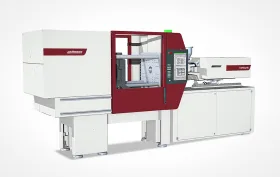
Yes, during Plastpol we will present our thixomolding machine-and this will be its official premiere at a European industrial trade fair. It will be the first opportunity to see a fully operational system of this kind showcased in Europe.
For us, this is not just a technology display, but a demonstration of real production capabilities-from process stability and precise parameter control to the quality of the final parts. We want to show that thixomolding is no longer just a laboratory concept, but a mature technology ready for industrial implementation.
We invite visitors to experience the machine firsthand, speak with our experts, and explore specific application cases-this is a unique opportunity to see the future of lightweight, high-performance components in practice.
But is that everything you will present at Plastpol?
We would also like to draw visitors’ attention to another highly innovative technology that will be showcased at our booth. CIML (Continuous Fiber Injection Molding) is a modern solution enabling the production of lighter and stronger plastic components without increasing material costs.
In the CIML process, continuous fiber is fed directly into a twin-screw extruder and combined with the polymer just before injection. This minimizes material degradation and fiber breakage, allowing for a greater effective fiber length in the final part.
Fiber length is a critical factor for mechanical performance. At lengths of 6 – 10 mm, impact resistance, strength, and fatigue performance increase significantly. CIML enables achieving approximately 8 mm, translating into tangible benefits such as weight reduction, thinner wall sections, and partial metal replacement.
An important element of the process is the use of a plunger injection unit, which further limits fiber damage and improves repeatability of properties.
CIML also offers high material flexibility-it allows selection of fiber type, fiber content, and polymer matrix depending on application requirements, which is a strong advantage in OEM projects.
Additionally, the technology reduces costs by eliminating compounding, pelletizing, and logistics associated with ready-made LFT granulates.
At the same time, successful implementation of CIML requires precise control of key process parameters, such as stable fiber dosing, proper extruder configuration, temperature control, and optimized mold design.
The greatest benefits of CIML are realized in medium- to high-volume production, particularly in structural applications where high strength and weight reduction are essential.
We warmly invite you to visit the BOLE booth.
-

BOLE Europe Technology Co.LTD.sp.zo.o.
Bole injection molding machines: hydraulic, fully electric, double plate, two-component injection molding machines (2K).



Branson to showcase welding technologies at MSV 2026
10.9.2026 At MSV Brno 2026 (Hall G1, Stand 55), Branson will showcase advanced welding and joining technologies that enhance manufacturing flexibility, quality, and connectivity.