


Ing. Lubomír Zeman: Melt flow index and its use in thermoplastic injection moulding technology - theory and practice part 2
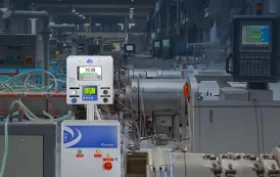
Capillary Rheometry – Flow Curves
The purpose of rheometry is to experimentally determine the functional relationship between shear stress and the velocity gradient for a given fluid sample, i.e. the dependence of apparent viscosity on shear stress or the velocity gradient.
Flow-through capillary viscometers with an adjustable pressure drop are most commonly used to measure the flow curves of non-Newtonian fluids. The directly measurable quantities are the volumetric flow rate V and the pressure drop Δp measured across a capillary with radius R and length l.
The direct result of measurement on a capillary rheometer is a set of pressure drop values and their corresponding volumetric flow rates. Initial processing involves calculating the variables – shear stress and velocity gradient D (and, where applicable, apparent viscosity) – and plotting the flow curve (rheogram). To characterise the flow of non-Newtonian fluids, it is therefore necessary to know the relationship η = η.(D) over a wider range of velocity gradients D.
A viscosity curve (flow curve, rheogram) is a graphical representation of the dependence of dynamic viscosity on the velocity gradient, or shear rate (Shear Rate) – Fig. No. 7.
 |
|
| Fig. No. 7 : Viscosity curves – flow curves – rheogram : dependence of viscosity on shear rate ( Shear Rate ) at various temperatures, determined under shear rate conditions typical of thermoplastic injection moulding, here up to 10 000 s-1 |
Figure No. 7 shows the shear rate range up to 10 E4 s-1; the usual shear rate ranges for selected processing technologies are: compression moulding – 10 E0 to 10 E1 s-1, extrusion – 10 E1 to 10 E3 s-1, injection moulding – 10 E2 to 10 E5 (10 E6) s-1.
Principles that can be applied to thermoplastic injection moulding and that follow from rheograms:
- from a physical perspective, a material's internal resistance to flow is its viscosity, which, in polymeric materials, depends on both temperature and the shear rate value; this is an exponential relationship
- as the processing temperature of a given polymeric material increases, its viscosity as a function of shear rate decreases
- in general – the higher the viscosity of a polymer melt, the lower its fluidity, i.e. its ability to fill local features of the mould cavity without difficulty, and conversely, a lower polymer melt viscosity allows a lower processing temperature, or a lower injection pressure and a lower injection speed, to be used for injection moulding of the material in question; the higher the temperature, the lower the viscosity, and the higher the shear rate, the lower the viscosity – the material flows more easily
- these principles are illustrated in Figure No. 8
 |
|
| Fig. No. 8: Flow curves for PA66 Utramid at temperatures within the processing range recommended by the manufacturer |
From the above, and particularly from the flow curve plot, it is clear that the flow curves of injection-moulded materials are not the most suitable basis for quick practical use in thermoplastic injection moulding. The curves are important input parameters for simulation calculations, for example, but they are not suitable as a quick reference when deciding on the selection of a material for a given application, when considering processing parameter settings, and so on. Measuring them is relatively costly, and they also require the necessary knowledge, which, I am sorry to say, is usually lacking in injection moulding shops.
Melt Flow Index
For this reason, it has become established practice in the injection moulding sector not to provide flow curves as rheological data, but to characterise a given granulate using a single value called the Melt Flow Index – MFI, which is also usually listed in material databases, material data sheets or certificates for the thermoplastics concerned. Particularly for highly hygroscopic polyamides, the viscosity number is sometimes used instead of MFI.
With regard to the documentation mentioned above, it is important to bear in mind that polymer properties are never absolute values, particularly because of the different lengths of the macromolecular chains in the polymer structure, whose frequency as a function of length is expressed by a distribution curve. A certificate confirmed by the supplier serves as a kind of warranty certificate for the polymer processor, whereas a database entry or a value in a material data sheet is for information only and is not a binding document for any potential claim – a so-called typical value is given.
As I have already mentioned, viscosity is related to the characteristic generally used to describe polymer melts – the melt flow index (ITT, MFI - Melt Flow Index) – ČSN EN ISO 1133-1:2012 Plastics – Determination of the melt mass-flow rate (MFR) and melt volume-flow rate (MVR) of thermoplastics -Part 1: Standard method (MFR – Melt Mass Flow Rate; MVR – Melt Volume Flow Rate); Part 2: Method for materials sensitive to time-temperature history and/or moisture.
 |
|
Part 1 of the standard specifies two methods for determining both types of melt flow rate – MFR (mass), MVR (volume). Method A measures the mass of the extruded melt, and method B measures the piston displacement of the test extrusion capillary plastometer. The test conditions, i.e. the melt temperature and the load applied to it, which must always be stated with the melt flow index value, are usually specified in the standard for the material concerned; commonly used test conditions are listed in Annex A of the standard. If the test conditions are not available, they must be contractually agreed between the parties concerned.
Part 2 of standard 1133 specifies the procedure for determining both types of melt flow rate for thermoplastics that exhibit high rheological sensitivity to the time-temperature history experienced by the sample during the test or are sensitive to moisture. The fundamental difference from Part 1 is that Part 2 specifies tighter tolerances for the barrel temperature during MFI measurement and for the time during which the material is exposed to the test temperature. The time-temperature history is controlled more precisely, thereby reducing the variation in results that would be obtained under the conditions specified in Part 1. More precise MFI determination also contributes to the information available for processing moisture-sensitive materials.
Material documentation for injection moulding materials may also contain MVR or MFR values measured in accordance with ASTM D 1238 (American Society for Testing and Materials International - American Society for Testing and Materials).
The melt volume-flow rate (MVR) is generally suitable for comparing materials with different filler contents and for comparing filled and unfilled thermoplastics.
The melt mass-flow rate (MFR) can be determined from the MVR, or vice versa, provided that the melt density at the temperature and pressure used in the test is known.
 |
|
| Figure No. 9: Comparison of the variation in melt mass-flow rate – curve 1 – and melt volume-flow rate – curve 2 – with filler content in a polymer-matrix composite |
Dilute Solution Viscosity Number
The standard ČSN EN ISO 307:2007 Plastics – Polyamides - Determination of viscosity number defines a method for determining the viscosity number of dilute solutions of polyamides in specified solvents. The PA samples being evaluated must be completely soluble in the specified solvents. For some types of PA containing additives such as flame retardants and various modifiers, the additives affect the measurement of the viscosity number, which is a measure of the molecular weight of the polymer, although it does not correspond to it exactly.
The viscosity number is used for materials such as PA or PC, which are susceptible to hydrolytic degradation, or for materials whose properties are improved by crosslinking.
Hydrolytic degradation - for polyamides and polyesters ( especially PET ), which are hygroscopic materials, we must take into account degradation caused by water in all its states (atmospheric moisture, rain, snow, etc.), i.e. hydrolytic degradation. Hydrolysis of amide groups leads to chain scission and increased formation of reactive sites. To suppress hydrolytic degradation of the pellets, they must be dried before processing.
Crosslinking – termination reactions (termination = the end of a reaction, the disappearance of active sites in chain and catalysed reactions) cause polymer chains to crosslink, resulting in an increase in molar mass that ultimately leads to the formation of an insoluble polymer. Crosslinking is a process in which polymer chains undergo a reaction that forms bonds (called crosslinks) between different chains (or possibly between two different points on the same chain) at the level of reactive functional groups. These bonds can be covalent or ionic, and are therefore strong. As bonds form, the chemical and physical properties of the polymer change depending on the relative number of these bonds.
In connection with the measurement of the dilute solution viscosity number, the standard ČSN EN ISO 1628:2009 Plastics – Determination of the viscosity of polymers in dilute solution using capillary viscometers must also be mentioned.
The method is applicable to production control and to comparisons of individual materials across products. Variations in viscosity number may be caused either by the PA itself or by the effects of additives, or by both. Molecular weight has a significant effect on the properties of macromolecular substances – polymers. Short molecular chains with low molecular weight, present in greater quantities in a polymer, impair its mechanical and physical properties and reduce its melt viscosity. Conversely, increasing the size of the macromolecules has a favourable effect on mechanical properties, but at high values the polymer becomes difficult to process because it is highly viscous and has low flowability.
End of Part Two. To be continued on 13. 12. 2024
You can find Part One here.
Illustrative photo: AI
-

Jiří Češka, Nástrojárna Příbram
Production of injection molds, cutting and stamping tools, CNC machining, electric discharge machining, laser welding.

Suppliers on this topic
-

Plasted spol.s r.o.
Plastic processing, production of plastic products, production of plastic windows, plastic window profiles, plastic… -

KOH-I-NOOR MACHINERY a.s.
Development and production of tools, injection molds, blow molds, plastic injection, blow molding machines for… -

Mateja Plasty, s.r.o.
Processing of thermoplastics and thermosetting plastics using injection molding, extrusion and blow molding. -

Elektroplast výrobné družstvo Prešov
Production of plastic products, injection, vacuuming of plastics, plastic technical moldings, household goods. -

Extruindustrie CR s.r.o.
Extrusion of plastics, production of plastic profiles, plastic profiles, boards, rods and others, plastic and rubber… -

JASPLASTIK-SK spol. s r.o.
Plastic components for the automotive, electronic and industrial markets, plastic molding, assembly, painting, PVD…


ALLROUNDER e TREND: ARBURG Sets a new standard in electric injection moulding machines
21.9.2026 Rising energy costs, pressure to improve production efficiency and a shortage of skilled workers are changing how plastics processors assess new investments. ARBURG is responding to these trends with the launch of its new ALLROUNDER e TREND series...



Most read in the last 7 days
-
Polymer prices - october price increases partly successful, with minor corrections expected in the week ahead
-
Polymer prices - Year-End Polymer Price Scenarios
-
Long-lasting solution: Radiation-crosslinked PE-Xc pipes for drinking water supply
-
Polymer prices – the increase in olefin monomer contract prices in October was in line with expectations
-
Plastica-expo 26





Most read in the last 7 days
-
Polymer prices - october price increases partly successful, with minor corrections expected in the week ahead
-
Polymer prices - Year-End Polymer Price Scenarios
-
Long-lasting solution: Radiation-crosslinked PE-Xc pipes for drinking water supply
-
Polymer prices – the increase in olefin monomer contract prices in October was in line with expectations
-
Plastica-expo 26