



NPolymer prices – arrowing polyolefin availability and selectively rising prices in the southern half of Central Europe
However, many people postponed purchases, waiting for a clearer picture of the situation. Polystyrene manufacturers, with a few exceptions, followed the decline in styrene monomer prices. In the case of PVC, the downward price trend is also general, however, in the case of PET, the market is heading towards a trend reversal, and prices are expected to start rising again as the season approaches.
In Slovakia and the Central European countries to the south, the shrinking supply of polyethylene and polypropylene is clearly noticeable. Those converters who must use a familiar type are now trying to secure their production, even by paying higher prices and even significant markups. There is no availability of certain HDPE and PP grades, but converters in this region also feel that LDPE supply is tight. Since Thursday afternoon of last week, increasing demand has appeared on the market. In this region, it is no longer just a feeling of shortage, but an actual shortage, the clear reason for which is now the decrease in MOL's production. But it is important to mention that the limited availability did not start now, but as early as in the summer, when Orlen-Unipetrol's production also declined following the major power outage in the Czech Republic. The market has not caught up in terms of sales since then. However, falling converter demand due to falling prices masked the problem. Now that there has been a slight turnaround in demand, the limited availability and shortage of Central European grades is clearly noticeable.
There is no short-term solution for now, but in the case of MOL, it seems likely that the Százhalombatta refinery will operate at 50-55% capacity for months. As a result, one of the three MOL crackers will have to be shut down. Either one of the Tiszaújváros or the one in Bratislava, if the restart takes too long, they may be stopped in turn. If the Tiszaújváros plant shuts down, it will affect HDPE production, further narrowing the supply. If the Bratislava plant shuts down, the LDPE supply will narrow.
In addition, the largest European polyethylene producer in Wesseling has begun a 40-day maintenance period, shutting down one of its crackers, which will also involve the suspension of LDPE production and the reduction of the polypropylene production capacity. Although this will have little impact on Central Europe, the real decline in Serbian and Bulgarian polymer production will. The grades of Serbian polyethylene manufacturers can only be obtained through an intermediary company, which is a bit complicated, but not impossible. However, according to press reports, the Serbian refinery only has 2 weeks of crude oil in stock. Thus, if the refinery shuts down, HIP-Petrohemija must also suspend its production. It seems that the sale of Lukoil's foreign assets has failed, but the Bulgarian state is intervening and placing the Burgas refinery under asset management, following the German model (Scwedt - Rosneft refinery), thus probably exempting it from sanctions. However, a significant part of polypropylene exports is in the hands of Lukoil trading offices, so this could cause supply problems in the Balkans.
The shrinking supply was already visible this week, both for polyethylene and polypropylene. Surprisingly, the supply of PP homopolymer, even Raffia grades, has shrunk considerably in the countries of the South Central European region. This is contributed to by the fact that one of the largest European PP manufacturers has stopped importing these grades from its factories in the Middle East.
South Central European converters will likely try to buy from Czech, Polish and Baltic sources, which could mean stronger demand in the northern region in the coming weeks. Although the availability of MOL materials is extremely limited there as well. The Czech manufacturer has already seen an increase in demand for HDPE and PP, but availability is also limited due to the shutdowns in August-September.
The real question is, how much of a priority will stockpiling safety stocks be for converters in Central Europe? What will converters prefer? Ensuring production at the beginning of the year on the feedstock side or low year-end polymer inventory, which means better financial results?
In any case, it can be seen that the polyolefin price gap is widening in the region. The gap between the lowest and highest prices is growing significantly and is likely to continue to grow.
-

myCEPPI
myCEPPI provides a weekly price report for commodity plastics.


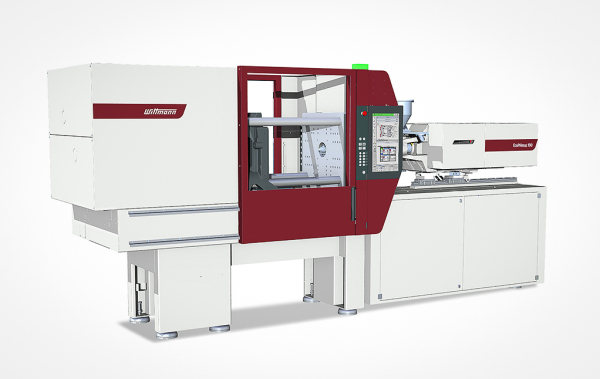
WITTMANN Group at Fakuma 2026: High performance with maximum cost efficiency
28.8.2026 Primus stands for a clear focus on what matters most to achieve maximum material, energy and cost efficiency – without compromising on performance, quality or spare parts availability. At Fakuma 2026, taking place from 12 to 16 October in...