

Environmental aspects of modern vacuum pumps: VAKUUM BOHEMIA explains how to reduce oil mist emissions and waste heat
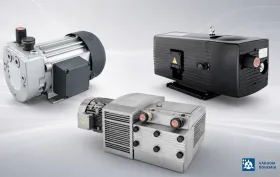
Modern vacuum technologies can significantly reduce the environmental impact of operations. They help limit oil emissions, reduce energy consumption, make more efficient use of waste heat and extend equipment service life. A properly designed vacuum system is therefore not just a technical solution, but also an important step towards more sustainable production.
Why Environmental Issues Matter for Vacuum Pumps
Vacuum pumps often operate continuously or in multi-shift operations. This means that even small differences in energy consumption, maintenance or operating losses can translate into significant costs over the long term. From an environmental perspective, three areas are most commonly addressed: oil emissions, electricity consumption and waste heat generation.
Oil-lubricated vacuum pumps may release oil vapours if the system is not properly designed, filtered or serviced. Regular oil changes, oil disposal and inspection of filter elements must also be taken into account. In addition, every vacuum pump generates heat during operation, which in many facilities is discharged into the surroundings without further use. This is precisely where opportunities for savings and environmental improvements arise.
Reducing Oil Emissions Through Proper Filtration and Servicing
Oil-lubricated vacuum pumps are a reliable and widely used technology, but their environmentally responsible operation depends on proper maintenance. High-quality oil, regular filter replacement and checks for system leaks significantly reduce the risk of oil vapours escaping into the working environment. Oil mist separators also play an important role, capturing fine oil particles and helping to keep the air in the facility cleaner.
Another underestimated factor is selecting the right oil for the specific application. One type of oil may be suitable for standard industrial operations, while another may be suitable for higher temperatures or processes with heavier loads. If the oil has deteriorated, vacuum pump wear increases, efficiency decreases and the risk of operational problems rises. Regular servicing is therefore not just a matter of reliability, but also of environmental responsibility.
Companies seeking to reduce oil emissions should monitor not only the vacuum pump itself, but the entire vacuum system. Leaks, incorrectly sized piping or clogged filters can lead to higher energy consumption and greater strain on the equipment. A well-maintained system operates more cleanly and efficiently, with lower operating costs.
Dry Vacuum Pumps as a Route to Cleaner Operations
One of the most significant trends in modern industry is the shift to dry vacuum pumps. These operate without oil in the pumping chamber, so the pumped medium does not come into contact with lubricant. This reduces the risk of product contamination as well as oil vapour emissions. Dry vacuum technology is therefore particularly suitable for operations where cleanliness, safety and a lower environmental impact are important.
| Dry vacuum pumps |
Dry vacuum pumps are used in the pharmaceutical industry, chemical production, food processing, vacuum distillation, drying and solvent recovery. In these applications, oil-free operation can be a key advantage. It eliminates the need for frequent oil changes in the pumping chamber and reduces the amount of operating fluids that need to be stored, checked and disposed of in an environmentally responsible manner.
The higher purchase cost of a dry vacuum pump can be recouped through lower servicing costs, cleaner operations and a reduced risk of downtime. In operations where long-term stability and hygienic or chemical safety are important, a dry vacuum solution is therefore often a very efficient choice.
Waste Heat: A Problem or a Source of Energy?
Every vacuum pump generates heat during operation. In many companies, this heat is regarded merely as an unwanted by-product that needs to be removed from the production hall. However, this means losing energy that could, in some cases, be reused.
A modern approach to vacuum systems takes heat recovery into account. Waste heat from vacuum pumps can be used, for example, to preheat water, heat utility areas or support other processes that require heat. Such a solution is not always suitable for every facility, but in larger installations it can deliver worthwhile savings.
Correct positioning of vacuum pumps is also important. If they are installed in an inadequately ventilated room, this leads to overheating, greater strain on the equipment and deterioration of the working environment. Conversely, well-designed cooling and heat removal extend the vacuum pump's service life and improve the operational stability of the entire system.
Energy Efficiency as the Basis for Environmentally Responsible Operations
Environmental and economic considerations often go hand in hand when it comes to vacuum pumps. A vacuum pump that consumes less energy reduces not only costs, but also the operation's carbon footprint. For this reason, systems with variable-frequency control, which adapt output to current production requirements, are being used increasingly often.
In practice, this means that the vacuum pump does not have to run at full capacity all the time. If the operation requires a lower output at a given moment, the system adjusts it automatically. This reduces electricity consumption, equipment wear and the amount of heat generated. These savings can be particularly significant in operations with variable loads.
Another option is a central vacuum system. Instead of several separate vacuum pumps distributed throughout the facility, a single efficient central solution can be designed to serve multiple production points. Such a system is easier to control and service, and often achieves lower overall energy consumption.
How to Reduce the Environmental Impact of a Vacuum System
Companies seeking to reduce oil emissions and waste heat should begin by analysing their current operations. This often reveals that vacuum pumps run for unnecessarily long periods, are incorrectly sized or operate under unsuitable conditions. Modernisation does not always mean immediately replacing the entire system. Sometimes it is enough to add filter elements, adjust the controls, eliminate leaks or optimise servicing intervals.
Important steps include:
- Regular inspection of oil, filters and oil mist separators.
- Eliminating leaks in the vacuum system.
- Correctly sizing the vacuum pump according to the actual requirements of the operation.
- Using variable-frequency control to reduce energy consumption.
- Considering dry vacuum technology for sensitive or demanding applications.
- Efficient removal or utilisation of waste heat.
- Regular professional servicing and measurement of operating parameters.
Each of these steps can deliver savings. In combination, they can significantly improve the environmental and economic performance of the entire operation.
Environmentally responsible operation of vacuum pumps does not begin with the equipment itself. It starts with proper system design. The type of application, operating load, required vacuum level, nature of the pumped medium, thermal conditions and access for servicing all need to be taken into account. Only then can a solution be designed that is reliable, economical and more environmentally friendly.
VAKUUM BOHEMIA offers the supply, servicing and repair of vacuum pumps, blowers, oil-free compressors and industrial fans. It also provides the design and implementation of customised vacuum systems. It will help you select the right technology, reduce oil emissions, optimise energy consumption and make better use of waste heat.
A modern vacuum pump is no longer merely a source of vacuum. It is part of a broader system that affects production efficiency, the quality of the working environment and the company's environmental footprint. If properly designed and serviced, it can become an important tool for more sustainable industrial operations.
-

VAKUUM BOHEMIA s.r.o.
Industrial pumps, industrial blowers, oil-free compressors and industrial fans, rental of pumps and blowers, spare parts for vacuum technologies. -

VAKUUM BOHEMIA SK s.r.o.
Sales and service of pumps and vacuum systems, oil rotary pumps, beak pumps for the transport of granules, systems for processing granules.


Suppliers on this topic
-

Flumasys s.r.o.
Authorized distributor of Nordson, manufacturer of dosing systems, technologies for regeneration of industrial… -

IN-ECO, spol. s r.o.
Supply of blowers, vacuum pumps, flow meters and aeration elements, as well as technology components for wastewater… -

COMPUPLAST s.r.o.
Extrusion lines including tools, extruders, extrusion lines for plastics, cooling gauges, cooling baths, extrusion… -

TECHLER INDUSTRY spol. s r.o.
Supplier of products for industry, manufacturing and service, such as oil separators (skimmers), lubrication… -

Lubexpert Slovakia s.r.o.
Authorized importer and distributor of ExxonMobil products in Slovakia, greases, hydraulic and synthetic oils… -

Klüber Lubrication Slovensko s.r.o.
Production and development of advanced, high-performance and efficient customised lubricants, expert tribological…


Round Table at Fakuma 2026: Strong Impetus for Sustainability
15.10.2026 Common sense, insight, creativity, innovation and even more involvement – this was the formula for a successful economic future recommended by the team of experts who took part in the “Fakuma Round Table” discussion on the afternoon of the...


Most read in the last 7 days
-
Polymer prices – the increase in olefin monomer contract prices in October was in line with expectations
-
Polymer prices - monomer-linked price increases based on early September levels
-
Fakuma 2026
-
BASF expands the Ultradur® portfolio with new grades based on post-consumer recycled PET
-
We had the pleasure of meeting at one of the plastics industry events




Most read in the last 7 days
-
Polymer prices – the increase in olefin monomer contract prices in October was in line with expectations
-
Polymer prices - monomer-linked price increases based on early September levels
-
Fakuma 2026
-
BASF expands the Ultradur® portfolio with new grades based on post-consumer recycled PET
-
We had the pleasure of meeting at one of the plastics industry events