

BRIKLIS, spol. s r.o.: Efficient processing of plastic waste through briquetting
Briquetting Presses for Processing Plastic and Synthetic Materials
BRIKLIS spol. s r.o. is a long-established Czech company which, after almost 35 years on the global market, now ranks among the leading manufacturers of briquetting presses and related equipment. Today, using a briquetting press represents one of the highly advantageous and indispensable economic solutions for engineering operations where waste is generated.
| Briquetting press |
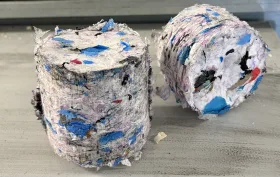
Briquetting presses are now used not only to process metal chips or wood waste, but also to process plastic and synthetic materials. Suitable materials that can be briquetted include, for example, polyurethane, polystyrene, textile fibres, artificial wood, dust from various production processes and other lightweight industrial waste.
How Is Waste from Plastic and Synthetic Materials Briquetted?
The principle of briquetting consists of compressing material under high pressure into compact briquettes. This significantly reduces the volume of the material, bringing a range of practical benefits. Briquettes are easier to store and handle, and logistics and waste removal costs are optimised. In some cases, the briquettes can also be used further, for example as a feedstock for energy recovery or further processing.
| Plastic waste |
Given the differing properties of plastic and synthetic materials, it is always important to assess their properties before designing the technology itself. Each material has a specific structure, bulk density and behaviour during pressing. A briquetting process trial is therefore always carried out to verify its suitability. The trial is conducted at the Briklis testing centre in Malšice. Based on the trial results, the most suitable technical solution is then proposed for the customer according to their operating conditions, from selecting the most suitable briquetting press to material handling. And because this is the technology manufacturer itself, which takes care of everything from drawings to subsequent press servicing, modifications can be made to suit the customer's specific needs.
Briquetting thus represents a practical technology that helps industrial operations address the issue of bulky waste, reduce storage costs and streamline logistics. At the same time, it contributes to meeting corporate ESG goals – reducing the carbon footprint, supporting recycling and efficient management of raw materials.
Stay connected with us: Instagram, LinkedIn, Facebook, YouTube
-

BRIKLIS, spol. s r.o.
Czech manufacturer of machines, briquetting presses, crushers, conveyors and waste processing lines.
Suppliers on this topic
-

Remarkplast compounding a.s.
Plastic compounds, plastic compounding, regranulate, plastic regranulation, construction plastics - production and… -

Import Export Hurt Spedycja J.J. Sp. z o.o.
Collection and purchase of waste plastics, plastic waste, purchase, sale, recycling of plastics in the form of… -

Kunststoff- und Farben-GmbH
Recycling, acrylic recycling, PMMA recycling, pulverizing equipment and extruders, polycarbonate regrind, PMMA… -

Piovan Czech Republic s.r.o.
Peripherals, suction and storage systems for granulate, drying systems, mold dryers, dispensers, mills and waste… -

PROFING Piešťany spol. s.r.o
Production and engineering of machines and machine technologies. -

ERI TRADE s.r.o.
New and used pre-crushers, crushers, mills, spare parts and accessories for plastic recycling, machine offer…


MOL Group Expands Its Green Energy Portfolio with Bi methane Production
29.10.2026 The MOL Group has officially opened its first biomethane production plant in Szarvas, in Békés County, southeastern Hungary. The facility, representing an investment of more than €7.4 million, can produce biomethane from biogas at a purity level...

Most read in the last 7 days
-
Polymer prices - october price increases partly successful, with minor corrections expected in the week ahead
-
Plastica-expo 26
-
Polymer prices – the increase in olefin monomer contract prices in October was in line with expectations
-
Report from Ruma, Serbia: How MAPRO opened the doors to Haitian’s European megafactory
-
Long-lasting solution: Radiation-crosslinked PE-Xc pipes for drinking water supply





Most read in the last 7 days
-
Polymer prices - october price increases partly successful, with minor corrections expected in the week ahead
-
Plastica-expo 26
-
Polymer prices – the increase in olefin monomer contract prices in October was in line with expectations
-
Report from Ruma, Serbia: How MAPRO opened the doors to Haitian’s European megafactory
-
Long-lasting solution: Radiation-crosslinked PE-Xc pipes for drinking water supply