

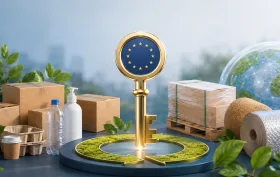
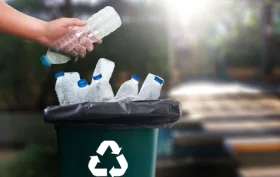
EU sets rules for calculating recycled plastic content in PET bottles
The rules are laid down in Commission Implementing Decision (EU) 2026/1425 of 30 June 2026. The Decision replaces the previous methodology under Decision (EU) 2023/2683 and establishes a common framework to be used in all Member States.
How Will the Recycled Plastic Content Be Calculated?
The recycled plastic content will be calculated as the ratio between:
- the total weight of recycled plastic in PET bottles placed on the market in a given Member State during a calendar year,
- the total weight of all plastic parts of these PET bottles placed on the market during the same period.
The result will be expressed as a percentage. The calculation will therefore not be carried out separately for each individual bottle, but on the basis of aggregate data for PET bottles placed on the market in a specific Member State.
The total weight of plastic will not include only the PET bottle body. Plastic caps, lids, labels and sleeves will also be taken into account. If these parts contain recycled plastic, its weight will also be included in the total quantity of recycled material. Non-plastic packaging components, such as paper labels, will not be included in the calculation.
Only Post-Consumer Plastic Waste Is Counted
For the purposes of meeting the specified targets, only material derived from post-consumer plastic waste will be considered recycled plastic.
Production waste generated during processing, testing, storage or other manufacturing operations before a product is placed on the market is not considered post-consumer waste. It therefore cannot automatically be included in the calculation as recycled content intended to meet the targets of the Single-Use Plastics Directive.
New Rules Also for Chemical Recycling
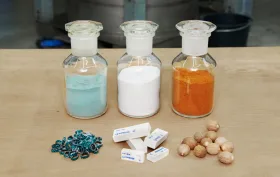
A significant change is the introduction of a methodology for accounting for material derived from chemical recycling. For processes in which polymers are broken down into smaller molecules and subsequently reused as feedstock for plastics production, it will be possible to use a mass balance system.
Mass balance makes it possible to track and allocate the quantity of post-consumer material to individual outputs of the production process, even where recycled feedstocks are processed together with virgin feedstocks.
However, material used to produce fuels and losses occurring during the process cannot be counted as recycled content. Operators will also not be able to freely transfer declared quantities of recycled material between production facilities. The data will have to be supported by documentation and, for selected processes, verification by an independent third party.
The European Commission emphasises that chemical recycling should complement mechanical recycling, particularly for plastic waste that cannot be mechanically processed to the required quality. According to the Commission, mechanical recycling remains the generally preferred option from an environmental perspective, provided it can ensure the required properties of the recyclate.
The Aim Is Transparency and Comparability of Data
The common methodology is intended to ensure that recycled plastic content is reported in a transparent, verifiable and comparable manner, regardless of the recycling technology used.
The Decision also sets out the conditions under which post-consumer plastic waste recycled in third countries may be counted from 21 November 2027. This will be conditional on compliance with requirements for environmentally sound waste management and comparable standards of health and environmental protection.
Under the Single-Use Plastics Directive, PET beverage bottles must contain an average of at least 25 % recycled plastic from 2025. From 2030, a target of at least 30 % recycled plastic will apply to all single-use plastic beverage bottles.
The Implementing Decision was published in the Official Journal of the European Union on 3 July 2026 and will enter into force on the twentieth day following its publication, namely 23 July 2026. The European Commission is to review the new methodology by 1 January 2030 at the latest.
Source: European Commission, Commission Implementing Decision (EU) 2026/1425
Suppliers on this topic
-

MEYER Europe s.r.o.
Optical sorters for the plastics recycling, optical sorters for the food industry, separation quality control, food… -

1.PLASTCOMPANY, spol. s r.o.
Horizontal and vertical injection molding machines, extruders and extrusion lines, extrusion tools, material conveyors… -

VH-FB EURO, s.r.o
Purchase of plastic waste, (LDPE) polyethylene film, sale - additives for plastics processors, fillers, color… -

TOMA RECYCLING a. s.
Recycling of plastic materials. Purchase of PET bottles, production of PET flakes and regranulate. -

Maloun s.r.o.
Collection and sorting of plastic waste, crushing, production of regranulates, compaund, testing and sale of primary… -

IRBIS GROUP, s.r.o.
Purchase and sale of plastics, tetrapak and paper, comprehensive services in trade with sorted waste, including…


BASF expands the Ultradur® portfolio with new grades based on post-consumer recycled PET
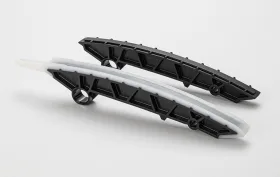
9.10.2026 BASF is expanding its portfolio of engineering plastics with new Ultradur® grades designed to help automotive manufacturers and suppliers increase the recycled content of their products while meeting demanding technical requirements. The new...
Most read in the last 7 days





Most read in the last 7 days