
History of the Czechoslovak plastics industry in interviews of witnesses (VI./VII.)
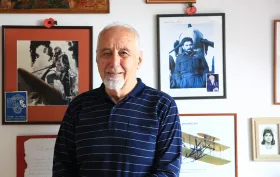
How did you get into plastics?
I studied mechanical engineering at both secondary school and university in Brno, specialising in forming technology. After graduating, I joined a company in Brno as a design engineer, and after some time I moved to the Research Institute of Power Electrical Engineering in Brno. My initial task was to design a production process for prototype moulds for plastics processing. The head of the laboratory was looking for a plastics specialist at the time, a job nobody wanted to do. So he approached me because I already had some experience and knew foreign languages. They sent me on various courses and seminars, and I also began postgraduate studies, so I got to know many people in the field. Among them were several specialists who, in 1968, had the opportunity to spend a few months at companies or universities in the West, for example at General Electric, BASF and so on.
Because there was a desperate shortage of information, a few friends and I decided to establish a separate plastics section under the auspices of the Scientific and Technical Society (VTS). This led to the creation of Uniplast, an association focused on organising conferences and seminars.
 |
|
| The GEP team in St. Moritz, 1977 |
At the same time, I came into contact with General Electric through the production programme for power sockets and plugs run by our institute. An amendment to the IEC standards at the time no longer permitted the use of phenolic resin, or Bakelite. It was replaced by polycarbonate, and the scale of this change meant establishing the largest polycarbonate processing operation in Eastern Europe. General Electric was the main supplier of the material, and I provided technical consultancy for them. However, every training course I attended in the West and every individual assignment for General Electric had to be approved by the institute's Communist Party committee.
At that time, no engineering plastics were produced behind the Iron Curtain, apart from polyamide 6 in Neratovice; everything was imported. The problem was outdated machinery in moulding shops and a lack of knowledge. The political system favoured heavy industry. Priority support went to military applications, and heavy industry mainly produced weapons. Consumer goods manufacturing would only come to the fore once socialism and communism had triumphed throughout the world – that was the idea of the time. Plastics were in the background. My experience at university in the Materials Science course illustrates this nicely. When I asked the lecturers, what about plastics? They told me they were tasteless and odourless, you prepared a polished section and could see nothing in it…
What was the situation with plastics here in Czechoslovakia in the 1970s?
We were starting from scratch. We needed some standards, so we developed an industry standard for plastics and introduced engineering thermoplastics into components. We studied their flammability, self-extinguishing properties and so on. We drew on information from Western Europe and America. I put panels with plastics samples on the roof of the research institute and went up to observe how UV radiation affected them. I had my own small injection moulding machine for material samples. I have fond memories of working with Marie Jindrová, Jarda Novák and Jirka Gabriel during that period.
 |
|
| Publications: Injection Moulding of Thermoplastics, Plastics and Rubber |
In the 1980s, the research institute was to build a toolroom for plastics tooling. Novák organised and managed it, and Gabriel began working on plastics injection moulding simulations using Mouldflow. At that time, plastic parts were still very simple, and the machines used plunger cylinders for injection instead of screws. The simulation software itself was very primitive by today's standards; injection simulations were carried out for parts consisting only of surfaces with a defined thickness. Moreover, simulation software was subject to a Western embargo, so we had to purchase the simulation program through South Africa. Sometimes, plastic part designers would design a complex part, describe the production process and set a price, only to find that it could not be manufactured or that it was not economically viable. Based on such experiences, I prepared a handbook for them describing simulation procedures.
What was working for General Electric like?
I worked for GE for 12 years. They had a generous marketing programme, even for their external staff. Every February we had a business meeting, always in some exotic location, for example in St. Maurice, at the Brenner Pass or in the Canary Islands. I went on regular business trips to the Netherlands. Thanks to this, we also began organising conferences and meetings together with Dům techniky České Budějovice, where it was possible to share information provided by Western companies.
Were visits abroad trouble-free?
Of course, problems arose over time. When I was abroad, I was under surveillance by the STB. If you met an emigrant abroad, you had to include it in your report. Unfortunately, they fabricated a false accusation against me and wanted me to collaborate with them. Although I never signed anything, I appeared on Cibulka's lists. I sued the Ministry of the Interior, and a trial was held at which STB officers were also called as witnesses. The court eventually ruled that I had been wrongfully listed. But the whole thing was extremely unpleasant.
How did mouldmaking here compare with the West?
Western companies were interested in cooperation. After 1989, they invited us to Portugal; they wanted to supply moulds to Czechia. They boasted about their high standards. My response was that we were also very good in Czechia. They did not believe it. The world tended to view us – a post-communist society – as a “developing” country. Eventually, they flew over to visit us, and when I took them to our toolrooms, they were surprised by the high level of workmanship we could actually offer.
You devoted almost your entire professional life to plastics.
After the revolution, I no longer worked as a researcher; I focused on consultancy, published and actively participated in conferences and seminars. And I travelled – Germany, France, Benelux, England; I even went to LA on business.
I worked with plastics until I retired, and for a long time afterwards I taught designers at Brno University of Technology. The overlap between disciplines was interesting: apart from plastics, there was metal forming in mechanical engineering, chemistry and electrical engineering. Chemists were not very good at calculations, while mechanical engineers made mistakes when using plastics, both in design and in material selection. With plastics, you needed everything together. Before I started, the global volume of plastics did not exceed that of metals. During my lifetime it grew, and by the turn of the 1980s and 1990s it was already 5x greater. And today we have the situation we have with plastics. But we can no longer do without plastics.
End of the sixth part of the interview.
The first part of the interview with Jaroslav Novák and Associate Professor Miloslav Maňas can be found here.
The second part of the interview with Jaroslav Novák and Associate Professor Miloslav Maňas can be found here.
The third part of the interview with Zdeněk Řehulka can be found here.
The fourth part of the interview about ARBURG can be found here.
The fifth part of the interview with Jiří Gabriel can be found here.
The final, seventh part of the interview with Lubomír Zeman can be found here.
Photo Gallery


-

ARBURG spol. s.r.o.
Injection molding machines, injection molding machines, two-component injection moulding, accessories for plastics, production automation, conveyors…

Suppliers on this topic
-

Plasted spol.s r.o.
Plastic processing, production of plastic products, production of plastic windows, plastic window profiles, plastic… -

KOH-I-NOOR MACHINERY a.s.
Development and production of tools, injection molds, blow molds, plastic injection, blow molding machines for… -

Mateja Plasty, s.r.o.
Processing of thermoplastics and thermosetting plastics using injection molding, extrusion and blow molding. -

Elektroplast výrobné družstvo Prešov
Production of plastic products, injection, vacuuming of plastics, plastic technical moldings, household goods. -

Extruindustrie CR s.r.o.
Extrusion of plastics, production of plastic profiles, plastic profiles, boards, rods and others, plastic and rubber… -

JASPLASTIK-SK spol. s r.o.
Plastic components for the automotive, electronic and industrial markets, plastic molding, assembly, painting, PVD…




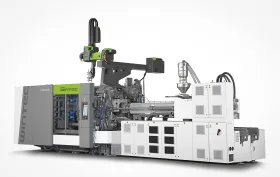
ALLROUNDER e TREND: ARBURG Sets a new standard in electric injection moulding machines
21.9.2026 Rising energy costs, pressure to improve production efficiency and a shortage of skilled workers are changing how plastics processors assess new investments. ARBURG is responding to these trends with the launch of its new ALLROUNDER e TREND series...
Most read in the last 7 days
-
Polymer prices - october price increases partly successful, with minor corrections expected in the week ahead
-
Polymer prices - Year-End Polymer Price Scenarios
-
Long-lasting solution: Radiation-crosslinked PE-Xc pipes for drinking water supply
-
Polymer prices – the increase in olefin monomer contract prices in October was in line with expectations
-
Plastica-expo 26






Most read in the last 7 days
-
Polymer prices - october price increases partly successful, with minor corrections expected in the week ahead
-
Polymer prices - Year-End Polymer Price Scenarios
-
Long-lasting solution: Radiation-crosslinked PE-Xc pipes for drinking water supply
-
Polymer prices – the increase in olefin monomer contract prices in October was in line with expectations
-
Plastica-expo 26