



K.D. Feddersen CEE GmbH: Engineering plastics with ISCC PLUS certification for sustainable applications
K.D. Feddersen CEE GmbH strengthens market focus on mass balance-certified materials in the Czech Republic and Slovakia
In cooperation with established material producers such as Celanese, Elix Polymers, BIO-FED and Trinseo, K.D. Feddersen CEE GmbH provides engineering plastics allocated via a certified mass balance approach. These materials enable customers to align sustainability objectives with established technical requirements across automotive, electrical and electronics, industrial and consumer applications.
“Customers in the Czech and Slovak markets are increasingly evaluating sustainability criteria alongside mechanical and thermal performance,” says Stefan Jando, Account Manager Slovakia at K.D. Feddersen CEE GmbH. “Our ISCC PLUS certified grades allow us to support this development with documented, traceable material solutions while maintaining proven processing and application performance.”
Mass balance certification with defined traceability
Under the ISCC PLUS certification scheme, renewable or chemically recycled raw materials are introduced into the upstream production system and documented according to defined sustainability and chain-of-custody criteria. The certification ensures that these feedstocks meet recognised environmental and social standards throughout the supply chain. For plastics, the ISCC PLUS sustainability claim specifically refers to the origin and type of raw materials from which the monomers are derived, enabling the manufacture of more sustainable polymers.
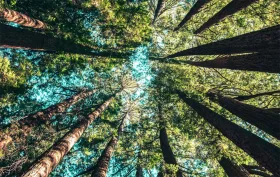
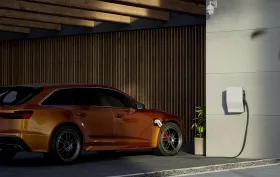
| source: ©supamotion/stock.adobe.com |
Within a mass balance framework, the allocated share of renewable or recycled raw material is taken into account at system level. The physical properties and technical specifications of the resulting grades remain unchanged compared to their conventional equivalents, allowing processing under established manufacturing conditions.
This approach is particularly relevant for complex engineering polymers where dedicated mechanical recycling streams are not yet widely available or where demanding technical requirements restrict the use of conventional recyclates.
Portfolio overview: ISCC PLUS certified grades
K.D. Feddersen CEE GmbH offers a defined portfolio of certified grades, including:
- Celanese (ECO-B)
- ELIX Polymers (E-LOOP)
- BIO-FED (M∙VERA®)
- TRINSEO (APIGO™ BIO)
These grades cover polymer families such as PBT, POM, ABS, PP compounds and bio-based PP blends, supporting a wide range of technical applications.
Supporting sustainability strategies in CEE markets
Manufacturers in the Czech Republic and Slovakia operate within highly integrated European supply chains, particularly in the automotive and E&E sectors. As sustainability reporting requirements and OEM expectations continue to evolve across the EU, traceable and certification-backed material solutions are becoming increasingly relevant.
By combining established certified grades with local technical expertise and application-oriented material selection, K.D. Feddersen CEE GmbH supports customers in aligning performance requirements with evolving environmental considerations.
Further information can be found at www.feddersen.group or www.kdfeddersen.com
-

K.D. Feddersen CEE GmbH
Engineering plastics, masterbatches, biodegradable biocompounds, thermoplastics, technical plastics - sales, bioplastics suppliers.



Genesis Polymers Europe and Velogy bring European PP and PE production closer to customers at Fakuma 2026
9.9.2026 The joint presence at Fakuma (Hall B2, Booth 2310) showcases a growing European polyolefin platform that combines Velogy’s production capabilities with Genesis Polymers Europe’s local distribution, expertise, and customer support.