


Plastic products for food contact: Practical requirements for testing and documentation by PRVÁ CERTIFIKAČNÁ s.r.o.

What Is Assessed for FCM
The basic principle is that neither the material nor the finished product, when in contact with food, should:
- release substances in quantities that could endanger health,
- alter the composition of the food,
- impair its sensory properties (taste, smell, appearance).
This entails a practical obligation to demonstrate compliance with framework and specific legislation, carry out migration tests and maintain proper documentation, particularly a declaration of compliance (DoC) and supporting documents.
Who Is Subject to FCM Requirements
Food contact materials are relevant not only to large packaging producers, but also to smaller plastics processors supplying components to the food supply chain. Responsibility therefore lies with the manufacturer or, where applicable, the importer. A properly established testing and documentation process is the basis for safely placing a product on the market and minimising commercial and legal risks.
A common mistake in practice is to rely solely on the resin supplier's declaration without assessing the specific finished product and its actual conditions of use. However, compliance assessment applies to the final product and its specific use.
The key parameters are primarily:
- type of food
- temperature,
- contact time,
- how the product is used.
In practice, this means that the same material may be acceptable in terms of migration in one application but non-compliant in another – simply because the contact conditions have changed.
For example, products made using additive manufacturing or unconventional technologies often give rise to the mistaken assumption that, since the input material is declared suitable, the product will also be acceptable. However, this does not hold true for FCM. The final product and its use must be assessed – including the effect of the technology on the surface, porosity, residual substances and post-processing.
A Practical Solution: How PRVÁ CERTIFIKAČNÁ s.r.o. Can Help You
PRVÁ CERTIFIKAČNÁ s.r.o. provides expert support in demonstrating the compliance of plastic products intended for food contact – from analysing legislative requirements, designing a test plan and coordinating testing in accredited laboratories (including migration tests), through to evaluating the results and preparing technical documentation and declarations of compliance. The aim is to enable manufacturers to substantiate their products' compliance on technical and legal grounds during inspections and when dealing with customers.
If you are interested in an expert consultation or an assessment of a specific product, you can contact PRVÁ CERTIFIKAČNÁ s.r.o.
-

PRVÁ CERTIFIKAČNÁ s.r.o.
Accredited certification body, product certification according to ISO / IEC 17065: 2012, testing of automotive plastic parts, testing of plastics.

Suppliers on this topic
-

INSTITUT PRO TESTOVÁNÍ A CERTIFIKACI, a. s. (ITC)
Evaluation of quality and safety of products, certification of plastic products, accredited testing laboratories… -

Strojírenský zkušební ústav, s.p. (SZÚ)
Comprehensive services in testing, inspection, certification, and training for manufacturing and supplier companies. -

SK PRODUKT CERT s.r.o.
Accredited certification body, certification of plastic products and plastics intended for contact with drinking… -

Testpolymer EU s.r.o.
Accredited testing laboratories no. 1595, testing of plastics, mechanical tests of plastics, laboratory tests and… -

Volkswagen Slovakia, a. s.
Materials laboratory of Volkswagen Slovakia with modern technological equipment, materials testing and trials… -

ISPE TECHNOLOGIES SE
High-quality series injection molds from China. More than 600 molds delivered. Exceptionally thorough and fast DFM and…


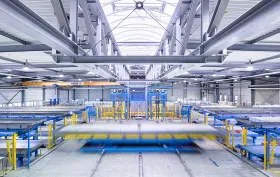
Modernisation of Industrial Machinery by Symtex Brno: How to Extend Equipment Life and Improve Production Efficiency
26.10.2026 In the plastics processing and recycling industries, production equipment is often expected to operate reliably for many years. However, as machinery ages, its performance, availability of spare parts and compatibility with modern control systems...


Most read in the last 7 days
-
Polymer prices - october price increases partly successful, with minor corrections expected in the week ahead
-
Polymer prices - Year-End Polymer Price Scenarios
-
Long-lasting solution: Radiation-crosslinked PE-Xc pipes for drinking water supply
-
Polymer prices – the increase in olefin monomer contract prices in October was in line with expectations
-
Plastica-expo 26






Most read in the last 7 days
-
Polymer prices - october price increases partly successful, with minor corrections expected in the week ahead
-
Polymer prices - Year-End Polymer Price Scenarios
-
Long-lasting solution: Radiation-crosslinked PE-Xc pipes for drinking water supply
-
Polymer prices – the increase in olefin monomer contract prices in October was in line with expectations
-
Plastica-expo 26