


Servicing of plastics processing machines by Symtex Brno: The most common failures and how to prevent them
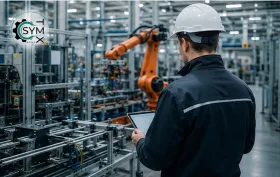
Servicing Plastics Processing Machinery as the Foundation of Stable Production
In the plastics industry, reliable operation of processing equipment is essential for production efficiency. Servicing plastics processing machinery and processing lines is therefore among the key factors affecting productivity, safety and operating economics.
The Most Common Industrial Machinery Faults in the Plastics Industry
When servicing industrial equipment, technicians most frequently encounter problems that can significantly affect the operation of the entire production line.
1. Extruder Screw and Barrel Wear
The extruder screw and barrel are among the most heavily stressed parts of any extrusion system. During long-term operation, abrasive wear caused by the material being processed gradually increases the clearance between the screw and barrel.
This typically results in:
- reduced extruder output and productivity,
- deterioration in the quality of the processed material,
- higher energy consumption in production,
- instability of the production process,
- increased mechanical stress on the entire processing unit.
In extreme cases, excessive wear can lead to serious damage or even screw breakage, resulting in a prolonged production shutdown.
Given that manufacturing and delivering a new screw or barrel can take several weeks to months, regular inspections of the processing unit are recommended at least once a year. Early diagnosis of wear allows component replacement to be scheduled during a planned shutdown and prevents unexpected production interruptions.
The most common causes of wear:
- processing abrasive materials,
- long-term operation without an overhaul,
- incorrectly set process parameters,
- use of unsuitable material blends,
- inadequate preventive inspection.
2. Electrical Control Cabinet Faults
Electrical control cabinets are the “heart” of every processing system. Overheated components, loose connections or worn circuit protection devices can cause an unexpected machine shutdown.
The most common causes:
- overloading of electrical circuits,
- inadequate cooling of control cabinets,
- ageing electrical components,
- dust accumulation in control cabinets,
- inadequate maintenance.
3. Damage to Cabling and Electrical Installations
In industrial environments, cable installations are exposed to vibrations, mechanical stress and high temperatures.
Risk factors:
- damage to cable insulation,
- loose connectors,
- mechanical wear,
- incorrect cable routing,
- moisture and contamination.
Even minor damage to cabling can lead to communication failures between devices or control system faults.
4. Control System Faults
Modern plastics processing systems are controlled by PLC systems, industrial computers and automation components.
The most common problems include:
- communication errors between devices,
- input and output module faults,
- problems with industrial networks,
- power supply failures,
- incorrect settings of processing system parameters.
Unresolved problems can lead to reduced production output or a complete line stoppage.
5. Overheating of Electrical Components
Excessive temperatures significantly shorten the service life of electronic components and can cause premature failure.
The most common causes:
- clogged ventilation filters,
- non-functioning fans,
- high ambient temperature,
- insufficient airflow,
- prolonged overloading of equipment.
Regular checks of temperature conditions and thermal imaging measurements can detect a problem before a fault occurs.
6. Wear of Safety Components
Safety systems protect not only the processing equipment, but above all its operators.
The following in particular must be checked:
- safety switches,
- emergency STOP buttons,
- light barriers,
- safety relays,
- safety door locks.
Regular inspections help ensure safe operation and compliance with legal requirements.
What Impact Can Faults Have on Production?
Even a seemingly minor fault can cause the entire production line to stop.
This can lead to:
- unplanned production shutdowns,
- increased repair costs,
- delays in fulfilling orders,
- reduced productivity,
- higher operating costs,
- customer dissatisfaction.
Every hour of downtime can mean significant financial losses.
Preventive Maintenance of Processing Lines
The most effective way to prevent faults is regular preventive servicing.
Preventive maintenance makes it possible to detect potential problems before they cause a production shutdown.
Equipment Diagnostics
- checking electrical parameters,
- measuring loads,
- thermal imaging inspection of components,
- checking the condition of motors and drives.
Electrical Installation Inspection
- tightening connections,
- checking cable routes,
- verifying correct operation of control cabinets,
- checking protective devices.
Safety System Inspection
- testing emergency circuits,
- checking safety components,
- verifying compliance with occupational health and safety requirements,
- functional testing of safety circuits.
Optimising Processing System Control
- checking PLC systems,
- updating parameters,
- optimising the production process,
- checking communication between devices.
Benefits of Regular Industrial Machinery Servicing
Companies that invest in regular maintenance of processing equipment gain a range of long-term benefits.
Key benefits:
- fewer faults and shutdowns
- higher production productivity
- longer equipment service life
- greater operational safety
- lower repair costs
- a more stable production process
- better production planning
- more reliable deliveries to customers
Servicing as an Investment, Not a Cost
In the modern plastics industry, servicing is no longer merely a response to a problem that has occurred. It is becoming an important part of the strategy for efficient operation of production equipment.
Regular maintenance, diagnostics and professional servicing make it possible to keep production lines in optimal condition, minimise the risk of shutdowns and ensure the long-term reliability of equipment.
For manufacturing companies, a high-quality service partner represents one of the most important elements of stable, efficient and competitive production.
-

Symtex Brno s.r.o.
Industrial automation, maintenance of machinery and equipment, plastic welding, automation and robotization of industrial production, construction…

Suppliers on this topic
-

EK-INDUSTRY, s.r.o.
Czech-Slovak company for machine safety, risk assessment, CE documentation, modernization, programming, and NIS2… -

TECHLER INDUSTRY spol. s r.o.
Supplier of products for industry, manufacturing and service, such as oil separators (skimmers), lubrication… -

Klüber Lubrication Slovensko s.r.o.
Production and development of advanced, high-performance and efficient customised lubricants, expert tribological… -

PM AUTOMATION CZ s.r.o.
Complete solutions for industrial automation, robotics and machine vision. We support you every step of the way, from… -

Safetykleen Czech, s.r.o.
Manual parts washers, high-pressure parts washers, automatic parts washers, specialist parts washers for removing… -

Excelitas Noblelight GmbH
Manufacture and sale of infrared and ultraviolet lamps, systems and solutions for manufacturing applications, UV lamps…




MSV 2026 Showcased the Latest Industrial Innovations and Confirmed the Importance of Face-to-Face Meetings for Business.
16.10.2026 Nine fully occupied halls at the Brno Exhibition Centre showcased the most exciting developments in today’s industry. Over four days, more than 55,000 visitors explored the exhibits of 1,379 exhibiting companies from 39 countries. Most were...




Most read in the last 7 days




Most read in the last 7 days