

Industrial design and 3D printing: How rapid prototyping is transforming product development
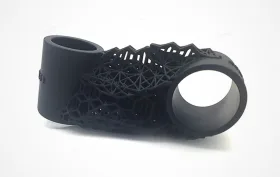
Speed That Changes the Rules of the Game
Rapid prototyping for product design is no longer just a buzzword, but a key part of modern development. It enables an idea to be validated quickly, a functional model to be created and tested in practice – before investing in costly tooling or production lines.
Instead of waiting for months, a prototype can be produced on site within a few hours. This approach significantly reduces costs, increases the number of iterations and accelerates the return on investment.
The Synergy of CAD Software and 3D Printing: From Data to Reality Without Compromise
Industrial design and 3D printing today form a synergistic partnership that fundamentally accelerates and streamlines new product development. CAD software (e.g. SolidWorks, Siemens NX, Fusion 360) enables exceptionally precise 3D modelling – including parametric designs, load simulations and topology optimisation.
While these models once remained in digital form until later stages of development, 3D printing now enables their almost immediate translation into physical form. This eliminates the need for external suppliers, CNC pre-production or mould making.
Case: Consumer Electronics and Functional Prototypes
In consumer electronics, 3D printing is already used extensively at the conceptual design stage. Functional prototypes are used for:
- Ergonomic testing – checking shape, grip and access to buttons and ports, especially on portable devices.
- Thermal analysis – testing cooling fins, passive vents and thermal conductivity.
- Assembly testing – checking snap-fit mechanisms, threads, part fit and assembly of components.
- Tolerance testing – simulating manufacturing precision without the need for CNC machining.
Engineering filaments such as PETG, ABS, PC or carbon-fibre-reinforced nylon are often used for these purposes, as they withstand loads and also enable functional testing.
Frictionless Transfer from CAD to Production: The Advantage of the 3MF Format
Unlike the older STL format, the modern 3MF (3D Manufacturing Format) preserves more comprehensive information – colours, part orientation, materials and print settings. This significantly reduces risk when transferring a model from CAD software to a slicer, saves time and increases prototyping accuracy.
Practical Example: Personalised Medical Devices
In healthcare, 3D printing is changing the way prosthetic and orthopaedic devices are designed and manufactured. Using patient scanning and CAD modelling, an individually tailored prototype can be created and tested before final production.
- Reducing production time from weeks to days.
- Reducing errors and increasing wearing comfort.
- Direct patient involvement in providing feedback on shape or appearance.
This approach reduces costs and improves the outcome – not only clinically, but also on a human level.
Challenges That Cannot Be Ignored
Although 3D printing and rapid prototyping offer many advantages, they are not without problems:
- Format standardisation has still not been fully resolved.
- Print accuracy depends on the settings and material – it does not always match final production quality.
- Demands on the team – successful implementation requires a combination of knowledge in design, engineering and additive manufacturing.
- Integration with the cloud and AI – intelligent automation of designs and printing workflows is increasingly expected.
Without a properly configured process, the technology can be more of an obstacle than an advantage.
What Does This Mean?
3D printing has long ceased to be merely a futuristic tool. Combined with industrial design, it is changing the way products are designed, tested and brought to market.
Key Benefits:
- A significantly shorter development cycle – from months to days.
- Reduced risk of failure – errors can be detected before production.
- Greater creative freedom – experimentation without financial risk.
- A better fit with user needs – the option of personalisation.
- Lower barriers to market entry – even small teams with limited budgets can now create a prototype.
For companies seeking to innovate, accelerate development and reduce the risk of product failure in the market, rapid prototyping using 3D printing is an essential tool. Those who do not use it risk falling behind the competition.
What Next?
Consider a small pilot project – create a simple prototype of an existing product and compare speed, costs and feedback.
Measure the difference – analyse how many design–test–change cycles you can complete in a month before and after introducing 3D prototyping.
Connect with experts – working with teams that understand both design and additive manufacturing can accelerate adoption and avoid dead ends.
-

3D Tlač - Stepanek3D
3D scanning, 3D printing, editing of 3D models, plastic atypes, custom production, small series production, production of plastic prototypes.

Suppliers on this topic
-

FilamentyBrno.cz
Custom 3D printing, filaments and 3D printer servicing. Prototypes, jigs and small series for companies in Brno. -

ADATEX, s.r.o.
3D printing, 3D printers, 3D scanners, 3D scanning and inspection, 3D digitization, 3D measurement, 3D model, 3D… -

OSMOS s.r.o.
ERP software, 3D design of plastic products, simulation of plastic injection, plastic press, plastic injection… -

LukMatic s.r.o.
LukMatic is a modern Czech company that has been providing professional services in the field of additive… -

SORTEC EUROPE, s. r. o.
Supply of robotic systems for large-format pellet 3D printing, custom 3D printing of parts up to 3 m, mould… -

MEDAEX - PLAST - international s.r.o.
CNC milling and turning of plastics and aluminium, production of high-precision and high-quality plastic products and…


Modernisation of Industrial Machinery by Symtex Brno: How to Extend Equipment Life and Improve Production Efficiency
26.10.2026 In the plastics processing and recycling industries, production equipment is often expected to operate reliably for many years. However, as machinery ages, its performance, availability of spare parts and compatibility with modern control systems...




Most read in the last 7 days
-
Polymer prices - october price increases partly successful, with minor corrections expected in the week ahead
-
Long-lasting solution: Radiation-crosslinked PE-Xc pipes for drinking water supply
-
Polymer prices – the increase in olefin monomer contract prices in October was in line with expectations
-
Polymer prices - Year-End Polymer Price Scenarios
-
Plastica-expo 26




Most read in the last 7 days
-
Polymer prices - october price increases partly successful, with minor corrections expected in the week ahead
-
Long-lasting solution: Radiation-crosslinked PE-Xc pipes for drinking water supply
-
Polymer prices – the increase in olefin monomer contract prices in October was in line with expectations
-
Polymer prices - Year-End Polymer Price Scenarios
-
Plastica-expo 26