




INOFEST 2026: A car manufacturer and a vineyard face the same challenges. Nitra made that clear
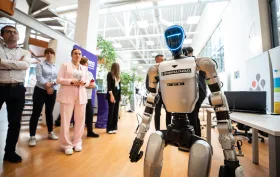
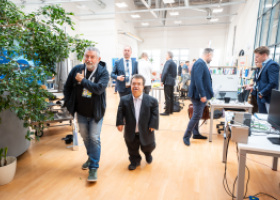
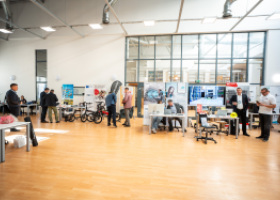
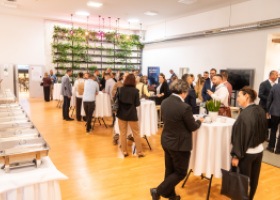
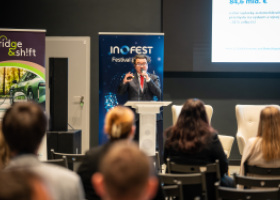
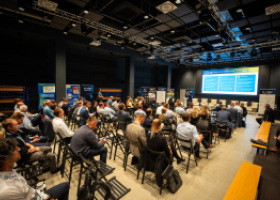
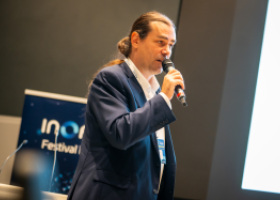
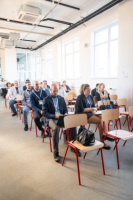
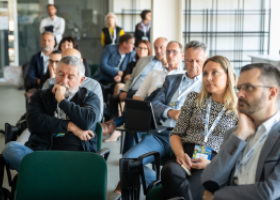
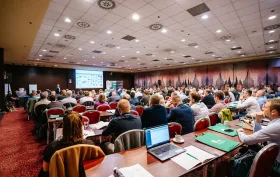
The seventh annual INOFEST innovation festival brought together more than 160 people from industry, agriculture, schools, and public administration. Throughout the entire day, one and the same question was repeated. The theme of this year's event was Automotive in motion, transformation as an opportunity. However, the program quickly spilled far beyond the boundaries of the automotive industry. In one room, electrification and supply chains were discussed, in another, autonomous robots in fields, and in the third, why young people are leaving the regions. Yet, from the whole day, it was clear that everyone was talking about the same thing.
Same technologies, same problem
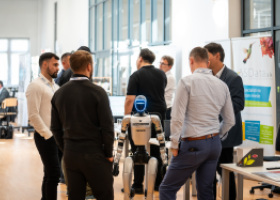
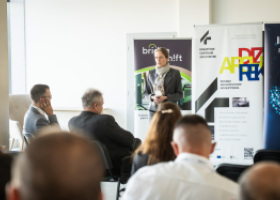
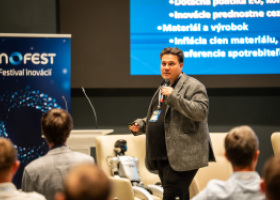
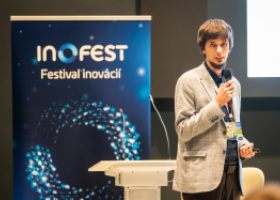
Vladimír Cviklovič from the Slovak University of Agriculture presented autonomous robotics that works with living material and must cope with the fact that two plants are never the same. František Duchoň from the Faculty of Electrical Engineering and Information Technology of the Slovak University of Technology showed machine learning that recognizes vine disease and applies spray only where needed. Lukáš Vacho spoke about mapping areas using LiDAR technology, i.e., about the same sensor on which autonomous vehicle driving is based.
|

Meanwhile, in the adjacent room, Libor Witassek from the company IMPACTIVE spoke about the shift from automotive manufacturing to the creation of energy ecosystems, and Eva Winter from Top Privacy spoke about the fact that cybersecurity today is not an IT topic, but an operational one.
The difference between a tractor and a car manufacturer has thus narrowed down to who has better data and who knows how to use it.
Modernization does not begin with technology
The morning program was based on the simple idea that modernization does not begin with technology, but with a decision. Kristián Berko from Kraftstrom Partners spoke about how not to become a hostage to one's own automation, i.e., how a company should not let its pace be dictated by the machines it has bought itself. Pavol Palko from TRIPAL followed this up with a story on how, through patient engineering, one can build a broad portfolio instead of taking one big leap. The block was concluded by an interview between the moderator and Patrik Hanák and Denis Barta from DALITRANS about what the same change looks like in transport and logistics, where digitalization of operations, cost pressure, and the transition to alternative fuels are changing simultaneously.
The second block moved down from the strategy level to the level of day-to-day operations. Matej Pavelka from Lexus Slovensko, together with Lukáš Richter, looked at the automotive world from behind, i.e., through the eyes of the customer, and spoke about how to improve customer service at dealerships, how to work with people at the store, and where exactly to look for areas for improvement. Rastislav Sopko and Ladislav Papánek from M2M Solutions, together with František Babej from CSI Leasing, then added the most practical question of the day, namely how to modernize without a company laying out a large sum at the beginning. The same conclusion emerged from both blocks. The obstacle is usually not money or technology, but the postponement of a decision.
A panel that did not speak in theses
The afternoon was opened by economist Vladimír Vaňo from Wealth Effect Management, and his figures set the tone for the entire discussion. The share of Chinese brands in the European Union market almost doubled in a year from 3.2 to approximately 6 percent. According to the CLEPA association, European suppliers cut roughly 104 thousand jobs in 2024 and 2025, and another 350 thousand are at risk by 2030. For Slovakia, where the automotive industry accounts for over half of industrial production and feeds 256 thousand people, this is not an academic topic.
|

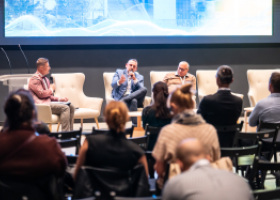
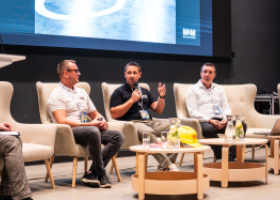
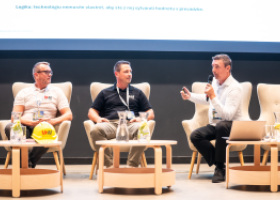
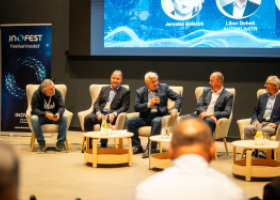
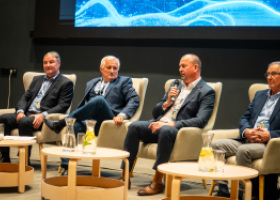
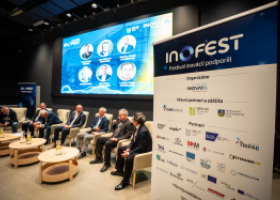
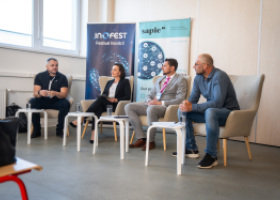
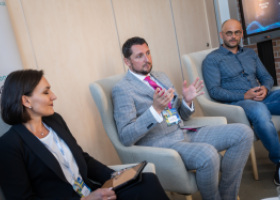
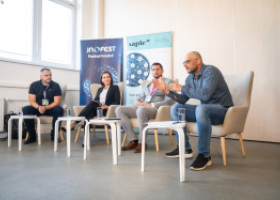
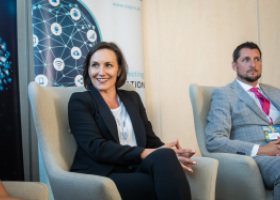
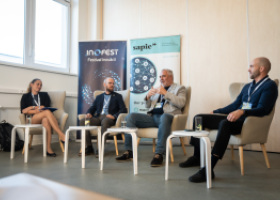
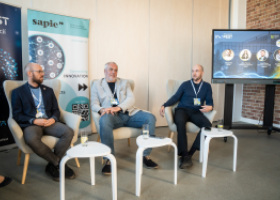
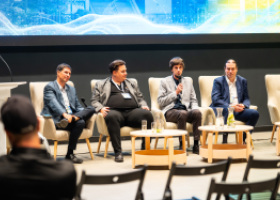
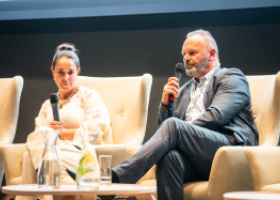
The data was followed by a panel discussion led by Ján Košturiak, in which Jaroslav Holeček, Miroslav Janota from the company Schaeffler, Libor Witassek from STROJCAR, and Libor Dobeš with Ladislav Glogar from Autoklastr met. They talked about the pace of transformation, the readiness of the supply chain, and what companies really need from the state and what, on the contrary, only hinders them.
A question that no technology will solve
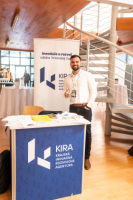
In cooperation with the Slovak Alliance for Innovative Economy SAPIE, a block was created on how European funds are turned into functional innovation ecosystems. Michal Číž from SAPIE, Janka Pálková from the Innovation Agency BBSK, Jozef Šimko from the Partner Innovation Center, Marek Krnáč from KIRA, Igor Wzoš from the Smart City Cluster, and Peter Sedlák from INOVIA talked about how to use resources effectively and how to support projects so that they do not disappear after funding ends. This was naturally followed by a discussion led by Katarína Vitálišová from UMB, which opened a topic that no subsidy will solve. Why young people leave the regions, what brings them back, and what the region must offer them so that they want to create in it. Both discussions concluded that the development of a region is not measured by the number of supported projects, but by how many people remain in it.
Baťa after one hundred and fifty years
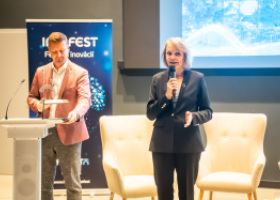
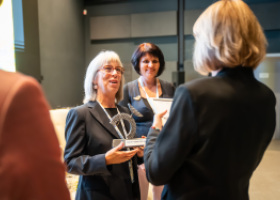
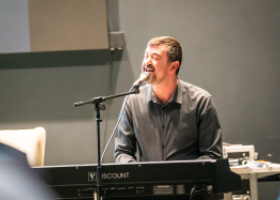
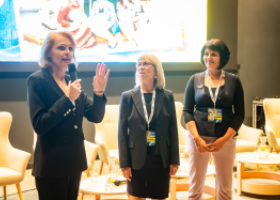
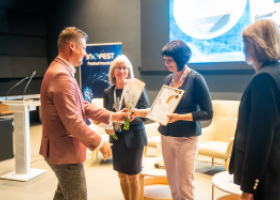
The evening atmosphere was induced by the singing and piano of Vašo Michalčík, and after a day full of numbers and technology, the hall paused for a moment. Then came the announcement of the INOVATO AWARDS poll. The title of Innovator of the Year was won by the civic association Cesty k podnikaniu, and Renáta Fogeltonová and Monika Urdovová accepted the award on behalf of the entire team. They work with students long-term and are changing the way entrepreneurship is taught in schools, i.e., from theory to practical experience. This is exactly what was discussed in the afternoon in the discussions about talent and the departure of young people from the regions.
The same idea was also carried over into the lecture by Gabriela Končitíková from the Tomáš Baťa Foundation on Baťa principles on the occasion of the one hundred and fiftieth anniversary of his birth, and into the discussion with Ľubomír Švec from ŠVEC GROUP about building a company. Baťa, after all, did not just build factories, he also built schools, apartments, and the people who then worked in them. After a whole day about sensors, artificial intelligence, and data, the sentence attributed to him sounded surprisingly relevant. Buildings are piles of bricks and concrete, machines are a pile of iron and steel, life is only given to it by people.
|

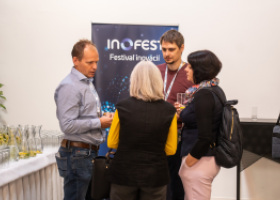
The rest of the evening belonged to music and conversations over a glass of wine, i.e., that part of the festival that no one writes into the program and from which there is the most benefit.
We thank the partners who supported the festival. ŠVEC GROUP, CSI Leasing, Lexus Slovensko, M2M Solutions, Kraftstrom Partners, TRIPAL, DALITRANS, Controllplus, Finlinea, LPH s.r.o, SHARVAN, Hronček & Partners, TOC EU. For professional cooperation on the program, we thank SAPIE, Smart City Cluster, KIRA, Partner Innovation Center, Innovation Agency BBSK, INOVIA, BIC Bratislava. We also thank the Slovak Business Agency and the Slovak Innovation and Energy Agency for their support.
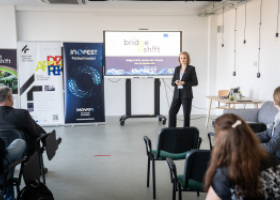
Part of the program also included professional discussions carried out within the STICS project, Smart Transformation and Innovation Consortium Slovakia, and the Bridge & Shift project, which connects automotive and mobility clusters in five European regions.
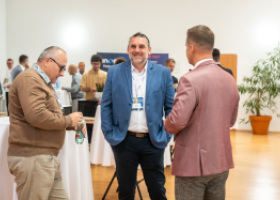
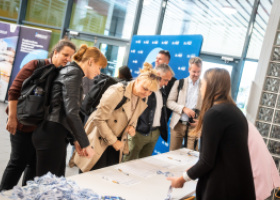
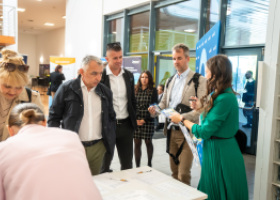
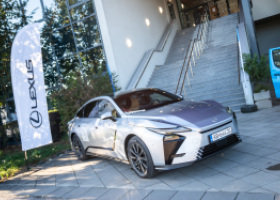
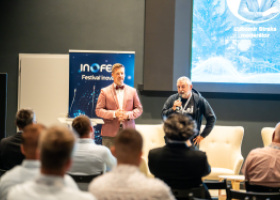
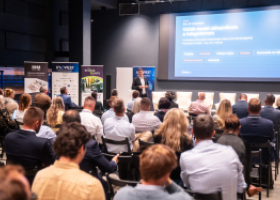
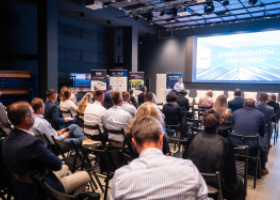
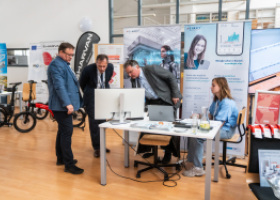
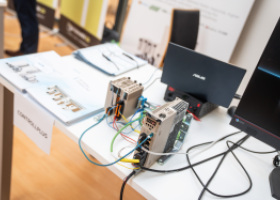
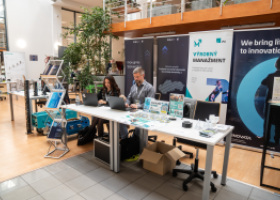
Photo Gallery
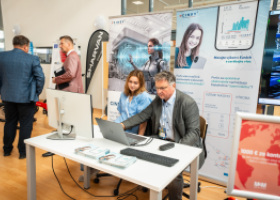
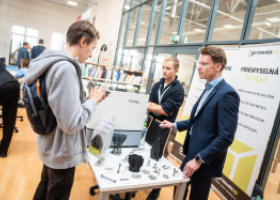
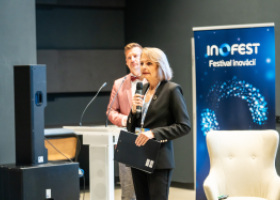
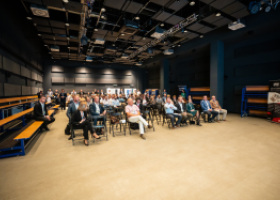

Suppliers on this topic
-

OSMOS s.r.o.
ERP software, 3D design of plastic products, simulation of plastic injection, plastic press, plastic injection… -

SOVA Digital a.s.
Complex solutions for digitization and optimization of production processes, Industry 4.0, industrial automation… -

3M TRADE - PLASTIC PARTS s. r. o
Plastic molding, plastic injection, injection molds, molds, industrial robots, manipulators, grippers, EOAT components. -

ATU Slovakia, spol. s.r.o.
Ultrasonic Welding Machine, Hot Plate Welding Machine, Spin Welding Machine, Vibration Welding Machine, Hot Air… -

FORM s.r.o.
Glass-reinforced plastics, fiberglass, thermoplastic products, painting of plastic products, metal production and… -

INCOT PLASTIC s.r.o.
Production of plastic moldings, design of plastic parts, production of injection molds, plastic injection, plastic…





SprinterMarker: Simple pneumatic product marking directly on the production line
23.9.2026 Do you need a simple, reliable way to print a date, batch number, inspection mark, symbol, or short code on plastic parts, metal, glass, rubber, or packaging materials? The SprinterMarker pneumatic stamp offers a simple industrial solution that can...
Most read in the last 7 days
-
Polymer prices - polyolefin price increase without panic buying
-
CHI MEI – ABS Polylac® - the next generation from Biesterfeld Interowa GmbH&Co KG
-
Composites with thermoplastic matrix and automotive, Part 3
-
WITTMANN BATTENFELD at the Compamed presented Micro Injection Molding with LSR
-
On the same wavelength: Visit K.D. Feddersen at Fakuma 2026




Most read in the last 7 days
-
Polymer prices - polyolefin price increase without panic buying
-
CHI MEI – ABS Polylac® - the next generation from Biesterfeld Interowa GmbH&Co KG
-
Composites with thermoplastic matrix and automotive, Part 3
-
WITTMANN BATTENFELD at the Compamed presented Micro Injection Molding with LSR
-
On the same wavelength: Visit K.D. Feddersen at Fakuma 2026