


Trends in plastics injection moulding: Mold inserts with integrated sensors voestalpine
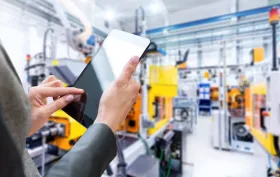
How do inserts with built-in sensors help with process monitoring?
Injection moulding machines can measure many process parameters, such as injection pressure and temperature or the weight of the injected plastic. Using this data from the machines, it is possible to identify approximately 70 % of the causes of part defects. Depending on the application, however, additional sensors in the mould can support the measurement of quality data, thereby helping to adjust process parameters such as temperature. A simplified illustration of the process is shown in the image below.
| Monitoring the plastic injection moulding process using inserts with integrated sensors: Sensor data import, Data processing, Data analysis, Process parameter adjustment, Plastic injection moulding process. |
As shown in the image, sensors integrated into the mould make it possible to process data in real time, detect potential problems and adjust process parameters accordingly. AM provides design freedom that allows sensors to be integrated in exactly the right locations without adversely affecting the insert's cooling design.
* voestalpine supplies AM inserts and installs sensors. Sensor manufacturing, data processing and analysis are currently not included in our scope of services.
What are the benefits of AM inserts?
In the previous article, we discussed how to increase efficiency and productivity in plastic injection moulding. You can read the article here. The use of additively manufactured inserts played a key role in this. Additive manufacturing overcomes many of the problems associated with plastic injection moulding that are typical of conventionally manufactured tool inserts:
- Defects such as shrinkage due to uneven temperature distribution, leading to higher reject rates
- Longer cycle times
- High maintenance and production costs due to large numbers of rejects and long cycle times
- Design limitations, e.g. for conformal cooling or sensor integration
One of the many benefits of additive manufacturing (AM) is the creation of conformal cooling channels in mould inserts, which ensure homogeneous temperature distribution, thereby reducing reject rates and narrowing the tolerance range of the plastic parts produced. Similar channels can be created to integrate sensors for monitoring purposes. Of course, sensors can also be integrated into conventionally manufactured inserts. To achieve the same flexibility in their placement – meaning the ability to embed sensors exactly where they are needed – a vacuum brazing process is usually required. However, the conventional process is generally more expensive than integration into AM inserts, and there are potential design issues that can adversely affect the insert's conformal cooling performance.
Using AM inserts, designers can create channels for integrating sensors such as thermocouples or pressure sensors for monitoring. The monitoring system can thus provide injection mould manufacturers with real-time mould data – ranging from temperatures and faults to downtime and maintenance. The use of thermocouples offers the following benefits:
- Time savings when setting up new moulds and processes
- Sampling
- Increased process stability
- Reduced reject rates
- Increased insert service life through operation under optimal conditions
- Detection of cooling blockages within a single cycle
- Collection of (big) data, e.g. for assisted process optimisation, Industry 4.0 and quality data assignment for OEMs
By using AM technology, designers can create inserts with the following features:
- Sensor channels can be curved, allowing sensors to be positioned in key areas (for example, near the cavity or cooling channels). Sensors can be effectively positioned wherever they are needed.
- Cooling channels can be adapted to allow sensors to be integrated without compromising cooling performance.
- Efficient heat transfer between the AM insert and the sensor.
| Image on the left: Design of an AM insert with channels for conformal cooling and sensor integration. Image on the right: Additively manufactured inserts with installed sensors. Collaboration between voestalpine and SKZ – German Plastics Center. |
Inserts with sensors, as shown in the image above, were used in a joint project with German Plastics Center in collaboration with Eye, which supplied the hardware and software for visualising and collecting sensor data.
How can sensors be integrated into the process?
If you operate a plastic injection moulding business, in collaboration with voestalpine High Performance Metals we will help you integrate sensors into your production chain right from the start.
| Sensor integration process chain. The processes in blue (Design, additive manufacturing and sensor integration) are offered by voestalpine. The processes in grey (monitoring) are offered by partners if support is required. |
During the design phase, the sensor position and the number of sensors in the AM insert are determined through direct consultation between the customer and the voestalpine additive manufacturing centre. Further design considerations regarding sensor position include the minimum distance from the cavity and the minimum distance from the cooling channel.
Once the design has been finalised, the AM insert is manufactured (including post-processing such as machining, heat treatment and surface finishing).
Although voestalpine does not manufacture the sensors themselves or provide monitoring, through consultation with customers we are able to integrate sensors into AM inserts in preparation for monitoring according to the monitoring system selected by the customer.
How can your injection moulds benefit from inserts with sensors?
Inserts with sensors for plastic injection moulds are increasingly being used because this approach improves production processes, increases quality and supports digital automation. We will soon publish an interesting case study on the blog that demonstrates precisely this. In the meantime, our experts look forward to discussing with you how voestalpine HPM can help you in this area. You can contact them below.
-

voestalpine High Performance Metals Slovakia, s.r.o.
Market leader for special steels, tool steels and other value-added services such as heat treatment and PVD coating.

Suppliers on this topic
-

PM AUTOMATION CZ s.r.o.
Complete solutions for industrial automation, robotics and machine vision. We support you every step of the way, from… -
TG – Toman Group spol s r.o.
Komplexné technologické riešenia na mieru, adiabatické chladenie, poradenská, montážna, inštalačná a servisná činnosť… -

Dopak sp. Z o. o.
Dopak is one of the leading suppliers for the plastics processing and recycling industry in Central Europe. -

HTS IC s.r.o.
iTherm® conformal cooling solutions for plastic injection moulding, conformal cooling channels for injection molds. -

Bonafa projekt s.r.o.
Protection of interiors against overheating and glare, external shading of rooflights with screen fabrics, rooflight… -

ARBURG SK s.r.o.
Injection molding machines, Arburg injection molding machines - sales and service, peripherals, automation and…


AI in maintenance: How to turn data and human expertise into practical support for manufacturing
2.11.2026 Predictive maintenance, access to know-how, and faster troubleshooting. The panel discussion showed that the real value of artificial intelligence in industrial maintenance lies not only in predicting failures, but also in how companies work with...
Most read in the last 7 days
-
Polymer prices - october price increases partly successful, with minor corrections expected in the week ahead
-
Polymer prices - Year-End Polymer Price Scenarios
-
Long-lasting solution: Radiation-crosslinked PE-Xc pipes for drinking water supply
-
Polymer prices – the increase in olefin monomer contract prices in October was in line with expectations
-
Plastica-expo 26





Most read in the last 7 days
-
Polymer prices - october price increases partly successful, with minor corrections expected in the week ahead
-
Polymer prices - Year-End Polymer Price Scenarios
-
Long-lasting solution: Radiation-crosslinked PE-Xc pipes for drinking water supply
-
Polymer prices – the increase in olefin monomer contract prices in October was in line with expectations
-
Plastica-expo 26