

Slovak-German economic dialogue: Innovation and transformation as the key to Europe’s competitiveness
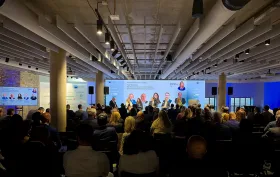
The discussion highlighted, in particular, that Slovakia, as a major industrial and automotive country, is facing a decisive stage. Investments in innovation, productivity and forward-looking business models are crucial to maintaining its position in international value chains over the long term. Dialogue between policymakers and business was also highlighted as an important factor in creating suitable framework conditions for transformation and growth.
Approximately 200 representatives from companies, public administration, research and politics attended the sixth edition of the forum. The event brought together different perspectives and used concrete examples from practice to show how companies are incorporating technological change and sustainable transformation into their operations. The main topics included industrial innovation, artificial intelligence and automation, sustainable solutions, as well as the role of innovative healthcare in strengthening Europe's economic resilience.
Vladimír Šimoňák, State Secretary at the Ministry of Economy of the Slovak Republic, which granted its patronage to the conference, stressed the importance of a stable and predictable business environment for the further development of Slovak industry.
“Slovakia is an industrial country, and our task is to create conditions that encourage companies not only to stay here, but also to continue investing, innovating and creating jobs with higher added value in Slovakia. In the face of strong international competition, we need a predictable business environment, competitive energy prices and conditions that support investment and technological transformation,” said Šimoňák.
Susanne Szech-Koundouros, Director-General for European Policy at Germany's Federal Ministry for Economic Affairs and Energy, highlighted the importance of the European single market and the close links between German and Slovak industry.
“The single market is the foundation of the European Union and a key pillar in strengthening competitiveness. Strengthening Europe's competitiveness is and must remain the highest priority at European level. We need a comprehensive, cross-cutting approach. This must also include ambitious reductions in bureaucracy and the regulatory burden. Germany and Slovakia are closely linked through their industrial value chains, and this partnership needs to be developed further. By deepening bilateral relations between our countries and cooperating within the European Union, we can jointly contribute to a more competitive and resilient European economy,” said Szech-Koundouros.
Peter Stano, Head of the European Commission Representation in Slovakia, pointed out that Slovakia's competitiveness cannot be viewed separately from the competitiveness of the European Union.
“Europe's competitiveness begins in its member states. When administrative burdens slow down business and small and medium-sized enterprises, we must remove them. Uncompromising reductions in bureaucracy and an end to unnecessary tightening of European rules at national level are crucial for the economy. We need an environment in which companies have the confidence to invest, innovate and develop new technologies. The signals coming from the business sector and chambers of commerce must therefore be heeded carefully and translated into concrete decisions at both European and national level,” said Stano.
Germany Remains Slovakia's Key Economic Partner
The discussion also confirmed the importance of Slovak-German economic relations. Pavel Lakatos, President of AHK Slowakei, stressed that Slovak-German economic cooperation must continue to develop towards innovation and higher added value.
“Slovakia and Germany share an exceptionally strong industrial base, with Slovak industry closely integrated into the value chains of the German economy. This is precisely why we have a shared interest in ensuring that Europe remains a place where manufacturing, investing and innovating are worthwhile. Slovakia has great potential, but the next stage of its economic development must be built on higher productivity, new technologies, a skilled workforce and stable conditions for doing business. Dialogue between business and policymakers is essential in this regard,” said Lakatos.
Innovation Must Be Part of Everyday Industrial Practice
One of the forum's main topics was the technological transformation of industry – from artificial intelligence and automation to the digitalisation of manufacturing processes. The discussion focused particularly on how to turn innovation into higher productivity and long-term economic growth. The programme also included a panel devoted to practical experience of how innovation, automation and artificial intelligence are changing industry and business processes.
Milan Jurky, CEO of Schaeffler Slovakia, stressed the importance of rapidly introducing new technologies directly into industrial practice.
“In industry today, what matters is not only the ability to develop an innovation, but above all the ability to bring it into production quickly and efficiently. Automation, digitalisation and artificial intelligence enable us to increase the productivity and flexibility of manufacturing processes. It is important for Slovakia to be able to harness this technological transformation and move its industrial base towards activities with higher added value,” said Jurky.
Healthcare as Part of a Competitive Economy
A separate section of the Slovak-German Economic Forum was devoted to healthcare, placing it within the broader discussion of competitiveness, productivity and economic resilience. The discussion emphasised that the performance of healthcare systems is not merely a social or budgetary issue. Access to innovation, prevention, early diagnosis and the ability to keep people healthy and active for longer are becoming increasingly important factors in the long-term strength of European economies.
Lyndsay Sullivan, Country Division Head for Central and Eastern Europe at Bayer Pharmaceuticals, stressed that healthcare innovation should be seen as a strategic investment in Europe's future resilience, not merely as an expense.
“Healthcare innovation is not just a matter of health. It is a matter of competitiveness, economic growth and one of the key pillars of Europe's resilience. When Germany and Slovakia discuss their shared economic future, we must also talk about how to attract investment more effectively, accelerate innovation and improve patients' access to innovative medicines,” said Sullivan.
The forum thus connected topics that are often discussed separately – industrial policy, technological innovation, energy, sustainability and healthcare. The common denominator of the discussions was the need to increase productivity, support investment and create an environment in which innovation can be translated more quickly into economic growth and tangible benefits for society.
The Slovak-German Economic Forum was held under the patronage of the Ministry of Economy of the Slovak Republic and the Ministry of Health of the Slovak Republic. Its institutional partners were the Embassy of the Federal Republic of Germany in Bratislava and the German Committee on Eastern and Central European Economic Relations (Ost-Ausschuss der Deutschen Wirtschaft). The conference partners were Ahrend, Bayer, BMB Partners, Boehringer Ingelheim, Dallmayr, Deutsche Telekom IT Solutions Slovakia, dm drogerie markt, Evonik, Horváth & Partner Management Consulting, Jungheinrich, Kaufland Slovenská republika, Kinstellar, Knauf Insulation, MAN Truck & Bus Slovakia, MEGGLE Slovakia, Oberbank, Roche Slovensko, Schaeffler Slovakia, Siemens Energy, Siemens Slovakia, Slovak Telekom, Volkswagen Slovakia and ZSE.
-
Slovensko-nemecká obchodná a priemyselná komora
Support of trade and economic relations between Germany and Slovakia, consultancy for plastic and rubber production, subsidies, subsidy consultancy…

Suppliers on this topic
-

IPA Slovakia, s.r.o.
Consulting for plastic and rubber production, accredited education in the field of plastics, training of operation and… -
Plastikářský klastr
Services for the plastics industry, seminars, workshops, conferences, education, training, plastics production… -
TG – Toman Group spol s r.o.
Komplexné technologické riešenia na mieru, adiabatické chladenie, poradenská, montážna, inštalačná a servisná činnosť… -

Active Communication s.r.o.
Exhibitions, seminars, workshops, conferences, education, training, fair of composite materials. -

SUVko s.r.o.
A training and consulting company connected to business results. Tailor-made solutions that deliver the change… -
SLOVENSKÝ PLASTIKÁRSKY KLASTER
Interest association of independent legal entities and associated institutions in the field of plastics, consulting…



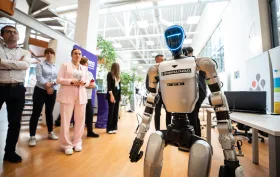
TECHTOGETHER+: A day that brings the automotive industry together
7.10.2026 Where is the Hungarian automotive industry heading, what developments will shape the coming years and where can suppliers find new business partners? On 12 November, the industry's key players will come together again in one place. This year,...

Most read in the last 7 days
-
Polymer prices - narrowing availability, rising prices without panic buying
-
OPEX Industry Summit 2026: Meeting of Slovak Industry Leaders
-
Fully automated production cell for manufacturing rubber-to-metal bonded parts by ROMI Automation
-
TECHTOGETHER+: A day that brings the automotive industry together
-
INOFEST 2026: A car manufacturer and a vineyard face the same challenges. Nitra made that clear


Most read in the last 7 days
-
Polymer prices - narrowing availability, rising prices without panic buying
-
OPEX Industry Summit 2026: Meeting of Slovak Industry Leaders
-
Fully automated production cell for manufacturing rubber-to-metal bonded parts by ROMI Automation
-
TECHTOGETHER+: A day that brings the automotive industry together
-
INOFEST 2026: A car manufacturer and a vineyard face the same challenges. Nitra made that clear