





New Additive from GRAFE Improves Polymer Melt
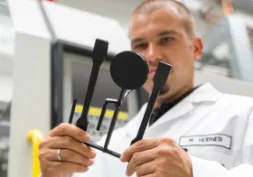
The processing aid is used at a dose of two to four percent in the injection molding of polyalkenes. It improves the flowability of the polymer melt and also accelerates the crystallization of the polymer in the cooling process. The process temperature can thus be lowered and shorter cooling times are possible. The processer benefits from lower production costs and less energy consumption.
The additive batch can be used on all standard machines, and is also suitable for other processing methods such as extrusion and blow molding. In this process, a number of applications can be developed, for example in the packaging industry or in medical technology. The mechanical properties of the target polymer, however, remain largely intact. Users therefore do not have to suffer any losses in the purchased component’s strength, stiffness or impact strength.
A further development from GRAFE relates to an additive that improves the processing of polyamide as an engineering material in the injection molding of the melt flow. Moreover, with this tool the component surface is optimized to reduce cycle time and to positively influence the mechanical properties. The new formulation can be used for a variety of high temperature polymers, such as PA6, PA6.6, PPS, PPE, PSU and PEEK.
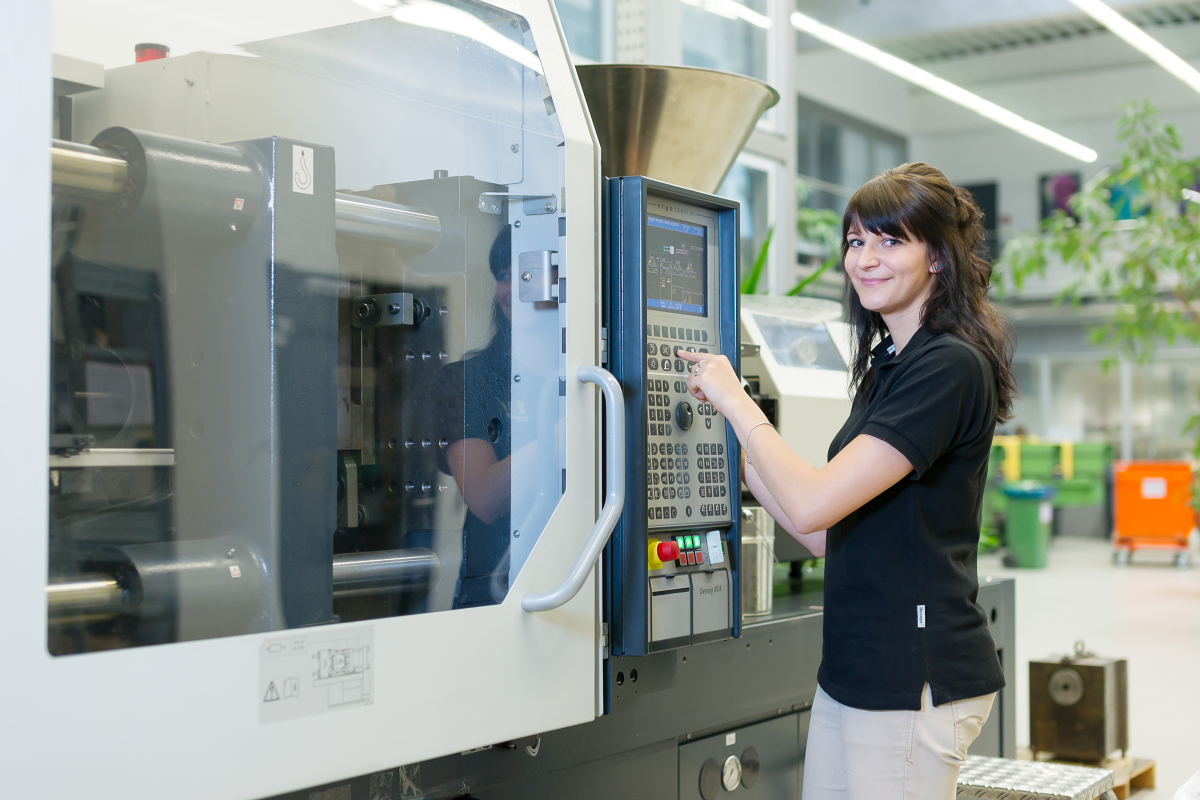 |
Polyamide presents a real challenge to many processors and customers as an engineering material. In order to ensure the required mechanical properties of the final component, raw polymers are reinforced, for example with glass fibers. This may affect the melt flow, as under certain circumstances surfaces may result with impaired perceived quality. Developers and application engineers from the GRAFE company have, over the last year, been working on and testing an optimal formulation.
The new additive masterbatch, which is dosed at a level of three to four percent, optimizes the embedding of the fibers through optimal integration. In this way, the melt flow improves. As a result, improved flowability offers further advantages. The tool’s filling occurs faster or more easily, which in this way shortens the life cycles and in turn can decrease production costs.
In addition, the use of the additive can decrease the processing temperature, which also has a positive effect on cycle time and energy consumption. Moreover, because of the better embedded glass fibers and the lower burden on the polymer melt, the mechanical properties are maintained or even optimized. This is a result of the fact that the components are less stressed during processing.
-

GRAFE Polymer Solutions GmbH
Color masterbatches, additive masterbatches, combibatches, compounded materials.
Suppliers on this topic
-

Nylus SK, s.r.o.
Commodity plastics, polyolefins, plastic additives, color concentrates, masterbatches, UV stabilizers for plastics… -

Brenntag CR s.r.o.
Thermoplastics, plastic additives, dyes, additives, construction plastics, plastic crumb, plastic regenerate, rubber… -

ORBIT POLYMERS S.A.
Granuláty plastov - komoditné a inžinierske, špecializované technické polyméry, aditíva, plnivá, farbivá a stabilzátory. -

GENETRIX s.r.o.
Standard and technical plastics, thermoplastics, plastic granulate HDPE, PA, PP, chemical raw materials, rubber… -

Avient Corporation
Polymeric materials, structural thermoplastics, thermoplastic elastomers TPE, color concentrates, masterbatches for… -

IMCD Czech Republic s.r.o.
Distribution of special chemical raw materials (plastics, additives, fillers, TiO2 ..) with pan-European activity.




BASF expands the Ultradur® portfolio with new grades based on post-consumer recycled PET
9.10.2026 BASF is expanding its portfolio of engineering plastics with new Ultradur® grades designed to help automotive manufacturers and suppliers increase the recycled content of their products while meeting demanding technical requirements. The new...


Most read in the last 7 days
-
BASF expands the Ultradur® portfolio with new grades based on post-consumer recycled PET
-
OPEX Industry Summit 2026: Meeting of Slovak Industry Leaders
-
Polymer prices – the increase in olefin monomer contract prices in October was in line with expectations
-
Fully automated production cell for manufacturing rubber-to-metal bonded parts by ROMI Automation
-
Polymer prices - narrowing availability, rising prices without panic buying


Most read in the last 7 days
-
BASF expands the Ultradur® portfolio with new grades based on post-consumer recycled PET
-
OPEX Industry Summit 2026: Meeting of Slovak Industry Leaders
-
Polymer prices – the increase in olefin monomer contract prices in October was in line with expectations
-
Fully automated production cell for manufacturing rubber-to-metal bonded parts by ROMI Automation
-
Polymer prices - narrowing availability, rising prices without panic buying