



UNIPLAST 2026 Conference: The Future of the Plastics Industry in Practice
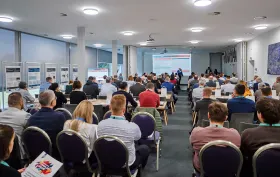
Legislation, the automotive sector and European industrial competitiveness
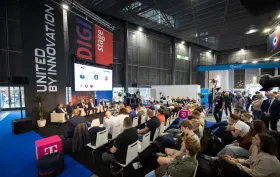
Representatives of UNIPLAST Brno opened the first day of the conference alongside Michal Šmarda, Mayor of Nové Město na Moravě. The opening session covered recent developments in the European chemicals and plastics industries and expected regulatory changes. A representative of the Association of Chemical Industry of the Czech Republic outlined the current state of the European chemicals industry, while the Czech Ministry of Industry and Trade discussed forthcoming legislation and its implications for plastics processors.
BRANO Group followed the opening presentations with a discussion of the future of the domestic supply chain and a realistic approach to industrial sustainability. ŠKODA AUTO and Miele then shared their views on future material requirements, product design and the growing emphasis on recyclability. The presentations featured practical experience with mono-material solutions and outlined manufacturers’ requirements for materials that must withstand demanding service conditions over long periods.

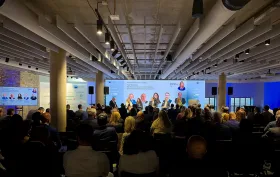
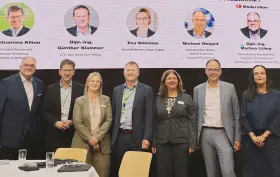
The afternoon programme opened with the panel discussion “How Can We Survive the Future?”, which examined European industrial competitiveness amid growing regulatory requirements, economic uncertainty and changes in the automotive market. Trevos and Antolin then discussed how European companies need to adapt, the importance of innovation and the significant regulatory constraints on industry in the EU. A representative of Radka International described recent developments in oil production, the decline in European chemical industry capacity and the expansion of large-scale processing capacity in Asia.
Materials innovation, recycling and collaboration with academia
The second day focused primarily on materials innovation, recycling and emerging technology trends. Borouge International presented applications for polyolefins in sustainable mobility, followed by Lehmann & Voss with a presentation on engineering plastics for the most technically demanding applications.
A significant part of the programme focused on the circular economy and plastics recycling. Remiva and Remarkplast shared their experience in recycling plastic waste, outlined market requirements for recycled materials and discussed the practical aspects of producing high-quality recyclates. The Czech Technology Platform PLASTY then presented other ways to process plastic waste and discussed the prospects and limitations of chemical recycling.
Students from Tomas Bata University in Zlín also attended the conference. Academic representatives outlined the topics addressed by the Test Laboratory for the Implementation of Sustainable and Resilient Technologies project (CZ.02.01.01/00/23_021/0010411), co-funded by the European Union through the Jan Amos Komenský Operational Programme. They highlighted opportunities to work with industry.
The technical programme concluded with a joint presentation by ARBURG, ENGEL and Wittmann Battenfeld. Under the title “From Idea to Competitive Advantage”, the companies gave practical examples of innovation in injection moulding plants and opened a discussion on ways for Czech and Slovak manufacturers to improve productivity, digitalise operations and use artificial intelligence effectively.

Key conclusions and recommendations for strengthening competitiveness
The presentations and subsequent discussions highlighted several issues that participants consider critical to the future of Czech and European industry. These will be submitted to the relevant institutions as recommendations and proposals based on the practical needs of industry.
- The competitiveness of European industry is being weakened primarily by a combination of growing regulation, high energy prices and a shortage of technically trained workers.
- Europe will never be the world’s cheapest manufacturing region. Its success depends on know-how, quality, innovation, automation and high added value.
- Companies cannot put off innovation during an economic downturn. These are the periods when they lay the foundations for future competitiveness.
- Digitalisation is one of the main ways for businesses to improve efficiency and resilience. Artificial intelligence can significantly accelerate further development and productivity growth.
- Technical education needs systematic support from primary school onwards, alongside closer cooperation between schools and industrial companies.
- European companies need to partner with customers in product development and provide specialist know-how that cannot easily be replaced by lower-cost production in other parts of the world.
- Sustainability and recycling requirements must take account of the technical, economic and physical limits of individual applications. Some products cannot be made from recycled materials while maintaining the required quality at an acceptable price.
- Industry needs stronger, more effective dialogue with lawmakers. Expanding regulatory requirements often exceed the capacity of individual businesses and make it harder for them to focus on development and innovation.
Conference participants agreed that the future of European industry would depend on its ability to innovate quickly, use modern technologies and create high-value products, with low production costs offering little basis for future success. This year’s UNIPLAST Brno conference reaffirmed the importance of open dialogue among industry, academia and government and produced concrete proposals for strengthening the competitiveness of the Czech and European plastics industries.


CEE Automotive Supply Chain 2026: Central Europe has potential but must fight for future investment
25.11.2026 The future of the automotive industry in Central Europe is being decided today. Growing global competition, pressure to transform and uncertainty in the business environment present manufacturers and suppliers with major challenges. How can the...
Most read in the last 7 days




Most read in the last 7 days