


Polymer prices - Firm Price Increases in November
Central European price ranges widened again. In the coming week, adjustments are expected at the upper end of the ranges, while the lower end is also expected to rise. Some Central European polyethylene producers that had not yet followed the price movement last week are planning increases of €40–50. According to polymer producers, demand is good, particularly near the lower end of the price range. Converters are working to ensure a smooth start to the year in January.
Supply has tightened, although all grades are still available for now. The tight supply is partly due to ongoing maintenance in Central Europe and partly to declining import volumes. In the case of polyethylene, production cuts caused by low water levels on the Rhine are also a major factor. This is precisely why European polymer producers implemented increases of varying sizes: €40–120 for polyolefins, €100–150 for polystyrene, and €80–100 for PVC. PET prices have not yet risen significantly. Some producers have not announced prices because their entire output is sold out through Christmas.
We expect demand to strengthen in the coming week, as converters that have waited until now will also start buying. No significant price correction is expected. At most, the upper end of the price ranges may decline slightly, while we expect the lower end to rise for all polymers. Some market participants expect feedstock prices to decline, and this has already happened to some extent following the U.S. midterm elections. However, this is likely to be temporary, as market conditions and the supply of oil and NAPHTHA have not changed; supply remains tight. Feedstock prices will remain high, as will energy prices, which are restricting supply in both Europe and Asia. Reduced Asian polymer imports are limiting availability in Europe, which has become a net polymer importer over the past four years, leaving little room for price negotiations in November. Demand is being driven by the need to maintain uninterrupted production rather than by end-user requirements. Most converters are seeking to secure production through mid- to late January, when business and shipping return to normal. Thus, although feedstock prices may decline slightly further, polymer price decreases are unlikely given the prospect of persistently tight supply.
-

myCEPPI
myCEPPI provides a weekly price report for commodity plastics.
Suppliers on this topic
-

VACULA s.r.o.
Engineering, technical plastics - sales, construction plastics - production and sales, plastic granulate… -

SLOVNAFT, a.s.
Production and sale of petroleum products and it´s chemical processing - production and distribution of polyethylene… -

SRNOPLAST K96 s.r.o.
Purchase and crushing of plastic materials, custom crushing of plastics, regranulate, regranulation, recycling of… -

Archeo CZ s.r.o.
Distributor of leading brands of technical granules, including PA and POM, expert advice on selecting the right… -

SOLLAU CZ s. r. o.
Purchase and sale of plastic crumbs and regranulates, magnets and magnetic separators, metal part separators… -

geba Kunststoffcompounds GmbH
Masterbatches for plastics, plastic regranulate, ABS regranulate, ABS plastic regranulate, PC, PC/ABS, PA6, PA66, TPU…


-

Genesis Polymers Europe and Velogy bring European PP and PE production closer to customers at Fakuma 2026
The joint presence at Fakuma (Hall B2, Booth 2310) showcases a growing European polyolefin platform that combines Velogy’s production capabilities with... -
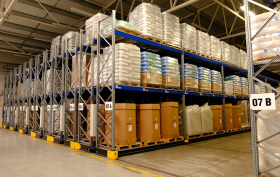
VACULA s.r.o.: Stable supplies of plastic granulates even in uncertain times
In the current complex global market environment, influenced among other factors by geopolitical tensions, many companies are facing uncertainty in supply... -
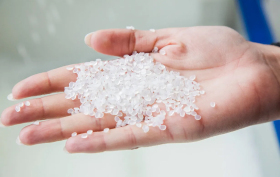
LIFOCOLOR explains how to choose the right masterbatch granule size
Are you dealing with colour inconsistencies, material segregation in the hopper, or inaccurate dosing? One possible reason may be an unsuitable granule size....


Most read in the last 7 days
-
FORT-PLASTY: Over 30 years of experience in manufacturing plastic ventilation systems and custom-made products
-
Polymer prices set to rise in November as supply tightens towards year-end
-
Polymer prices - Year-End Polymer Price Scenarios
-
Looking for an engineering plastics supplier? Contact VACULA s.r.o.
-
Nitra Model 2026: An international gathering of modelling enthusiasts in Nitra







Most read in the last 7 days
-
FORT-PLASTY: Over 30 years of experience in manufacturing plastic ventilation systems and custom-made products
-
Polymer prices set to rise in November as supply tightens towards year-end
-
Polymer prices - Year-End Polymer Price Scenarios
-
Looking for an engineering plastics supplier? Contact VACULA s.r.o.
-
Nitra Model 2026: An international gathering of modelling enthusiasts in Nitra