





The content of bioplastics can be verified by the radiocarbon method
More consumer goods packagers are turning to renewable, plant-based plastic, or a combination of petroleum- and plant-based polymers, for their packaging. A time-honored test method — one linked more closely to archaeology than packaging — can help them prove that the package contains the advertised amount of bio-based plastic. That method is radiocarbon testing.
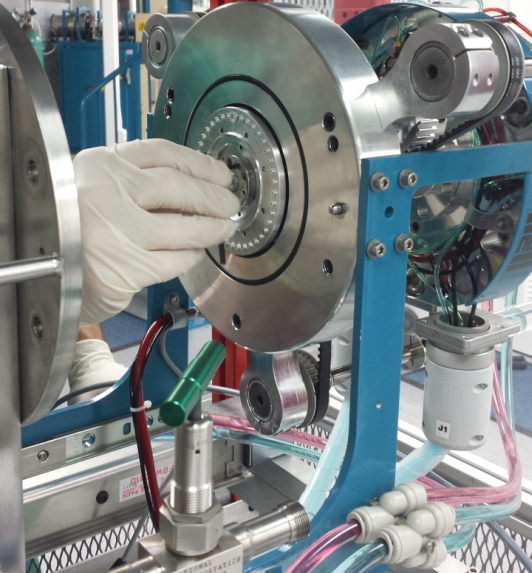
Typically used to estimate the age of fossils and other ancient organic materials, radiocarbon (aka carbon-14) testing is useful for analyzing plastic materials because of their carbon content.
Using test methods that determine the relative concentrations of carbon-14 isotopes in a packaging sample, technicians can calculate how much of the material is plant-based through the percentage of carbon-14 present — versus petroleum-based.
For example, if a packaging material is found to have 75% carbon-14, the material contains 75% renewable, plant-based plastic and 25% petroleum-based plastic.
 |
|
Authenticating sustainable packaging claims with scientific proof has grown more important as greenwashing — the practice of making false claims about environmental friendliness — has become commonplace, turning consumers into skeptics.
Sustainability certifications are a way to overcome that skepticism, and some third-party certification organizations rely on the results of radiocarbon testing to authenticate the plant-based and petroleum-based content of a plastic product or package.
The US Department of Agriculture (USDA) BioPreferred Program offers the USDA Certified Biobased Product label, for example, and testing/certification company TÜV Austria provides “OK biobased” certification.
“The USDA BioPreferred Program’s voluntary product label qualification requires ASTM D6866 measurements from a ISO 9001-conformant lab,” says Jordan Turner, marketing coordinator with Beta Analytic, a lab that meets both of these criteria and is one of only two approved testing labs for bio-based-content analysis. Beta uses the accelerator mass spectrometry method to perform radiocarbon testing.
Suppliers on this topic
-

Testpolymer EU s.r.o.
Accredited testing laboratories no. 1595, testing of plastics, mechanical tests of plastics, laboratory tests and… -
Szeplast Zrt.
Development and production of soft and hard PVC granulates, testing of plastic granulates, laboratory tests. -

OPTIK INSTRUMENTS s.r.o.
BRUKER spectrometers and microscopes, control and identification of plastics, fillers, measuring systems, laboratory… -

Mettler - Toledo s.r.o.
Laboratory, industrial and food scales, laboratory instruments, industrial measuring systems, analytical instruments. -

SunTechem Solutions s.r.o.
Compounding of plastics, coloring of plastics, improvement of plastic properties, SunComp compounds, engineering and… -

Knudsen Plast, s.r.o.
Production of plastic products for the medical industry, plastic injection, assembly of plastic parts, plastic welding…




EU declaration of conformity under the PPWR: How can packaging compliance with legislation be demonstrated?
27.7.2026 The Packaging and Packaging Waste Regulation (PPWR) introduces several new obligations for packaging manufacturers. One of the most significant is drawing up an EU declaration of conformity, which will become an essential part of the process of...

Most read in the last 7 days
-
Polymer prices - october price increases partly successful, with minor corrections expected in the week ahead
-
Polymer prices - Year-End Polymer Price Scenarios
-
Long-lasting solution: Radiation-crosslinked PE-Xc pipes for drinking water supply
-
Polymer prices – the increase in olefin monomer contract prices in October was in line with expectations
-
Plastica-expo 26





Most read in the last 7 days
-
Polymer prices - october price increases partly successful, with minor corrections expected in the week ahead
-
Polymer prices - Year-End Polymer Price Scenarios
-
Long-lasting solution: Radiation-crosslinked PE-Xc pipes for drinking water supply
-
Polymer prices – the increase in olefin monomer contract prices in October was in line with expectations
-
Plastica-expo 26