




Polymer prices – slow-starting market, in some cases with price increases driven by tight supply
Polyolefins were characterized by price declines following roll-over and monomer price changes. However, some polyethylenes saw price increases due to tight supply. PVC saw a price decrease of 10-15 euros, while PET saw a price increase of 20-30 euros. In the case of polystyrene, although manufacturers have announced a price increase of 20-30 euros, few specific prices have been released. It seems that in business terms, 2026 will only begin next week, January 12th.
Despite falling olefin monomer prices, some European polymer producers have implemented significant LDPA price increases. The reason for this was limited availability. However, for now, converters have rejected the significant, in many cases triple-digit price increase. Although the availability of HDPE is also limited, the price decline was mostly due to roll-over and the change in the contractual price of ethylene. The price of imported LLDPE grades has also increased due to the shortage. In the case of polypropylenes, the market is currently waiting, mostly experiencing roll-over and a smaller price decrease following the price change of propylene monomer. The supply side is generally constrained by the fact that sea shipments arrive late at ports, and delivery from ports and warehouses is also difficult, partly due to snow, but mostly due to the prolonged holidays. For now, it is difficult to judge both supply and demand. We will only get a real market picture in the coming week.
Urgent purchases are only necessary for those converters who have minimized their year-end stocks, they are the ones who are willing to pay higher prices. Those converters who have secured the start of the year are calmly awaiting developments. Another reason for calm is that most Central European plastics converters have handled the uncertainties of 2025 well. Most of them had a good year. Uncertainty and changing circumstances will remain with us in 2026, but they are no longer unusual, but rather change has become part of the polymer market. Converters, especially in Poland and the Czech Republic, are optimistic about 2026 and expect growth. While in other countries there are question marks.
In addition to availability, price expectations will have a significant impact on demand in January. Although it is still early to predict monomer prices for February, it is an important development that the expected correction in the price of NAPHTHA has occurred in the past week, and further price increases are not ruled out. Thus, there is a high probability of a price increase for olefin monomers in February. All this could result in good demand in the week ahead.
-

myCEPPI
myCEPPI provides a weekly price report for commodity plastics.



-

Genesis Polymers Europe and Velogy bring European PP and PE production closer to customers at Fakuma 2026
The joint presence at Fakuma (Hall B2, Booth 2310) showcases a growing European polyolefin platform that combines Velogy’s production capabilities with... -
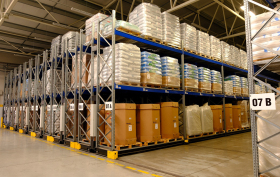
VACULA s.r.o.: Stable supplies of plastic granulates even in uncertain times
In the current complex global market environment, influenced among other factors by geopolitical tensions, many companies are facing uncertainty in supply... -
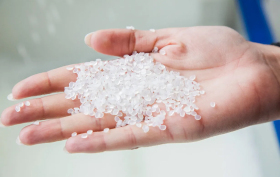
LIFOCOLOR explains how to choose the right masterbatch granule size
Are you dealing with colour inconsistencies, material segregation in the hopper, or inaccurate dosing? One possible reason may be an unsuitable granule size....