




Polymer prices – selectively rising polyethylene prices despite the end of the season
Regions and converters for whom MOL polyethylene plays a key role in their feedstock supply are now facing very tight supply, and in some cases shortages of certain grades. As a result, several converters see that they do not have sufficient stocks until mid-January. The uncertainty of supply is only increased by the fact that transportation options will be significantly reduced from the second week of December. Therefore, anyone who wants to buy has just over 2 weeks left. Meanwhile, the European polymer supply is also shrinking, primarily in the area of polyethylene grades. But there are also availability problems with polypropylenes (PPH).
European polymer manufacturers and distributors are already paying attention to year-end inventory levels. Production has decreased at some polymer manufacturers, partly due to technical, partly due to feedstock supply, and partly due to commercial reasons. Polymer stocks are depleting. In normal business conditions, this does not cause a problem, but converters in countries south of Slovakia are concerned about the shrinking supply of polyethylene, primarily due to the stocks needed for the start of operations in early January. Here, we have already seen a pick-up in demand over the past week and a small price increase for polyethylene. Demand is expected to strengthen in these countries over the next 2 weeks. In the Czech Republic, Poland and the Baltic States, these shortages are scattered. The market remained calm last week, with supply and processing inventories appearing sufficient; however, some polyethylene producers have also raised prices.
What to expect for polymer prices in December? For olefin monomers, a small price increase of €10 is expected, possibly a roll-over, which could lead to a price increase for European-made polyethylene grades in the first 2 weeks of December. The price increase may exceed the monomer price change in the southern and central regions of Central Europe. In fact, for some very limited grades, it can be as high as €20-50. In this region, a minor buying panic can be expected among understocked plastic converters, in the case of certain polyethylene grades. However, if panic does develop, it may be loud, but it will not affect serious quantities. In the northern region, however, we do not expect a noticeable price increase, but rather a roll-over or price change following olefin monomer, which will be associated with the usual December demand.
The second week of December could be exciting, as polymer manufacturers who have not yet reached their optimal year-end closing stock levels may exert more pressure, perhaps even with discounts, to encourage purchases and this year's deliveries. However, due to the transportation sector shutting down for Christmas, the market quiets down by the third week of December, and the availability of freight capacities decreases significantly.
No significant change is expected in the price of styrene monomer in December compared to November. December will be characterized by weak and then completely flat demand. No supply pressure from SM is expected in the market, so price falls are unlikely, but neither are price rises. A noticeable price rise is possible in January at the earliest. Polystyrene demand will probably only start to strengthen in February, so it is possible that the more serious SM price increase will shift to February.
-

myCEPPI
myCEPPI provides a weekly price report for commodity plastics.


-

Genesis Polymers Europe and Velogy bring European PP and PE production closer to customers at Fakuma 2026
The joint presence at Fakuma (Hall B2, Booth 2310) showcases a growing European polyolefin platform that combines Velogy’s production capabilities with... -
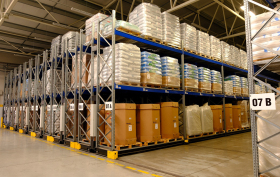
VACULA s.r.o.: Stable supplies of plastic granulates even in uncertain times
In the current complex global market environment, influenced among other factors by geopolitical tensions, many companies are facing uncertainty in supply... -
LIFOCOLOR explains how to choose the right masterbatch granule size
Are you dealing with colour inconsistencies, material segregation in the hopper, or inaccurate dosing? One possible reason may be an unsuitable granule size....