




Polymer prices - before the price increase in March
The decline in polyethylene prices in the second week of February due to weak demand in February has stopped, and LDPE prices have even started to correct back towards prices in the west of Europe. However, almost all market participants agree that a polymer price increase is likely in March.
March polymer prices are influenced by the following factors:
The deferred olefin monomer price increase, which was only partially enforced in February. However, it is also important to note that in January, olefin monomer producers only partially realized the potential monomer price reduction. The balance of the olefin monomer price changes implemented in the two monthly parts is only 55-65 €/t. Add to this the €5-7 impact from current feedstock price changes. Thus, the maximum olefin monomer price increase could be around €70/t. However, considering the so far “smoothed” pricing policy of olefin monomer producers, it is very likely that they will continue and increase the prices of ethylene and propylene by between €20-50/t in March.
European polyolefin producers will most likely pass on the olefin monomer price increase in their March prices. The price increase is supported by rising North American polyethylene and Asian polypropylene prices.
Price rises will be supported by the pick-up in demand in March, which is already evident. However, due to the returning winter, demand from contractors producing for the construction industry and agriculture is below the usual end-of-February level.
The price increase is supported by the fact that the Polish petrochemical industry will shut down in mid-April. Converters will be forced to build up inventories for this period in March. Although overseas imports will arrive in April, they can only partially cover market needs. In addition, there is huge uncertainty around imports. The free passage of the Strait of Hormuz is questionable due to the unfolding conflict with Iran. Some plastics converters have already started making precautionary purchases last week due to increasing supply uncertainty.
Other uncertainties include the shutdown of the Friendship pipeline and the uncertainty of oil supplies to Slovakia and Hungary. Which is aggravated by the fact that the Serbian NIS also operates only with a temporary license. All this also makes the production of Hungarian, Slovak and Serbian petrochemical plants uncertain. There is no problem for now, the countries concerned have opened their state oil reserves to refineries. But a quick solution is needed. In any case, this also means that converters will most likely build safety stocks in March.
Price increases are being held back by the fact that plastics converters are under constant pressure. Price increases are slow and cumbersome. In addition, polymer producers are sitting on significant inventories and will be more cautious about raising prices due to weak demand in February.
The fact that the first two weeks of April will be marked by Easter, meaning holidays are expected, is a factor against price increases. Thus, a strong March will be followed by a weak.


-

Genesis Polymers Europe and Velogy bring European PP and PE production closer to customers at Fakuma 2026
The joint presence at Fakuma (Hall B2, Booth 2310) showcases a growing European polyolefin platform that combines Velogy’s production capabilities with... -
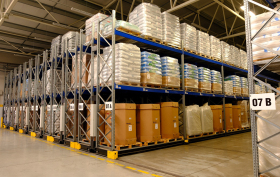
VACULA s.r.o.: Stable supplies of plastic granulates even in uncertain times
In the current complex global market environment, influenced among other factors by geopolitical tensions, many companies are facing uncertainty in supply... -
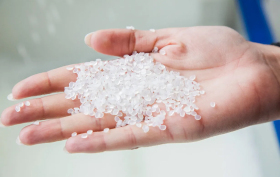
LIFOCOLOR explains how to choose the right masterbatch granule size
Are you dealing with colour inconsistencies, material segregation in the hopper, or inaccurate dosing? One possible reason may be an unsuitable granule size....