




Polymer prices - steep feedstock price increase without demand panic
The rise in feedstock prices points to the possibility of a more significant increase - in the range of 50–90 €/t - in olefin monomer and polymer prices in August.
However, polymer manufacturers are uncertain about both rising monomer prices and future demand. The primary reason for this is that the main holiday season has just begun and this will determine demand in European markets over the next 4 weeks. It seems that the supply-driven pricing that characterized the first half of this year has been replaced by demand-driven, demand-adapted pricing. At the same time, European polymer manufacturers are no longer willing to sacrifice the cash flow realized in the first half of the year in exchange for additional sales. Therefore, during the fall season, they will likely try to keep the markets in balance by reducing supply. However, it seems that the decline in polyolefin prices has ended for now, and a smaller price increase can be expected in August. In the case of polystyrene and PET, it is still unclear where the "bottom" prices are, but there is a chance of price stabilization as early as July. In the case of PVC, we expect a slow price erosion until December, which may be temporarily slowed by the increase in ethylene monomer prices.
The fall season will likely be similar to previous years, with a slight increase in demand and a minor price increase, except for PVC. The season is expected to end in mid-October. Consequently, the autumn price increase resulting from demand will not be significant. There is a significant chance that the price increase will occur as early as August, followed by a roll-over and then price decreases from October. Further price increases could only be triggered by a significant increase in feedstock prices, the possibility of which cannot be ruled out in the current uncertain geopolitical situation. Although markets are starting to adjust to the ongoing geopolitical uncertainties, the chance of another supply panic is low.
Demand is also cautious on the converter side. In the spring panic, converters overbought themselves, and the accumulated stocks are now running out. Large, seasonal forward purchases are not expected, especially since the prices of import shipments expected for September-October are at current price levels. In addition, the converters' customers, retail chains, are also stocking up and purchasing cautiously. In Central Europe, demand is primarily for HDPE, PPC and PPR grades. The primary reason for this is MOL Petrochemical's operation at reduced capacity and BOP maintenance. As a result, some grades have become less available. Converters who no longer expect prices to fall further have begun making purchases; these are primarily large and medium-sized companies. The majority of smaller converters still hope for further price declines in the summer. Many of them stopped working, went on vacation, and postponed purchases until August.


-

Genesis Polymers Europe and Velogy bring European PP and PE production closer to customers at Fakuma 2026
The joint presence at Fakuma (Hall B2, Booth 2310) showcases a growing European polyolefin platform that combines Velogy’s production capabilities with... -
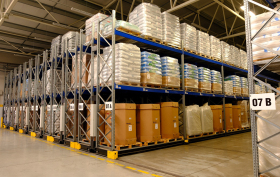
VACULA s.r.o.: Stable supplies of plastic granulates even in uncertain times
In the current complex global market environment, influenced among other factors by geopolitical tensions, many companies are facing uncertainty in supply... -
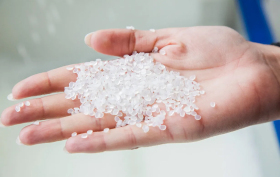
LIFOCOLOR explains how to choose the right masterbatch granule size
Are you dealing with colour inconsistencies, material segregation in the hopper, or inaccurate dosing? One possible reason may be an unsuitable granule size....