


Innovative SLM and DMLS metal 3D printing technologies. What are their advantages and disadvantages?
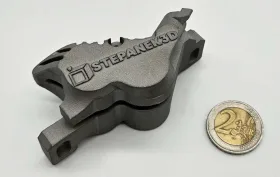
DMLS (Direct Metal Laser Sintering ) – originated as a registered name in 1995 by EOS, which remains a leading manufacturer of machines for metal additive manufacturing.
SLM (Selective Laser Melting ) – a registered name of SLM, which is also a leading manufacturer of machines for metal additive manufacturing.
Advantages
-
Geometric Complexity:
-
SLM and DMLS enable the production of complex structures that would be uneconomical or impossible using conventional methods. This aspect is particularly useful in the production of topology-optimised parts that minimise material costs while maintaining or improving mechanical properties.
-
Material Diversity:
-
The diversity of materials that can be used with these technologies is one of their greatest benefits. Common materials include stainless steel, aluminium, titanium, cobalt-chromium, nickel alloys such as Inconel and many others. This enables the production of parts for various applications, from medical implants to high-temperature aerospace components.
-
Weight Reduction:
-
Design optimisation through SLM and DMLS can lead to a significant reduction in part weight, which is important in fields such as aerospace and the automotive industry, where every reduction in weight is critical to fuel efficiency and performance.
-
Post-processing
-
The possibility of machining and heat treatment, such as tempering and hardening, as with conventional materials.
Disadvantages
-
Accuracy
-
A common disadvantage of these (and other additive) technologies is their relatively low accuracy (typically ± 0.3 mm) and higher surface roughness (usually starting at Ra = 6.3 μm), which limits their use. However, this can be addressed through additional conventional machining of critical dimensions or by using the parts in applications where high accuracy is not required.
-
Lead Time
-
Another disadvantage is relatively low productivity, which is related to the slow process of sintering cross-sections and applying thin layers of powder, as well as the heating and cooling cycle of the given print job. Therefore, these technologies are currently used primarily for one-off production or small production runs.
-
Cost
-
Last but not least, the higher cost of bulky parts is one of the main disadvantages. This is also related to the high cost of fine metal powder, which is produced by atomisation, a costly process. Therefore, this production method is usually suitable for parts with a smaller volume that have already been optimised for the smallest possible volume, e.g. through topology optimisation or generative design.
 |
 |
We at STEPANEK3D recommend the following guideline to help determine the suitability of using SLM / DMLS technology. Production using these technologies is usually cost-effective if at least one, ideally all 3 of the conditions below are met:
-
If the largest dimension of the part is ideally less than 250 mm (although we can print up to a maximum dimension of 390 mm, this is usually not cost-effective),
-
If the geometric complexity is as high as possible (where there is a high ratio of material removed by machining to the stock material, or the part cannot be manufactured using traditional methods),
-
If the quantities are lower (single units to tens of parts, sometimes even hundreds of parts if there is high added value in parts that are optimised for this production method and traditional methods are not possible or are inefficient). For higher quantities, we recommend Binder Jetting technology.
Types of Metal Powder
-
Stainless Steel: Used for its properties such as corrosion resistance and strength.
-
Titanium Alloys: High strength at low weight, ideal for aerospace and medicine.
-
Aluminium Alloys: Lightweight and strong, often used in the automotive industry.
-
Nickel Alloys (e.g. Inconel): Resistant to high temperatures and corrosion, commonly used in the energy sector and aerospace.
-
Cobalt-Chromium Alloys: High resistance and strength, often used in medicine.
More information in the materials section. SLM and DMLS technologies represent a revolution in metal part manufacturing, enabling the production of highly complex, detailed and mechanically strong components for a wide range of industries. Choosing the right machine and material is key to achieving optimal results, so it is important to understand the differences between SLM and DMLS, as well as the possibilities these technologies offer. More information about metal 3D printing and its capabilities can also be found on the following page Metal 3D Printing.
-

3D Tlač - Stepanek3D
3D scanning, 3D printing, editing of 3D models, plastic atypes, custom production, small series production, production of plastic prototypes.




OSMOS: We will help you design and manufacture a plastic product exactly according to your ideas
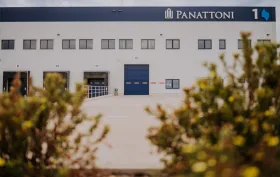
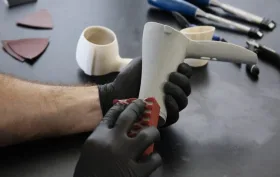
21.2.2025 Do you have an idea for a great plastic product but don’t know where to start? At OSMOS, we’ll help bring your ideas to life. We will design the product and ensure the production of precise injection molds, as well as flawless processing,...


Most read in the last 7 days
-
Polymer prices - october price increases partly successful, with minor corrections expected in the week ahead
-
Long-lasting solution: Radiation-crosslinked PE-Xc pipes for drinking water supply
-
Polymer prices – the increase in olefin monomer contract prices in October was in line with expectations
-
Polymer prices - Year-End Polymer Price Scenarios
-
Plastica-expo 26




Most read in the last 7 days
-
Polymer prices - october price increases partly successful, with minor corrections expected in the week ahead
-
Long-lasting solution: Radiation-crosslinked PE-Xc pipes for drinking water supply
-
Polymer prices – the increase in olefin monomer contract prices in October was in line with expectations
-
Polymer prices - Year-End Polymer Price Scenarios
-
Plastica-expo 26