




Polymer prices – prolonged delays in monomer price announcements, uncertain market demand
As a result, polyolefin and PVC producers only published their valid price lists in the last days of the last week, and there were polymer producers who had not yet published their price lists valid for August. Nevertheless, it is clear that Central European polymer prices have increased. Demand was not strong, partly due to a lack of information and partly because there were significant forward purchases at the end of July.
The protracted ethylene contract price agreement suggests that monomer and polymer producers have different interests and opinions on feedstock price changes. Moreover, PVC producers were against a significant ethylene monomer price increase due to weak demand and falling prices, as they would not be able to pass the increase on to their prices. Thus, they waited for the NAPHTHA price minimum last week (672.63 USD/t) and announced the August contract ethylene monomer price at the lowest price. This is still not as low as PVC producers would have liked (+15-30 €/t), but it could have been higher if they had priced just a day earlier or later, as the NAPHTHA price returned to the range above 700 USD/t, keeping monomer and polymer price expectations high.
Demand is weak for now, primarily because the summer vacation season is still underway, and there are even companies that are about to shut down. Secondly, because the more cautious converters already made purchases in July. We expect a significant pick-up in demand only in the second half of August. Another reason for the weak demand is that energy supply uncertainty has developed in three Central European countries (Hungary, Romania, Serbia) due to the low water level of the Danube. For this reason, the Hungarian and Romanian nuclear power plants had to be partially shut down. Also, as a result of the low water level in the Danube, the Vaskapu (Đerdap) hydroelectric power plant is only operating at a fraction of its capacity. This means that some larger converters have implemented partly voluntary and partly mandatory production cuts. For now, it seems that the low Danube flow will continue into August, so the uncertain energy supply and demand in these countries will remain with us until the end of August. In the second half of August, demand may strengthen as the fall season approaches, especially if feedstock prices also increase and NAPHTHA maintains a price level above 700 USD/t.
-

myCEPPI
myCEPPI provides a weekly price report for commodity plastics.


-

Genesis Polymers Europe and Velogy bring European PP and PE production closer to customers at Fakuma 2026
The joint presence at Fakuma (Hall B2, Booth 2310) showcases a growing European polyolefin platform that combines Velogy’s production capabilities with... -
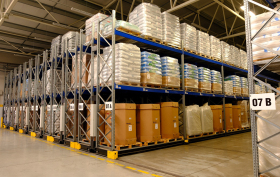
VACULA s.r.o.: Stable supplies of plastic granulates even in uncertain times
In the current complex global market environment, influenced among other factors by geopolitical tensions, many companies are facing uncertainty in supply... -
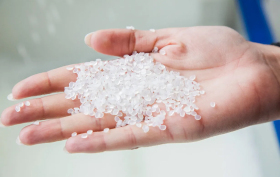
LIFOCOLOR explains how to choose the right masterbatch granule size
Are you dealing with colour inconsistencies, material segregation in the hopper, or inaccurate dosing? One possible reason may be an unsuitable granule size....