

Plastic granulate spillage: the Council of the European Union introduces new rules to reduce microplastic pollution
Better prevention of pellet losses
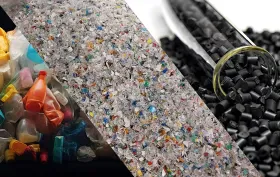
Under the new rules, the main objective of operators and carriers from the EU and third countries would be to prevent plastic pellet losses. A clear framework sets out obligations in the event of accidental spills, focusing on clean-up operations. A clear set of measures will be incorporated into the risk management plan prepared by each facility handling pellets. These measures would address, among other things, packaging, loading and unloading, staff training, as well as the necessary equipment.
To ensure a level playing field for EU carriers and third-country carriers, and to ensure accountability and transparency for all carriers of plastic pellets, non-EU carriers will have to appoint an authorised representative in the EU.
Achieving simplification and compliance
In line with the objectives of simplification for smaller companies and the Council's approach, the provisional agreement strikes a balance between a high level of environmental protection and requirements for companies tailored to their different sizes. Accordingly, operators handling more than 1 500 tonnes of plastic pellets per year will have to obtain a certificate issued by an independent third party. Small companies that also handle more than 1 500 tonnes per year will be able to benefit from less stringent obligations, such as one-off certification to be completed within five years of entry into force. Finally, companies handling less than 1 500 tonnes per year and microenterprises will only have to issue a self-declaration of conformity.
Maritime transport
The persistent presence of plastic pellets in the aquatic environment can be measured for decades or longer, as plastic pellets are not biodegradable. Maritime transport accounted for approximately 38 % of all pellets transported in the EU in 2022.
The co-legislators therefore also agreed to establish obligations concerning the transport of plastic pellets by sea (in freight containers), including ensuring high-quality packaging and providing transport- and cargo-related information in accordance with the International Maritime Organization's guidelines.
Next steps
The provisional agreement must now be approved by the Council and Parliament. Following revision by the lawyer-linguists, it will then be formally adopted by both institutions and published in the Official Journal of the EU. The regulation will then start to apply two years after publication. To facilitate compliance in the maritime transport sector, the co-legislators agreed to postpone the application of the relevant rules by one year (compared with the other rules laid down in the regulation).
Background
It is estimated that in 2019, 52 140 to 184 290 tonnes of pellets were lost to the environment in the EU. Pellet losses can occur at various stages of the value chain. Currently, EU rules do not specifically cover plastic pellet losses, despite their adverse effects on the environment, the climate, the economy and potentially human health. Plastic pellets are the third-largest source of unintentional microplastic releases after paints and tyres.
Suppliers on this topic
-

TECHLER INDUSTRY spol. s r.o.
Supplier of products for industry, manufacturing and service, such as oil separators (skimmers), lubrication… -

Klüber Lubrication Slovensko s.r.o.
Production and development of advanced, high-performance and efficient customised lubricants, expert tribological… -

Lubexpert Slovakia s.r.o.
Authorized importer and distributor of ExxonMobil products in Slovakia, greases, hydraulic and synthetic oils… -
KREDUS TECHNIK, s.r.o.
Waste management, waste recovery, plastics, plastic recycling, plastic recycling technologies. -

geba Kunststoffcompounds GmbH
Masterbatches for plastics, plastic regranulate, ABS regranulate, ABS plastic regranulate, PC, PC/ABS, PA6, PA66, TPU… -

Remarkplast compounding a.s.
Plastic compounds, plastic compounding, regranulate, plastic regranulation, construction plastics - production and…



MOL Group Expands Its Green Energy Portfolio with Bi methane Production
29.10.2026 The MOL Group has officially opened its first biomethane production plant in Szarvas, in Békés County, southeastern Hungary. The facility, representing an investment of more than €7.4 million, can produce biomethane from biogas at a purity level...

Most read in the last 7 days
-
Polymer prices - october price increases partly successful, with minor corrections expected in the week ahead
-
Long-lasting solution: Radiation-crosslinked PE-Xc pipes for drinking water supply
-
Polymer prices – the increase in olefin monomer contract prices in October was in line with expectations
-
Polymer prices - Year-End Polymer Price Scenarios
-
Plastica-expo 26






Most read in the last 7 days
-
Polymer prices - october price increases partly successful, with minor corrections expected in the week ahead
-
Long-lasting solution: Radiation-crosslinked PE-Xc pipes for drinking water supply
-
Polymer prices – the increase in olefin monomer contract prices in October was in line with expectations
-
Polymer prices - Year-End Polymer Price Scenarios
-
Plastica-expo 26