

What lies ahead for the plastics industry in Czechia and Slovakia? Ing. Juraj Majerský from SPK on the upcoming legislative changes in the field of plastics
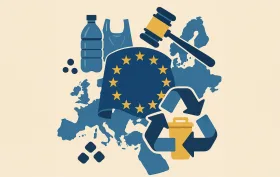
1. Mr Majerský, EU legislation on plastics is undergoing fundamental changes. Could you start by summarising which new regulations and directives will be most significant for the industry in the coming years?
Currently, the most important is Directive 2008/98/EC, as amended, the so-called Waste Framework Directive, which establishes the extended producer responsibility scheme, including the entire framework for waste management, disposal and recycling. Another important document is Directive (EU) 2019/904 of the European Parliament and of the Council of 5 June 2019, the so-called Single-Use Plastics Directive, and in the near future the Packaging and Packaging Waste Regulation will become applicable (from 12 August 2026, with Article 67(5) applying from 12 February 2029).
The rules currently in force affect everyone, but it is the forthcoming Regulation on preventing plastic pellet losses, currently at the drafting and consultation stage, that will have a direct impact on most pellet processors.
In my opinion, the Green Claims Directive will have a positive impact, providing a framework for labelling products made from biodegradable plastics or plastics produced from renewable resources. It will ensure that end consumers are not misled by various supposedly environmentally friendly materials that ultimately are not environmentally friendly.
2. The new Packaging and Packaging Waste Regulation was approved at the end of 2024. What specific obligations does it impose on companies in the plastic packaging sector?
This regulation will apply from 12 August 2026, with one part (Article 67(5)) applying from 12 February 2029, and will introduce a considerable number of fundamental changes and obligations. The regulation introduces recyclability grades: A (95 % and above), B (80 % and above) and C (70 % and above). Packaging will have to be at least 70 % recyclable, and specified plastic packaging will have to contain a mandatory proportion of recycled content.
The regulation also addresses the compostability of certain packaging, such as labels on fruit or tea/coffee bags, or very lightweight plastic packaging.
The regulation also bans certain single-use plastic packaging, including multipacks, containers for smaller portions of fruit and vegetables, packaging for food and drinks consumed on the premises of food service establishments, small cosmetic and toiletry products in hotels, and thin HDPE bags for loose food.
The regulation also sets targets for packaging reuse. For most common transport packaging, 100 % reuse should be achieved by 2030. For packaging for alcoholic and non-alcoholic beverages, the target will be at least 10 % of such products in reusable packaging.
A significant impact on retailers will come from the requirement for shops with an area of more than 400 m² to allocate 10 % of that area to refilling both food and non-food products. Customers will be able to take food and drinks away in their own containers or in reusable packaging. I would point out here that it will be interesting to see how establishments handle the refilling of food packaging to prevent contamination from inadequately washed customer-owned containers.
I consider the restriction on so-called empty space in packaging to be a very beneficial part of the regulation: for transport packaging, it should be no more than 50 %, and for consumer packaging, it should be reduced to the minimum possible. Empty space also includes space filled with void-fill material (air cushions or paper offcuts). Most of us are familiar with the situation where you order a small item from an online shop and it arrives in a huge box. Not only does it take up space in the transport vehicle, but when the customer opens it, they find a large amount of void-fill material that ends up as waste, which is a shame. Of course, certain products will need to be protected even at the cost of “empty space in the packaging”, but the regulation takes this into account.
The regulation also introduces producer fees that will be based on the packaging's recyclability level (grade) and may also take recycled content into account.
An important part is packaging labelling, which must be harmonised and must indicate the material composition. The labelling will make it easier to sort waste correctly and increase recycling rates.
This regulation set itself the objective of reducing packaging waste, taking 2018 as the reference year and excluding commercial and industrial packaging.
3. One of the EU's key objectives is to reduce the use of single-use plastics. What restrictions will come into force, and how will they affect packaging manufacturers, particularly in the food and restaurant sectors?
The most significant changes will concern the packaging of smaller portions of fruit and vegetables, where single-use packaging will not be permitted for weights below 1.5 kg. In restaurants, food will no longer be served to you on disposable plates, nor will you be given plastic cutlery if you are eating on the premises. I think we have already become accustomed to this in Slovakia, and most restaurants do not use single-use packaging for on-site consumption. However, hotel guests accustomed to small toiletry packs will also notice the change. These will no longer be available; instead, hotels are gradually introducing larger packs, including refillable ones.
4. The topic of plastic pellets and microplastics is also attracting considerable attention. Do you feel that legislators sufficiently understand the differences between these terms and the practical impact of regulating them on the industry?
Unfortunately, the problem with this issue is that a good intention has turned into something that will do more harm (costs) than good. I am not saying that there should not be a framework addressing pellet losses and the associated problems, but in my opinion, someone who does not fully understand the entire industry has taken charge of this issue within the EU. A well-intentioned initiative by pellet producers has become a source of fear for the entire sector. Pellet producers jointly agreed to reduce their losses and pellet releases into the environment and made a joint commitment, which someone in the EU took and applied to the entire sector. For plastics processors, this means costs for procedures and the prevention of losses that could be addressed through simple measures. Instead, processors will have to put a system in place and document it, and processors using pellets with annual consumption above 1000 tonnes will also require an audit.
5. Slovenský plastikársky klaster actively submitted comments on the planned legislative changes to the European Parliament. Could you outline the main points you emphasised in your comments and how you sought to influence the final form of the legislation?
As an associated partner of the Ministry of the Environment, we were invited to comment on the forthcoming legislation. Together with prof. Ing. Ivan Hudec, PhD from STÚ FCHTP and Ing. Daniel Orol, Ph.D. from Arburg, we studied the legislation carefully and drew up a total of 35 points and 7 proposals for the Ministry of the Environment to address the pellet losses described. The most fundamental problem, highlighted by prof. Hudec, was the definition of pellets as microplastics, which is inconsistent with the definition itself, since microplastics have dimensions measured in micrometres, while pellet sizes are in the millimetre range. Similarly, powder or flake forms of plastics did not meet the definition of pellets either. Fortunately, we managed to change this part. Another problem was that plastics in general were to be considered a hazardous material, and carriers were to apply special markings to vehicles during transport. Together with the ministry, we managed to overturn this part as well, but a few points remain that will please no one and make no sense to processors. Above all, the legislation views everyone as if they were making a profit or gaining benefits from polluting the environment with pellets. This is a complete misunderstanding of the industry. For processors, pellets are a valuable raw material, any loss of which is undesirable, and they always try to recover as much material as possible. The proposed legislation provides for a processor to be fined up to 4 % of the company's turnover in the country concerned, so that it gains no financial benefit from pellet losses.
The strictest requirements will apply to pellet processors that process more than 1000 t of pellets annually. They will have to introduce a system to prevent pellet losses, which will have to be audited, either through a separate audit or as part of ISO 14001.
The entire proposal lacks simple solutions known from practical experience. As a result, each processor will have to devise its own measures. Yet pallet collars could perhaps prevent 95 % of pellet losses by reducing the risk of puncturing bags or cardboard boxes in the lower layers during handling with a forklift truck. And the standard corrective measure for a pellet spill is a brush and dustpan; the next level is a workshop vacuum cleaner.
On the other hand, if this legislation helps to reduce losses, that will be welcome. However, I fear that in this case the administrative burden on processors will be more complex and costly than the benefits it brings.
6. What must companies that work with pellets prepare for – whether in production, transport or processing?
Primarily for documenting the process of preventing and remedying pellet losses, and also for an audit if the quantities processed annually exceed 1000 t.
7. In your view, which parts of the legislation may be the most challenging to implement in practice, particularly for small and medium-sized enterprises?
I think it is mainly the preparation of additional documentation. All businesses are overwhelmed by administrative work, and more of it will not ease this situation. The regulation on preventing plastic pellet losses even states how many new jobs will be created in Europe thanks to this regulation. In a labour market where it is difficult to find qualified workers, filling these positions will be very problematic. At the same time, it will increase costs for plastics processors, which, given the current burden (taxes and social contributions) and very low profitability, will further reduce companies' profits and their competitiveness.
8. How is Slovenský plastikársky klaster preparing its members for this transformation?
SPK initially asks its members for feedback on such legislation; that is the first step. The second step is the submission of comments and the third step, once the legislation has been approved, is to provide information. That means informing members about what lies ahead, what they should prepare for and, if there is interest, we can also arrange meetings with experts who will advise members on how to deal with the new developments.
-
SLOVENSKÝ PLASTIKÁRSKY KLASTER
Interest association of independent legal entities and associated institutions in the field of plastics, consulting for chemical and rubber…

Suppliers on this topic
-

Slovensko-nemecká obchodná a priemyselná komora
Support of trade and economic relations between Germany and Slovakia, consultancy for plastic and rubber production… -

TG – Toman Group spol s r.o.
Komplexné technologické riešenia na mieru, adiabatické chladenie, poradenská, montážna, inštalačná a servisná činnosť… -

INSTITUT PRO TESTOVÁNÍ A CERTIFIKACI, a. s. (ITC)
Evaluation of quality and safety of products, certification of plastic products, accredited testing laboratories… -

Volkswagen Slovakia, a. s.
Materials laboratory of Volkswagen Slovakia with modern technological equipment, materials testing and trials… -
Ekotoxikologické Centrum Bratislava s.r.o.
Consulting and advisory services, compliance with product legislative requirements, chemical legislation REACH, CLP.


MOL Group Expands Its Green Energy Portfolio with Bi methane Production
29.10.2026 The MOL Group has officially opened its first biomethane production plant in Szarvas, in Békés County, southeastern Hungary. The facility, representing an investment of more than €7.4 million, can produce biomethane from biogas at a purity level...



Most read in the last 7 days
-
Polymer prices - october price increases partly successful, with minor corrections expected in the week ahead
-
Long-lasting solution: Radiation-crosslinked PE-Xc pipes for drinking water supply
-
Polymer prices – the increase in olefin monomer contract prices in October was in line with expectations
-
Polymer prices - Year-End Polymer Price Scenarios
-
Plastica-expo 26





Most read in the last 7 days
-
Polymer prices - october price increases partly successful, with minor corrections expected in the week ahead
-
Long-lasting solution: Radiation-crosslinked PE-Xc pipes for drinking water supply
-
Polymer prices – the increase in olefin monomer contract prices in October was in line with expectations
-
Polymer prices - Year-End Polymer Price Scenarios
-
Plastica-expo 26