


New Packaging Regulation: How to Prepare for Major Changes?
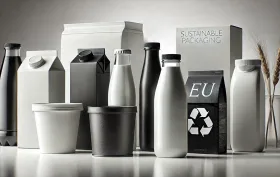
Stricter Obligations for Packaging Manufacturers
This extensive legal framework significantly strengthens the requirements for packaging sustainability and recyclability, as well as for the transparency of its free movement throughout the supply chain. This means that the demands on the functional design of packaging, its material composition and technical documentation are increasing substantially. Under the Regulation, manufacturers who place packaging on the market bear full responsibility for the conformity assessment of their products. Consequently, it is particularly important for packaging manufacturers to understand not only the technical aspects of their products, but also the legislative and procedural requirements that apply to them.
Introducing Design for Recycling and Packaging Classification
The Regulation emphasises stricter criteria for packaging to promote design for recycling, reduce material combinations and require the incorporation of recycled content – particularly in plastic packaging. Packaging will be classified according to recyclability performance grades (A, B or C), and from 1 January 2030 or 24 months after the entry into force of the relevant delegated acts (whichever is later), only packaging recyclable within these grades may be placed on the market.
| Classification of packaging according to recyclability performance grades A, B or C |
Given the complexity of this legislation and its significant practical implications, we recommend that packaging manufacturers and distributors pay increased attention to preparing for and implementing the Regulation's requirements at this stage. Under the Regulation, suppliers of packaging and packaging materials will have to provide all the information and documentation that the manufacturer of the final packaging or packaged product needs to demonstrate conformity.
A new concept in this area is so-called design for recycling. This is an approach to designing packaging (including its components) so that it can be effectively recycled through established collection, sorting and recycling systems that have been proven in practice under real-world conditions.
Definition of Recyclability and Recycling Quality
Related to this is the concept of recyclability, which is defined as the compatibility of packaging with waste management and treatment already at the design stage, based on separate collection, sorting into separate streams, recycling at scale and the use of recycled materials as a substitute for primary raw materials. Under Regulation (EU) 2025/40, all packaging placed on the market must be recyclable.
High-quality recycling is a treatment process that produces recycled materials with technical properties comparable to those of the original raw materials. This enables them to fully replace primary materials – whether in the manufacture of new packaging or in other areas where a high level of quality must be maintained.
High-Quality Recycling vs. Material Recycling
Under Regulation (EU) 2025/40, the difference between material recycling and high-quality recycling is that material recycling recovers recycled materials from packaging material that may not achieve the original quality. In contrast, high-quality recycling produces materials of a standard that allows them to be used to manufacture packaging of the same quality grade or for other purposes, while maintaining the quality of the recycled material.
Packaging should be designed, manufactured and placed on the market so that it can be reused as many times as possible or effectively recycled to a high standard of quality. At the same time, it should place as little burden as possible on the environment throughout its life cycle.
Requirements for Plastics Intended to Come into Contact with Food
Food-contact materials containing recycled plastics must meet the requirements laid down in Commission Regulation (EU) 2022/1616, including the conditions relating to the recycling technologies used. For plastic packaging – with the exception of packaging made from polyethylene terephthalate (PET) – it is important to check the availability of suitable recycling technologies for such plastic packaging sufficiently in advance of the date on which the related recycled content requirements begin to apply.
| Ban on polystyrene packaging and containers in contact with food |
Bans and Restrictions on Single-Use Plastic Products
The Packaging and Packaging Waste Regulation (PPWR) entered into force on 11 February 2025 and is generally due to apply from 12 August 2026. An exception, with application from 12 February 2029, applies to the provisions concerning the ban on placing single-use plastic products on the market. The existing list of these products set out in Directive (EU) 2019/904 is being expanded to include beverage packaging and food containers made from extruded polystyrene (XPS). The ban is also being extended to shrink films used at airports and railway stations to protect luggage, void-fill material made from polystyrene and other plastics that protects packaged goods during transport and handling, and plastic rings for multipacks used as grouped packaging.
| Ban on the use of protective transport materials |
Digitalisation, Labelling and Retention of Documentation
The changes will also affect packaging labelling and digitalisation. By 12 August 2026, implementing acts are to be adopted to establish a methodology for determining the material composition of packaging using digital labelling technologies. Packaging manufacturers will have to retain the technical documentation specified in the Regulation for 5 years from the date on which single-use packaging is placed on the market and for 10 years from the date on which reusable packaging is placed on the market.
Support for Implementing the Regulation in Practice
The company SK PRODUKT CERT s.r.o. provides up-to-date information needed to correctly understand and implement the requirements of this Regulation in practice. Legislative developments are monitored continuously, and their impacts on manufacturing and documentation practices are systematically assessed. If further information on the substantive and technical aspects of Regulation (EU) 2025/40 is needed, explanations are available within the framework of current regulations and standards.
-

SK PRODUKT CERT s.r.o.
Accredited certification body, certification of plastic products and plastics intended for contact with drinking water, certification of plastic…
Suppliers on this topic
-

Ján Pčola FRAGOLA
Výroba fólie LDPE a HDPE, potisk fólií, recyklace odpadní fólie, sběr a výkup odpadní fólie, balicí fólie, mikroten /… -

TBA Plastové obaly s.r.o.
Transport, handling and storage packaging, plastic crates, Euro crates, pallet boxes, plastic pallets, plastic… -

LB Slovakia Plastics s.r.o.
Manufacture of plastic dispensers and closures for the food and chemical industries, packaging solutions for… -

DIXI, výroba plastových obalů a.s.
Plastic bottles, plastic canisters, plastic packaging, closures, blow molds to order, CNC machining, chip machining. -

DOMITRI, spol.s r.o.
Purchase and recovery of secondary plastics LDPE, LLDPE, HDPE, PE / PP, PP, PS, ABS, production of LDPE and HDPE…Gemerská Hôrka 421
Gemerská Hôrka
-

PK Group 2016 s.r.o.
Plastic crates, euro crates, crate carts, plastic barrels, canisters, thermoboxes, plastic pallets and big boxes.


AI in maintenance: How to turn data and human expertise into practical support for manufacturing
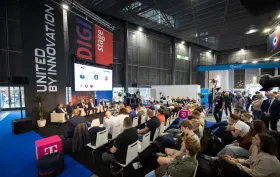
2.11.2026 Predictive maintenance, access to know-how, and faster troubleshooting. The panel discussion showed that the real value of artificial intelligence in industrial maintenance lies not only in predicting failures, but also in how companies work with...



Most read in the last 7 days
-
Polymer prices - october price increases partly successful, with minor corrections expected in the week ahead
-
Long-lasting solution: Radiation-crosslinked PE-Xc pipes for drinking water supply
-
Polymer prices – the increase in olefin monomer contract prices in October was in line with expectations
-
Polymer prices - Year-End Polymer Price Scenarios
-
Plastica-expo 26





Most read in the last 7 days
-
Polymer prices - october price increases partly successful, with minor corrections expected in the week ahead
-
Long-lasting solution: Radiation-crosslinked PE-Xc pipes for drinking water supply
-
Polymer prices – the increase in olefin monomer contract prices in October was in line with expectations
-
Polymer prices - Year-End Polymer Price Scenarios
-
Plastica-expo 26