


CleanAnt s.r.o.: High-level dust removal in production halls as an important element of safety, technology reliability, and worker health protection
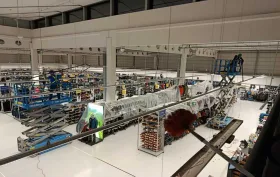
Dust at Height as a Safety Risk
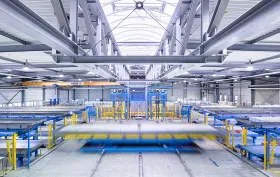
In production halls, dust gradually settles primarily on building structural elements and process installations. Typical locations include:
- steel beams and roof structures,
- cable trays and electrical installations,
- pipework and ventilation systems,
- upper sections of production equipment,
- light fixtures and hall lighting.
Dust can accumulate in these locations over long periods, which increases the building's fire load. For certain types of fine industrial dust, a specific concentration may also create a risk of an explosive atmosphere.
Another problem is the gradual release of settled dust back into the production area. Structural vibrations, equipment operation or airflow can cause it to spread through the hall again.
Regular dust removal at height is therefore an important part of preventive measures in occupational safety and fire protection.
Impact on Equipment and Operational Reliability
Settled dust also adversely affects the technical condition of production equipment. Dust layers on machinery, distribution systems and structures can:
- impair heat dissipation from equipment,
- cause equipment to overheat,
- increase the risk of electronic failures,
- shorten the service life of certain components.
In the long term, neglected maintenance can thus contribute to higher failure rates and unplanned production line shutdowns. From this perspective, preventive cleaning and dust removal in production halls are part of effective operational risk management.
Importance for Operational Hygiene and Audits
The cleanliness of the production environment is also an important factor in customer or certification audits. Dust settled at height is often perceived as an indicator of inadequate systematic maintenance.
Maintaining production areas in a good hygienic condition contributes not only to positive audit assessments, but also to the overall culture of the working environment.
Impact on the Quality of the Working Environment and Employee Health
Dust settled at height gradually returns to the working area. Fine dust particles can therefore impair air quality in production halls.
Long-term exposure to elevated dust levels can adversely affect workers' respiratory tracts and contribute to a higher incidence of respiratory problems or allergic reactions. In some facilities, elevated dust levels may also be associated with higher rates of illness among employees.
Regular dust removal at height therefore contributes not only to operational safety and technical reliability, but also to improving the working environment.
Specific Requirements of Cleaning at Height
Removing dust from structures and process installations at height requires a professional approach, appropriate technical equipment and trained personnel.
In practice, the following are used, for example:
- industrial vacuum systems with appropriate filtration,
- elevating work platforms or scaffolding,
- special techniques to minimise secondary contamination,
- procedures allowing cleaning to be carried out even during restricted operation.
Properly performed dust removal minimises the spread of dust back into the production area and enables effective maintenance even in technically demanding facilities.
Preventive Maintenance as Part of Modern Production Management
Experience from industrial facilities shows that regular scheduled dust removal in production halls is more effective than addressing the consequences of long-term maintenance neglect.
A systematic approach to cleaning at height helps to:
- reduce safety risks,
- protect process equipment,
- maintain a stable production environment,
- improve employees' working conditions
-

CleanAnt s.r.o.
Industrial cleaning and specialized cleaning of facilities, equipment and production lines, including high-level cleaning, laser cleaning and dry…

Suppliers on this topic
-

Safetykleen Czech, s.r.o.
Manual parts washers, high-pressure parts washers, automatic parts washers, specialist parts washers for removing… -

BRC Slovakia s.r.o.
BRC Slovakia offers individual solutions for customer needs, modernization of machines, optimization of production… -

TECHLER INDUSTRY spol. s r.o.
Supplier of products for industry, manufacturing and service, such as oil separators (skimmers), lubrication… -

Bonafa projekt s.r.o.
Protection of interiors against overheating and glare, external shading of rooflights with screen fabrics, rooflight… -

Klüber Lubrication Slovensko s.r.o.
Production and development of advanced, high-performance and efficient customised lubricants, expert tribological… -

MIELL QUALITY s.r.o.
Technical testing and analysis, comprehensive industrial quality control, specialized solutions in product quality…


AI in maintenance: How to turn data and human expertise into practical support for manufacturing
2.11.2026 Predictive maintenance, access to know-how, and faster troubleshooting. The panel discussion showed that the real value of artificial intelligence in industrial maintenance lies not only in predicting failures, but also in how companies work with...




Most read in the last 7 days
-
Polymer prices - october price increases partly successful, with minor corrections expected in the week ahead
-
Polymer prices - Year-End Polymer Price Scenarios
-
Long-lasting solution: Radiation-crosslinked PE-Xc pipes for drinking water supply
-
Polymer prices – the increase in olefin monomer contract prices in October was in line with expectations
-
Plastica-expo 26





Most read in the last 7 days
-
Polymer prices - october price increases partly successful, with minor corrections expected in the week ahead
-
Polymer prices - Year-End Polymer Price Scenarios
-
Long-lasting solution: Radiation-crosslinked PE-Xc pipes for drinking water supply
-
Polymer prices – the increase in olefin monomer contract prices in October was in line with expectations
-
Plastica-expo 26