


A sustainable future for plastic materials
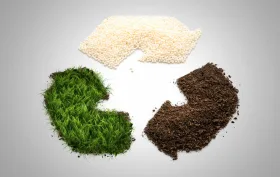
“We want to enable our customers’ transformation by offering them a portfolio with a lower carbon footprint and a variety of circular solutions. We strive for greater sustainability of plastics throughout their entire life cycle: from more resource-efficient production through improvements in their use to ways of breathing new life into plastics,” said Martin Jung, President of BASF’s Performance Materials division. “We call this transformation #ourplasticsjourney (#ourplasticsjourney) and with our roadmap, we have laid an important foundation for this transformation.”
Faster progress towards carbon neutrality and climate protection
BASF has set clear targets to reduce carbon emissions by 2030 by 25 percent compared with 2018 (Scopes 1 and 2[1]) and by 15 percent compared with 2022 for Scope 3.1[2], with the aim of achieving carbon neutrality by 2050. The first and essential step in BASF’s carbon management strategy is to increase the use of green electricity.
“As early as 2023, more than a third of our Performance Materials division’s plants worldwide were operating on green electricity, and we are working tirelessly to ensure that every one of them switches to it by 2025,” says Martin Jung, President of BASF’s Performance Materials division.
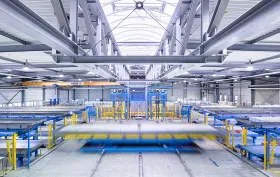
Green electricity also plays a significant role at the beginning of BASF’s value chain, particularly in Scope 3.1. 3B Fibreglass, one of its suppliers, supplies BASF with glass fibres used as reinforcement for thermoplastic and thermoset polymers.
 |
|
By using solar panels to generate electricity, 3B Fibreglass significantly reduces its carbon emissions. This means that the reduced carbon footprint of glass fibre products is also passed on to BASF’s products and ultimately to its customers. This approach demonstrates the potential of the circular economy when all stakeholders commit to sustainability.
 |
|
Supporting customers through sustainable certified solutions
BASF is actively certifying its production facilities worldwide under the International Sustainability and Carbon Certification system ISCC PLUS and REDCert². Most plants in the Performance Materials division are certified to at least one standard, and additional facilities will be certified in all regions by the end of 2024.
These systems certify the quantities of renewable raw materials attributed to biomass-balanced (BMB) products. These renewable raw materials replace some of the fossil raw materials required for production at the very beginning of the value chain. This process ensures the same product quality and properties. Customers can therefore use these materials as ready-to-use sustainable solutions. The same applies to chemically recycled feedstocks, such as pyrolysis oil from waste tyres or mixed plastic waste.
“At present, we already offer most of our product portfolio based on renewable raw materials and with a significantly lower or even net-zero carbon footprint. We want to help our customers meet their sustainability targets as soon as possible and offer them a variety of circular solutions,” adds Matthias Scheibitz, Head of Sustainability for BASF’s Performance Materials division.
An ambitious target for a broader portfolio of circular products
BASF is seeking to increase the use of circular raw materials in its product portfolio and is looking for the best mass balance solutions to meet the expectations of customers from various industries. On its sustainability journey, the Performance Materials division has committed to achieving at least 20 % of its sales in the circular economy by 2030, meaning through products that support the replacement of fossil raw materials with circular ones by at least 20 percent. BASF’s biopolymer portfolio already makes a significant contribution to this target, offering an optimal solution for certified compostable packaging and agricultural applications. Biopolymers help close the biological cycle by reducing food waste, increasing the organic recycling of organic waste, returning nutrients to the soil and preventing the accumulation of microplastics in agricultural soil.
BASF offers a wide range of commercially available sustainable solutions and co-creations
BASF's Performance Materials division regards collaboration with customers and partners across various value chains as a cornerstone of efforts to achieve sustainability in plastics. “It is essential that we offer our customers commercial and sustainable solutions ready for series production and inspire them with what is possible today,” says Jung.
Circularity must already be incorporated into product design. One example is the innovative polyurethane (PU) foam technology recently developed by BASF's Performance Materials division, which enables easier and more adaptable mechanical recycling. The first steering wheel prototypes using this technology were recently unveiled to the public in Europe and China.
The SIRIUS 3RV2 circuit breaker from Siemens is the first electrical safety product to contain components made from biomass-balanced plastics, in which fossil feedstocks at the beginning of the value chain have been replaced with biomethane obtained from renewable sources, such as agricultural waste.
 |
|
Similarly, BASF collaborated on the Flex Perch stool from Steelcase, using plastics obtained through chemical recycling, thereby preventing their incineration or disposal in landfill.

In other cases, bio-based and recycled feedstocks are used in a complementary way. The door handle and crash absorber of the Mercedes-Benz S-Class model, developed in collaboration with Mercedes-Benz AG, contain a combination of pyrolysis oil from waste tyres and biomethane from organic waste. The aim was to replace fossil feedstocks in the production of these plastics and retain their original properties.
BASF also offers solutions to increase the use of renewable feedstocks in the packaging industry. Its portfolio of certified compostable biopolymers also includes a biomass-balanced grade. In addition to being organically recyclable, these materials also have a product carbon footprint (PCF) that is 60 percent lower compared with the corresponding standard grade.
And finally, BASF also offers a comprehensive portfolio of engineering plastics and polyurethanes with a significantly reduced carbon footprint. Some of these low-PCF products achieve a CO2 footprint close to zero, reaffirming that a sustainable future for plastics is within reach. More information is available on the BASF website.
1 Scope 1 records direct CO2 emissions. They originate from emission sources at BASF sites and include, for example, BASF production plants and facilities for generating energy and steam. Scope 2 covers indirect CO2 emissions produced by BASF's suppliers when generating the energy that BASF then purchases for its production.
2 Scope 3.1 emissions relate to goods and services that BASF purchases from its suppliers.
-

BASF spol. s r.o.
Supplier of chemical solutions, engineering and high-performance plastics, and rubber materials designed for demanding industrial applications.

Suppliers on this topic
-

geba Kunststoffcompounds GmbH
Masterbatches for plastics, plastic regranulate, ABS regranulate, ABS plastic regranulate, PC, PC/ABS, PA6, PA66, TPU… -

Remarkplast compounding a.s.
Plastic compounds, plastic compounding, regranulate, plastic regranulation, construction plastics - production and… -

SRNOPLAST K96 s.r.o.
Purchase and crushing of plastic materials, custom crushing of plastics, regranulate, regranulation, recycling of… -

Puruplast, a.s.
Collection and recycling of plastics, manufacture and sale of plastic materials and products: tiles, bricks… -

Import Export Hurt Spedycja J.J. Sp. z o.o.
Collection and purchase of waste plastics, plastic waste, purchase, sale, recycling of plastics in the form of… -

Kunststoff- und Farben-GmbH
Recycling, acrylic recycling, PMMA recycling, pulverizing equipment and extruders, polycarbonate regrind, PMMA…




MOL Group Expands Its Green Energy Portfolio with Bi methane Production
29.10.2026 The MOL Group has officially opened its first biomethane production plant in Szarvas, in Békés County, southeastern Hungary. The facility, representing an investment of more than €7.4 million, can produce biomethane from biogas at a purity level...
Most read in the last 7 days
-
Polymer prices - october price increases partly successful, with minor corrections expected in the week ahead
-
Polymer prices – the increase in olefin monomer contract prices in October was in line with expectations
-
Plastica-expo 26
-
Long-lasting solution: Radiation-crosslinked PE-Xc pipes for drinking water supply
-
Polymer prices - Year-End Polymer Price Scenarios




Most read in the last 7 days
-
Polymer prices - october price increases partly successful, with minor corrections expected in the week ahead
-
Polymer prices – the increase in olefin monomer contract prices in October was in line with expectations
-
Plastica-expo 26
-
Long-lasting solution: Radiation-crosslinked PE-Xc pipes for drinking water supply
-
Polymer prices - Year-End Polymer Price Scenarios