




Polymer prices will return to early March levels in July
Most converters now have to pay their bills for purchases made in April, while most were only able to raise prices once, at the end of March; their selling prices did not keep pace with the rise in polymer prices. And now they are facing the fact that they have suffered a significant loss of cash flow over the past 2–3 months.
Most converters are counting on polymer prices to fall faster than finished product prices, so they can regain some liquidity. Everyone expects the lowest prices, but the downward trend shows no signs of stopping. Most European polymer manufacturers are still trying to sell at “high” prices. However, this amounts to an opportunistic, volume-driven sale. One major film manufacturer put it this way: “...those who raised their prices the fastest and the highest in March and April are now leading the way in price cuts.” "Extreme greed is now coupled with extreme cowardice." Plastic converters seem to have no choice but to go to extremes, waiting for the lowest prices—even at the cost of jeopardizing their security of supply.
However, polymer manufacturers are mostly just getting a head start; and in addition to the significant decline in oil prices and the moderate decline in naphtha prices, the zero tariff on North American (U.S.) polymers—which is set to take effect soon, possibly as early as July—could be another significant factor driving prices down. In addition, due to the attitude of plastic converters described above and the upcoming summer vacations, demand is expected to remain weak in July, even though many processors’ inventory levels will fall below critical levels.
We expect a three-digit price drop for all monomer prices. The expected price decline for ethylene (C2) is -80–120 €/t, for propylene 100–140 €/t, and for styrene monomer (SM), a price drop well in excess of 100 euros—possibly as high as 200 euros or more—is conceivable, driven by the significant difference between spot SM and contract SM prices.
In the case of propylene monomer, an even larger price decline is possible, since the price of propylene monomer has risen more than that of naphtha since early April. As a result, a significant pricing margin has emerged on the monomer producers' side.
And what does this mean for polymer prices in July? The significant drop in polymer prices—amounting to several hundred euros in the case of polyolefins—already occurred in June; July monomer prices are only partially reflecting this decline. Spreads are narrowing and, in the case of most polyolefins, will even turn negative in July. And this, in turn, leads to the usual pattern: unplanned outages and supply constraints managed through prolonged scheduled maintenance. Furthermore, one of Central Europe’s largest petrochemical plants is expected to continue facing production problems for months following the explosion at the end of May. However, one important consequence of the intentionally subdued demand from the converters is the decline in polymer inventory levels among converters. Tight supply and low inventory levels could together trigger a correction—a slight price increase—in the second half of July and at the end of July, similar to what occurred in 2024 and 2025.
-

myCEPPI
myCEPPI provides a weekly price report for commodity plastics.



-

Genesis Polymers Europe and Velogy bring European PP and PE production closer to customers at Fakuma 2026
The joint presence at Fakuma (Hall B2, Booth 2310) showcases a growing European polyolefin platform that combines Velogy’s production capabilities with... -
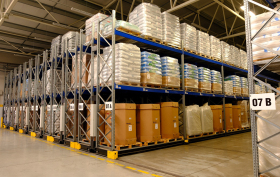
VACULA s.r.o.: Stable supplies of plastic granulates even in uncertain times
In the current complex global market environment, influenced among other factors by geopolitical tensions, many companies are facing uncertainty in supply... -
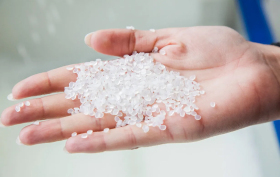
LIFOCOLOR explains how to choose the right masterbatch granule size
Are you dealing with colour inconsistencies, material segregation in the hopper, or inaccurate dosing? One possible reason may be an unsuitable granule size....