




Polymer prices – feedstock prices point to price rises in February, converters skeptical
Although a price rise in monomers and polymers is likely in February, converters are skeptical about its success. Some Western European manufacturers have ordered an order stop for some polyethylene and polypropylene grades, but there is availability on the market, and there have been minor price corrections in the past week.
Weak demand for construction and agricultural products is due to the unusually cold winter. In the northern parts of central Europe; north and east of Warsaw, frosts and snowfall are still expected in the coming weeks. This is why the start of the construction and agricultural season is delayed despite promising expectations. In the packaging materials segment, end-user behavior, which was also the case last year, is causing weak demand perception. Customers are ordering less and with shorter lead times, but more frequently. The school winter holidays are starting in Poland, and this is still not helping demand in the largest market.
On the supply side, although several manufacturers have taken steps to reduce supply (order-stop), there is still availability. Some Western European manufacturers have already fulfilled their sales plans for January, so there is less sales pressure. Central European polymer manufacturers were still trying to sell last week, everyone had availability and free spot stock.
With demand perceived to be weak and supply appearing broad, converters do not see a real risk of a price rise in February. However, feedstock prices rose with BRENT up 9..2% to NAPHTHA up 9.0%. The oil price showed stability in the second half of January in the range of 64-66 USD/barrel. NAPHTHA ranged between 512 and 536 EUR/t, which represented significant price uncertainty in recent weeks. One thing is certain, olefin monomer prices will increase, however, the uncertainty of the price of NAPHTHA makes the extent of the increase questionable. Olefin monomer price expectations were scattered in a wide range: in a range of 40-90 €/t. As a result, European polymer manufacturers will be forced to raise prices, but this will only be successful if demand noticeably picks up. This can be expected from the second week of February. However, the first major import shipments are expected to arrive in February, which will curb price increases in different ways depending on the polymer grade.
-

myCEPPI
myCEPPI provides a weekly price report for commodity plastics.



-

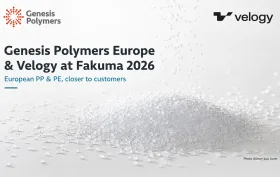
Genesis Polymers Europe and Velogy bring European PP and PE production closer to customers at Fakuma 2026
The joint presence at Fakuma (Hall B2, Booth 2310) showcases a growing European polyolefin platform that combines Velogy’s production capabilities with... -
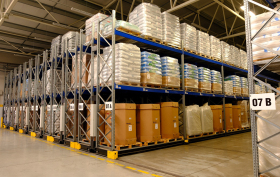
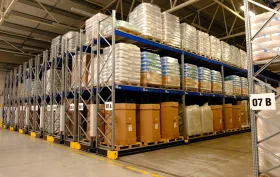
VACULA s.r.o.: Stable supplies of plastic granulates even in uncertain times
In the current complex global market environment, influenced among other factors by geopolitical tensions, many companies are facing uncertainty in supply... -
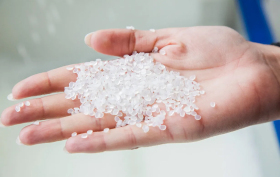
LIFOCOLOR explains how to choose the right masterbatch granule size
Are you dealing with colour inconsistencies, material segregation in the hopper, or inaccurate dosing? One possible reason may be an unsuitable granule size....