




Polymer prices – Supply vacuum in South Central Europe in the first half of 2026
After a difficult uncertain 2025, the following factors will determine the polymer market in Central Europe:
Partially resuming economic growth. It is very likely that Poland will continue to experience significant economic growth of over 3%, as seen in the second half of 2025. The start of economic growth in other Central European countries will also be stimulated by payments from the COVID recovery fund disbursed at the end of 2025. Most EU economies are likely to start growing. A very important role in 2026 will be played by slowly but steadily falling energy prices. A decrease in gas prices (TTF) can be expected primarily. The forced phase-out of Russian gas in 2026 has caused a significant price shock. However, as expected, as LNG capacities expand, import LNG prices will decrease and prices will drop from 50 EUR/MWh at the beginning of 2025 to below 30 EUR/MWh by the end of the year. Due to supply pressure, the price decline is expected to continue in 2026. It is important to note that these price levels are still higher than North American or Far Eastern prices. And it's still more than double pre-war prices. In the case of electricity, the price decline experienced in 2025 is likely to continue, with prices falling permanently below 100 EUR/MWh. However, European electricity networks are increasingly vulnerable to supply fluctuations and frequency disturbances caused by renewable energy sources. This could also cause disruptions like the power outages in Spain or Northern Bohemia in the summer of 2025. Averting this will trigger significant network expansion investments at EU, government and company level.
The Russian-Ukrainian war is expected to calm down in the spring of 2026 as a result of diplomatic efforts. All this could also result in a return of European consumer and investment confidence, in the second quarter of 2026, but no later than the second half of the year. Both private and industrial investments may expand.
However, if we look at the polymer markets, the picture is far from positive. The loss of competitiveness in the European chemicals industry continues. The loss of efficiency and declining profitability of recent years have led to the disintegration of the complex value chains of the European chemical industry. There have been many reports of plant closures in Central and Western Europe over the past year. European petrochemical margins remained consistently negative. There was a significant divergence between overseas import prices and prices for European-made polymers. As a result of this process, by 2025, significant quantities of polymers from the Far East, Central Asia, India and North America will have entered the Central European market. Converters have become more open to imported grades due to the significant price advantage. In 2026, imports are expected to arrive not only through traders, but also through European representations of Far Eastern manufacturers. This is a step forward, the European tax code and the expanding product range will pose a real challenge for European polymer manufacturers. Due to the expanding product portfolio, imports that can also be substituted will appear in almost every segment.
Large Western European and global polymer manufacturers are trying to compete with this trend. They are increasingly relying on their Middle Eastern production capacities, optimizing production locations and product range. As a result, mass-produced grades will increasingly be manufactured outside Europe, while smaller-volume grades will be manufactured in Europe. This strategy is accompanied by significant organizational transformations, a significant part of which is already underway (LyondellBasell-Veolia, Borealis-Boruge, etc.) Alongside the transformation, closures are expected to continue in Europe. In particular, polymer plants that are not part of complex value chains and do not have their own feedstock supply will have to be shut down.
Beyond the general European trends, it can be said that Central Europe is a little different. Although 2025 was also characterized by a general oversupply, a kind of market vacuum developed by the end of 2025. The reasons are multifaceted and have affected almost all Central European polymer manufacturers. Due to the large summer power outage in northern Bohemia, the second half of 2025 resulted in tight HDPE supply. However, in the last quarter of 2025, due to a fire at MOL's Százhalombatta refinery, HDPE and PP production also decreased. In addition, sanctions against Serbian and Bulgarian national oil companies have further reduced the supply of PP and HDPE in the southern and central regions of Central Europe. The tight supply is expected to remain with us in the first half of 2026. MOL is expected to be able to produce at full capacity only in the second half of the year, the Serbian producer in the second quarter at the earliest, and the Bulgarian producer will take a long time to organize export sales. Moreover, the Romanian polymer producer will not be able to purchase ethylene at a competitive price for continuous LDPE production due to the risky and expensive Black Sea transportation. In the first half of 2026, due to the tight supply, these regions of Central Europe will become extremely open, traditional suppliers will lose markets and new players will appear on the markets. A rare phenomenon will be experienced, a redistribution of a market. Import grades will play a significant role, especially in countries that are not members of the EU. But distributors will also play a big role in the new product launch, as they will have to look for new suppliers due to the loss of production from local polymer producers.
The big regional winner of 2026 will be the ORLEN group, with interest in their products increasing significantly in the last quarter of 2025. In addition, it is expected to take over GrupaAzoty Poliolefin in 2026. This will significantly increase the tradable commodity base. The big losers will be MOL Group and HIP-Petrohemija. Due to the loss of production, traditionally loyal customers will be forced to turn elsewhere. Importers will capture a significant market share, primarily those manufacturer representatives who can ensure continuous supply and a wide product portfolio below the price level of European polymer manufacturers.
Central Europe will continue to be a supply-driven market in the first half of 2026, but price dynamics will be determined by general European trends.
The decrease in feedstock prices at the beginning of the year is expected to drag down monomer prices, with a €50-70/t olefin monomer price decrease expected. However, polyolefin prices will not decrease to such an extent due to tight supply. In fact, in some cases, a roll-over is more likely to be expected due to the limited supply. These are primarily the import grades (PPH BOPP, LLDPE C4, LLDPE C6) that European polymer manufacturers import from their North American and Middle Eastern factories, but were no longer imported at the end of 2025 due to year-end inventory optimization. These will not be more widely available until February 2026.
In contrast, the price of styrene monomer remains stable, and even a slight increase is possible. However, due to weak demand, price pressure remains, so even with rising MS, a polystyrene price increase is unlikely.
The first half of 2026 will be divided into two halves for the Easter holidays. Between the beginning of February and the end of March, the market will be intense, with buyers seeking to map out new sources of supply and replenishing their inventories; brisk demand is expected. Thus, after January 15, at the latest at the beginning of February, a kind of price increase will begin, which will last until mid-March at the latest. Due to the Easter holidays, demand dynamics in Europe are disrupted. More intense demand is expected only in Hungary and south of it. However, this will not mean a significant difference in prices compared to other regions, so we expect stable prices and a flat price curve here during April-May.
The real question is the continuation. If the war actually calms down and the fighting subsides, European optimism is expected to revive, which could lead to a smaller price increase instead of the usual summer demand and price drop. However, we are no longer alone in the market; due to the decline in production and loss of complexity experienced by the European chemical and polymer industry in recent years, the role of import suppliers is strengthening. This will limit the possibilities for price increases for virgin polymers.
The big question is what will happen in the market for recycled plastics and recyclates. Recyclate prices have barely changed for years, regardless of virgin polymer prices. The price level is proportional to the limited usability of recycled materials. Although in 2025 everyone blamed cheap virgin polymer prices for declining profitability and numerous bankruptcies, the cause of the problem is different. High waste and energy prices play a significant role in the development of profitability problems. High waste prices are primarily due to the limited supply of high-quality and homogeneous waste. Some larger recyclers and packaging material producers practically determine the prices of waste on the European market with their demand. Smaller recyclers only have access to limited and expensive waste during peak season. However, when waste demand declines in the last months of the year, waste managers find themselves in trouble due to sharply falling waste prices. The system is volatile, both in terms of price and demand. It is clear that the 2030 targets can hardly be met in the European waste base. It is no coincidence that the European recyclate market is becoming increasingly dependent on imports. The import share of 15% in 2020 increased to 24% by 2024. Most imports are currently made of rPET as a result of the 2025 targets coming into effect. However, by 2030, significant imports of recycled materials will be required for other polymer grades as well. Due to lower production costs, European recycling will not be competitive.
Paradoxically, relaxing the regulations on the mandatory recycling rate, in other words, adjusting waste to opportunities, and enforcing the "everyone is responsible for their own waste" principle in the case of imports, would bring about the heyday of recycling in Europe.
In summary, we can say that the European polymer markets will be characterized by a slow and uncertain transformation. The structure now being created will define the European plastics industry for decades.
-

myCEPPI
myCEPPI provides a weekly price report for commodity plastics.

-
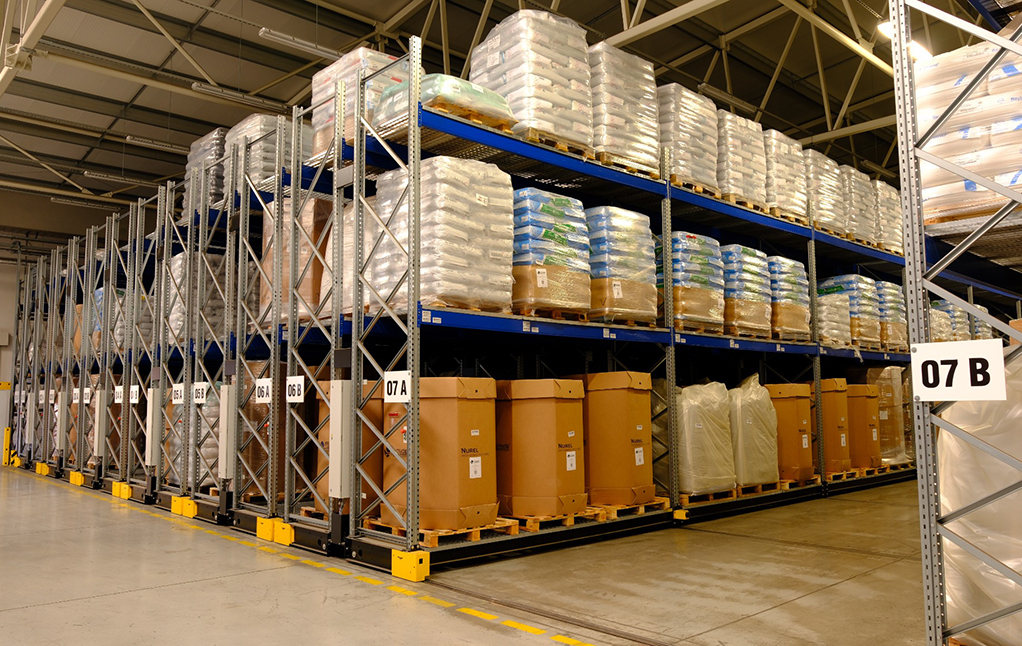
VACULA s.r.o.: Stable supplies of plastic granulates even in uncertain times
In the current complex global market environment, influenced among other factors by geopolitical tensions, many companies are facing uncertainty in supply... -
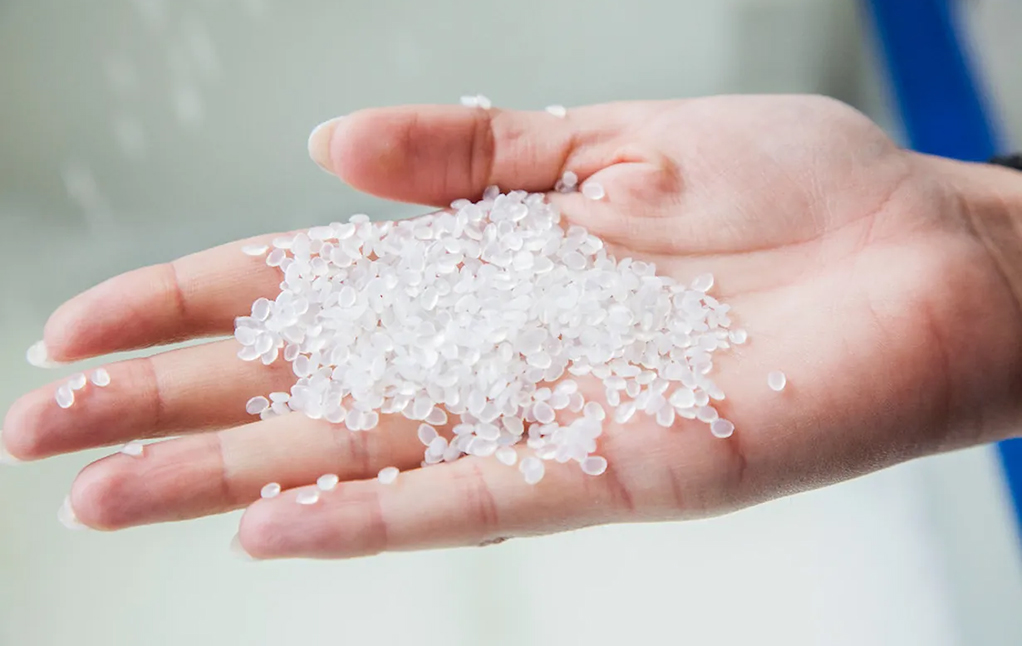
Lifocolor s.r.o. explains how to choose the right masterbatch granule size
Are you dealing with colour inconsistencies, material segregation in the hopper, or inaccurate dosing? One possible reason may be an unsuitable granule size....