




Polymer prices - continued steep price increases, narrowing availability
Prices vary over a wide price range, making it difficult for buyers to know what the real price is. The feedstock price increase has not stopped with BRENT approaching USD 110/barrel and NAPHTHA prices exceeding USD 860/t, prices that have only been higher in the last 10 years in 2022. Consequently, monomer prices are expected to remain at levels similar to 2022.
Our forecast for last week's olefin monomer price change of +4-500 €/t has been revised to "500+" for both ethylene and propylene. In the case of Styrene monomer, based on the data so far, a smaller monomer price increase of +300-400 €/t is likely. With no end in sight for the war against Iran, high oil and chemical commodity prices will remain with us until the end of March, and so neither a feedstock price correction nor a more moderate monomer price increase is expected. This is also the expectation of European polymer producers, who are already forecasting four-digit polyolefin prices starting in the double digits for the week ahead.
The behavior of polymer producers last week followed unprecedented patterns. Already confirmed orders were canceled or prices were modified, and in some cases, price-based, contractual prices were canceled, citing extraordinary circumstances. This is due to sudden cost increases, most polymer manufacturers did not expect such a large energy price shock, as well as significant increases in feedstock costs. And they are trying to immediately incorporate the recent price increases into their sales prices. Integrated manufacturers seem somewhat calmer, but they are trying to track market price movements and have also raised prices this week, with some doing so twice.
Most converters also tried to raise prices last week, mostly successfully. Since everyone has raised their prices, there is no alternative for plastic product buyers. The real question is how the end users in the packaging industry, the large retail chains, will react to the general price increase. They will probably reject it. However, recent years have taught converters that cost increases must be passed on as quickly as possible and losses must not be borne. Thus, end customers will also be forced to accept the price increase or not receive the product. The converters' intention to raise prices was aided by the fact that imported finished products also disappeared from the market. Most plastics converters were still trying to make safety purchases last week, even those who had stock until mid-to-late May.
Polymer supply is tight, one reason being that significant volumes of imports have fallen out. The other reason is that European polymer manufacturers have already fulfilled their March sales plans, and although they have physical availability, these items are already included in the April commodity base. Although demand would be continuous, polymer manufacturers' preference is to serve contracted and regular customers in April as well. A slight increase in supply is expected in Central Europe after the Orlen cracker malfunction has been resolved. Rompetrol's LDPE and PPH production is expected to restart in the coming week. Planned maintenance at Orlen, BOP and Anwil is also likely to be postponed for a month, so there will be no further shortages on the supply side in April. For April, the only problem that may arise is the unresolved issue of MOL's crude oil supply.
The expected significant “500+” olefin monomer price increase is unlikely to cause a similar increase in polyolefin prices in April. On the one hand, because the price rise has already taken place in March and will do so in the week ahead. On the other hand, because April begins with Easter, which is a holiday. Market participants will return on April 13th at the earliest. Demand will not be buoyant during this period. Moreover, if the Iran war calms down, the markets will also calm down. Another important development is that in recent weeks, converters have also replenished their stocks, while demand for the final product has remained basically unchanged and weak. So there is a chance that Easter will break the price increase dynamics and, if not bring a price decrease, at least price stability.
-

myCEPPI
myCEPPI provides a weekly price report for commodity plastics.



-

Genesis Polymers Europe and Velogy bring European PP and PE production closer to customers at Fakuma 2026
The joint presence at Fakuma (Hall B2, Booth 2310) showcases a growing European polyolefin platform that combines Velogy’s production capabilities with... -
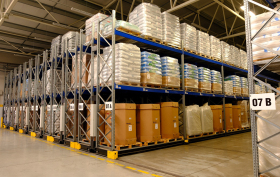
VACULA s.r.o.: Stable supplies of plastic granulates even in uncertain times
In the current complex global market environment, influenced among other factors by geopolitical tensions, many companies are facing uncertainty in supply... -
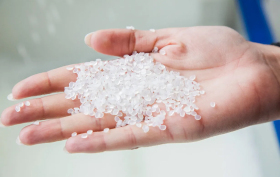
LIFOCOLOR explains how to choose the right masterbatch granule size
Are you dealing with colour inconsistencies, material segregation in the hopper, or inaccurate dosing? One possible reason may be an unsuitable granule size....