


The critical role of hydraulic oil cleanliness: How the Mobil DTE 10 Excel series from Lubexpert is changing the economics of maintenance
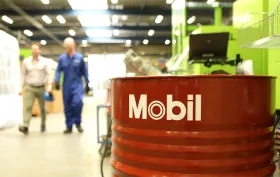
Why Is Oil Cleanliness Important?
Contamination poses the greatest threat to hydraulic system performance. Studies show that approximately 80 % of hydraulic system failures are caused by contaminated oil. This staggering figure highlights the crucial importance of maintaining perfectly clean hydraulic oil throughout system operation.
Clean hydraulic oil performs several critical functions beyond power transmission alone.
It acts as a protective barrier between precision components, preventing direct metal-to-metal contact that would otherwise lead to catastrophic wear.
In addition, clean oil maintains optimal viscosity characteristics, ensures efficient heat transfer and protects the chemical integrity of additives that protect system components.
Understanding ISO 4406
The hydraulics industry uses ISO 4406 to quantify the level of particulate contamination in hydraulic fluids.
This internationally recognised system measures particle concentrations in three critical size ranges: ≥ 4 μm, ≥ 6 μm and ≥ 14 μm.
The resulting cleanliness code, expressed as three numbers (e.g. 18/16/13), provides a relatively accurate picture of the condition of the fluid and the hydraulic system.
Modern hydraulic systems require increasingly stringent cleanliness levels.
For example, servo valves require oil with an ISO 4406 cleanliness level of at least 16/14/11 to function correctly, proportional valves 18/16/13, and gear pumps can operate at 19/17/15.
Systems operating at pressures above 3 000 psi require even stricter standards, with target cleanliness values reduced by one grade for each contamination level.
| Figure 1: Comparison of the sizes of various particles in cross-section |
The Hidden Costs of Contamination
The economic impact of contaminated hydraulic oil extends far beyond the cost of replacing it.
Uncontrolled contamination creates a chain of financial consequences that can seriously affect the operating budget:
- Accelerated component wear: Contaminants act as an abrasive material, causing premature failure of expensive components such as pumps, motors, valves and seals. Modern equipment with clearances of just 5–10 μm is particularly sensitive even to microscopic particles.
- Reduced system efficiency: Contaminated fluid increases friction and energy losses, forcing the system to work harder to achieve the same output. This inefficiency can reduce operational performance by up to 20 %, equivalent to losing one working day per week.
- Increased maintenance frequency: Contaminated systems require more frequent filter and component replacements and corrective interventions. The cost of removing one gram of contaminants amounts to only approximately 10 % of the potential damage that this contaminant would cause if it circulated in the system.
- Extended downtime: Failures caused by contamination lead to costly interruptions to operations, which is particularly critical for industries dependent on the continuous operation of hydraulic systems.
Sources and Prevention of Contamination
Contamination enters hydraulic systems through various routes:
- Internal (built-in) contamination – from manufacturing processes, assembly residues and initial system filling
- Operational contamination – generated by normal component wear and oil degradation during operation
- External contamination – entering from the environment due to inadequate sealing, improper storage or contaminated top-up fluids
Effective contamination control requires a comprehensive approach consisting of multiple layers of protection:
- Highly efficient filtration systems with appropriate beta ratios for target cleanliness levels
- Proper oil handling and storage – using clean, sealed containers and dedicated transfer equipment
- Protection from the external environment – effective breather systems, desiccant filters and sealed reservoirs
- Advanced hydraulic fluids with technology that reduces deposit formation and contaminant retention, actively keeping the system clean and extending component life
- Regular monitoring and analysis for early detection of contamination trends before system damage occurs
Maximising the Return on Initial Investment with Advanced Hydraulic Fluids – Mobil DTE 10 Excel Series
The Mobil DTE 10 Excel series represents a breakthrough in hydraulic fluid technology, designed specifically to meet the demanding requirements of modern high-pressure industrial and mobile equipment.
These premium anti-wear hydraulic oils combine synthetic base oils with proprietary additive packages, delivering exceptional performance across a wide range of operating parameters.
The formulation exhibits excellent oxidation and thermal stability, enabling extended oil life and minimising deposit formation even under demanding conditions.
The innovative “ultra keep-clean performance” system protects key hydraulic components against failure, particularly precision servo and proportional valves, which are common in modern sophisticated systems.
Measurable Performance Benefits
Laboratory tests have demonstrated measurable improvements in efficiency when using Mobil DTE 10 Excel oils.
In controlled efficiency tests, these fluids delivered up to a 6 % improvement in hydraulic pump efficiency compared with conventional Mobil hydraulic oils.
This increase in efficiency translates directly into lower energy consumption or higher machine output, delivering immediate cost savings.
A high viscosity index and shear stability ensure optimal performance across a wide temperature range – from successful operation at temperatures as low as -34 °C to stable operation at high temperatures.
This temperature versatility ensures consistent protection and efficiency regardless of the operating environment.
Field-Proven Results
Industrial applications repeatedly demonstrate the economic value of switching to Mobil DTE 10 Excel oils:
- Sheet Metal Manufacturing (Spray Technics, India): After switching to Mobil DTE 10 Excel 46, oil drain intervals were extended by 100 % – from annually to every two years. Servo valve failures were eliminated and annual savings of approximately 5 300 USD were achieved.
- Limestone Quarrying (Russia): Quarries extended oil drain intervals from 4 000 to 5 000 hours, delivering annual savings of 7 900 € through reduced oil and filter consumption and lower maintenance costs.
- Ceramics Manufacturing (Orient Ceramics): After implementing Mobil DTE 10 Excel 46, the service life of both the oil and gear pumps doubled, delivering annual savings of 2 000 USD.
- Waste Management (Vanheede Environment Group): After switching to Mobil DTE 10 Excel 46, the baling system operated continuously for 2 years without an oil change, delivering annual savings of 3 540 € and increasing production capacity by 192 tonnes.
Extended Oil Change Intervals: The Path to Lower Total Cost of Ownership
The excellent oxidation and thermal stability of Mobil DTE 10 Excel oils enables significantly extended oil change intervals.
Field testing shows that these oils can last up to three times longer than conventional hydraulic fluids, while maintaining excellent system cleanliness and component protection.
This longer service interval delivers several economic benefits:
- Reduced oil consumption: Fewer oil changes mean a lower annual volume of oil purchases.
- Lower disposal costs: Less waste means lower environmental fees.
- Reduced filter requirements: Cleaner operation extends filter life and reduces replacement frequency.
- Minimised downtime: Fewer maintenance interventions mean higher equipment availability and smoother operation.
System Cleanliness and Component Protection
The Mobil DTE 10 Excel Series oils keep hydraulic systems clean for up to three times longer than competing oils tested under the same conditions.
This exceptional cleanliness translates into:
- Extended component life – less abrasive wear on pumps, motors, valves and precision components.
- Reduced deposit formation – an advanced additive package minimises deposit build-up in critical areas of the system.
- Higher system reliability – consistent cleanliness reduces the risk of failures and unplanned downtime.
| Figure 2: Comparison of the cleanliness of Mobil DTE 10 Excel oil and a competing product over time (MHFD test) |
Energy Efficiency and Environmental Benefits
In addition to reduced maintenance costs, Mobil DTE 10 Excel oils also contribute to sustainability and environmental responsibility:
- Lower energy consumption: A 6 % improvement in efficiency means a measurable reduction in the energy consumption of hydraulic systems.
- Smaller carbon footprint: Longer oil life reduces the environmental impact of production, transport and disposal.
- Less waste: Extended oil change intervals and component life lead to an overall reduction in waste volumes.
High-Quality Hydraulic Oil as an Economic Necessity
Combining hydraulic oil cleanliness requirements with advanced fluid technology creates unprecedented opportunities for operational optimisation.
Clean oil provides the foundation for reliable system operation, while premium fluids such as Mobil DTE 10 Excel Series maximise the return on this investment through extended service life, higher efficiency and reduced maintenance costs.
Organisations that have adopted stringent cleanliness standards and introduced advanced hydraulic fluids gain a long-term competitive advantage – lower operating costs, higher reliability and better environmental sustainability.
In today's demanding industrial environment, this strategy is not merely a recommendation, but a necessity for long-term success.
The question, therefore, is not whether you can afford to implement these practices – but whether you can afford not to implement them.
With verified case studies demonstrating annual savings of thousands of euros, alongside higher reliability and environmental benefits, the economic case for hydraulic oil cleanliness and premium fluids such as Mobil DTE 10 Excel Series is clear.
-

Lubexpert Slovakia s.r.o.
Authorized importer and distributor of ExxonMobil products in Slovakia, greases, hydraulic and synthetic oils, lubricants for industry and all types…

Suppliers on this topic
-

TECHLER INDUSTRY spol. s r.o.
Supplier of products for industry, manufacturing and service, such as oil separators (skimmers), lubrication… -

Klüber Lubrication Slovensko s.r.o.
Production and development of advanced, high-performance and efficient customised lubricants, expert tribological… -

BRC Slovakia s.r.o.
BRC Slovakia offers individual solutions for customer needs, modernization of machines, optimization of production… -

SLOVNAFT, a.s.
Production and sale of petroleum products and it´s chemical processing - production and distribution of polyethylene… -

SLAVBIZ, s.r.o.
Heat-resistant PTFE teflon materials, PTFE films, PTFE semi-finished products, PTFE products, Kanthal resistance… -

Flumasys s.r.o.
Authorized distributor of Nordson, manufacturer of dosing systems, technologies for regeneration of industrial…


AI in maintenance: How to turn data and human expertise into practical support for manufacturing
2.11.2026 Predictive maintenance, access to know-how, and faster troubleshooting. The panel discussion showed that the real value of artificial intelligence in industrial maintenance lies not only in predicting failures, but also in how companies work with...





Most read in the last 7 days
-
Polymer prices - october price increases partly successful, with minor corrections expected in the week ahead
-
Polymer prices – the increase in olefin monomer contract prices in October was in line with expectations
-
Plastica-expo 26
-
Long-lasting solution: Radiation-crosslinked PE-Xc pipes for drinking water supply
-
Polymer prices - Year-End Polymer Price Scenarios




Most read in the last 7 days
-
Polymer prices - october price increases partly successful, with minor corrections expected in the week ahead
-
Polymer prices – the increase in olefin monomer contract prices in October was in line with expectations
-
Plastica-expo 26
-
Long-lasting solution: Radiation-crosslinked PE-Xc pipes for drinking water supply
-
Polymer prices - Year-End Polymer Price Scenarios